Best Adrenaline Activities in the Smoky Mountains
Quick Answer: Which Smoky Mountains Activities Fits You?
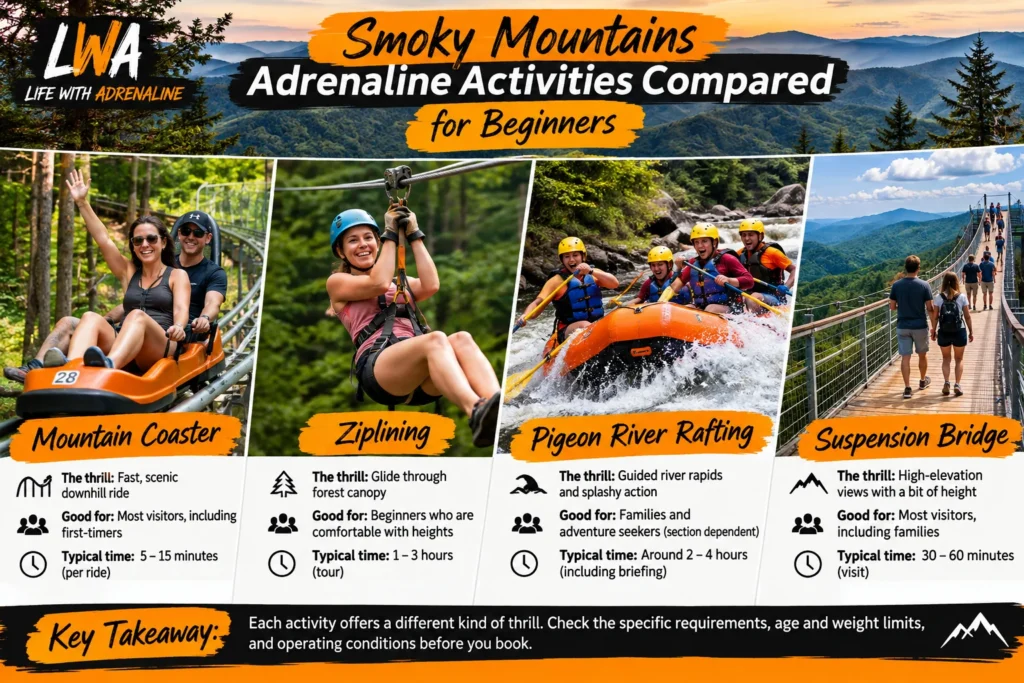
The Smoky Mountains work unusually well for first-time adventure travelers because you can choose very different kinds of excitement without leaving the wider Gatlinburg–Pigeon Forge region. For a controllable, relatively short thrill, compare a mountain coaster. For a longer guided outdoor outing, consider a zipline canopy tour. For paddling and splashes, choose the specific Lower or Upper Pigeon River trip that matches your group. A suspension-bridge crossing at Gatlinburg SkyPark delivers a height sensation without requiring a climbing harness.
The biggest mistake is to call all these experiences “beginner friendly” as if they require the same fitness, comfort with height, age, or tolerance for cold water. A guided tour can be well organized and still be the wrong activity for a particular person. Choose by the format and participation rules, not the most dramatic video.
If you can only book one paid activity, pick a mountain coaster when time is tight, a forest zipline when the group wants a longer shared challenge, or a suitable rafting section when everyone wants to participate together. Keep an optional hike or scenic stop for a weather-flexible second outing.
At a Glance: Six Ways to Get an Adrenaline Rush
The comparison below is designed to help with decisions rather than assign unverified safety scores. An attraction’s eligibility and actual intensity depend on the exact product, season, weather and individual participant.
| Activity | Where to plan | What makes it distinctive | Main first-timer check |
| Mountain coaster | Pigeon Forge / Gatlinburg | Cart on a fixed track; short attraction | Age/height, pairing, braking, admission |
| Guided ziplining | Gatlinburg-area forest courses | Several cable crossings and platforms | Height/weight, mobility, footwear |
| Lower Pigeon rafting | Hartford outpost | More relaxed guided river trip | Age, flow, season, water comfort |
| Upper Pigeon rafting | Hartford outpost | Stronger guided whitewater | Class III–IV, age/weight, river levels |
| SkyBridge | Gatlinburg SkyPark | Suspension bridge and glass section | Height tolerance, weather, tickets |
| National-park hike | Great Smoky Mountains NP | Terrain and panoramic views | Trail status, footwear, parking tag |
1. Mountain Coasters — Best for a Short, Self-Paced Rush
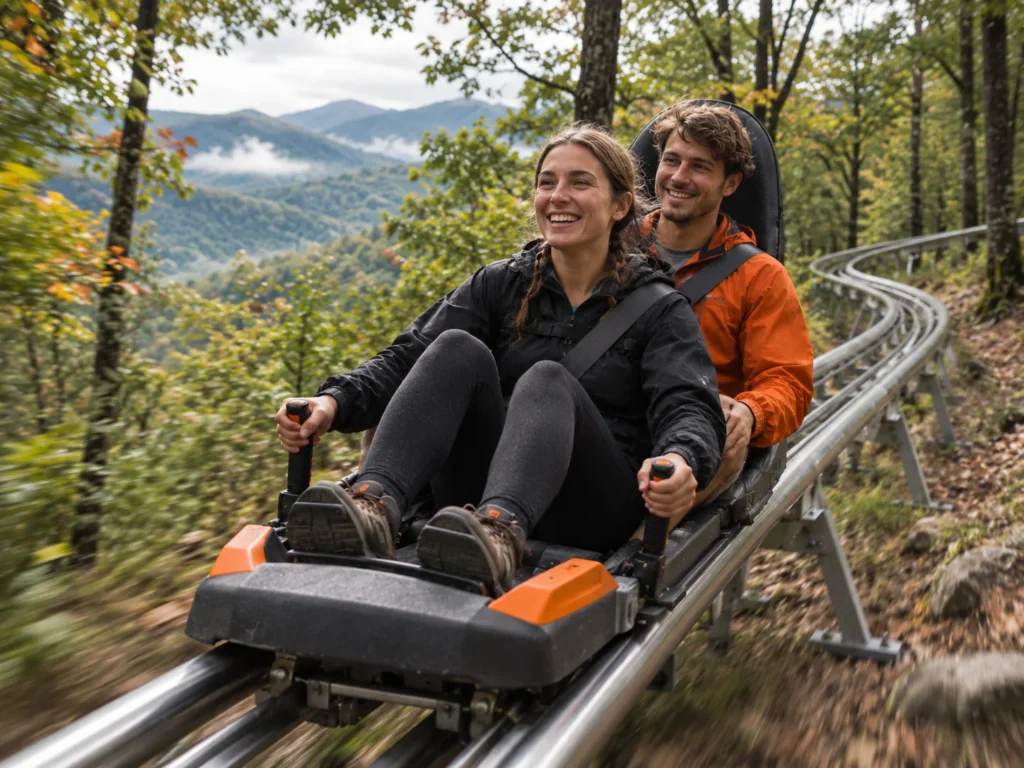
In a mountain coaster, the cart remains on a rail and the rider typically uses a lever to manage speed within the attraction’s limits. There is no bike steering or river paddling to learn, but you still need to follow spacing, braking and seating rules. That makes it an attractive first activity for some visitors who want excitement without a half-day guided appointment.
Pigeon Forge’s Rocky Top Mountain Coaster is a clear example. Its official FAQ describes a ride lasting more than nine minutes, a published maximum speed around 30 mph, and different height, age and cart-weight conditions. Riders must be 56 inches tall to drive alone; qualifying shorter passengers can ride with an eligible driver, and wet conditions change the permitted load. A family should check the exact adult–child pairing rather than assuming everyone rides independently.
For a more detailed choice among Rocky Top, Smoky Mountain Alpine Coaster, Moonshine, Goats on the Roof and the Anakeesta coaster offerings, use our Gatlinburg and Pigeon Forge mountain coaster comparison. That guide addresses attraction locations and ticket structures in more depth; this article focuses on how a coaster fits into a larger Smoky Mountains adventure itinerary.
Choose a standalone Pigeon Forge ride if you mainly want the coaster. Choose an attraction inside a larger ticketed park when the gardens, views, food and other activities justify the total admission cost. Do not compare a low-priced coaster add-on with a standalone ticket as if both include park entry. Check the whole checkout amount and the same-day operating calendar.
If you enjoy the idea but are traveling outside Tennessee, our best alpine coasters in the USA guide compares national options. In the Smokies, the most useful strategy is usually one carefully selected coaster, not a race to tick every track off a list.
2. Forest Ziplining — Best for a Guided Height Adventure
A zipline tour offers something the short mountain-coaster format usually does not: a longer sequence of platforms, cable crossings and group instruction in the wooded landscape. The most memorable part may be the quiet pause high among trees before a launch rather than the fastest few seconds of flight.
CLIMB Works Smoky Mountains provides a useful example of why “guided” and “suitable for everyone” are different claims. The operator’s current FAQ gives a minimum age of five and minimum height of 42 inches, with weight rules that depend partly on participant height. It requires closed-toe footwear and says lighter children may need to ride tandem. These are operator-specific published requirements, not rules for all ziplines in Tennessee.
Before reserving, ask whether the course involves stairs, suspended bridges, walking on uneven ground, participant braking, or a requirement to stand or reach particular positions. Check whether the tour continues during rain, what triggers a weather cancellation, and whether one nervous participant can opt out after the briefing. None of those answers should be guessed from a promotional photograph.
Our wider beginner zipline destinations guide explains how to compare course formats across the United States. In Gatlinburg, choose the exact guided product first and then plan a realistic amount of time around it. Parking, check-in and transportation may take longer than expected on a busy holiday weekend.
3. Whitewater Rafting — Choose Upper or Lower Pigeon Carefully
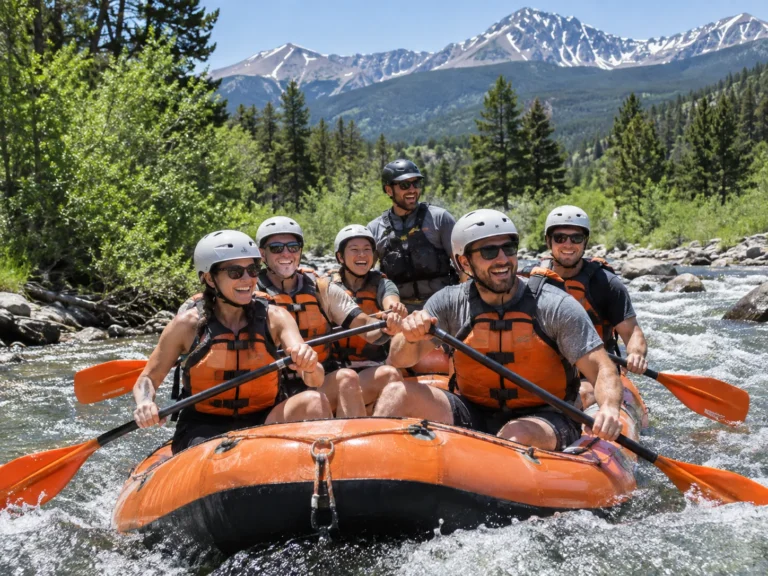
Pigeon River rafting is one of the strongest day-trip choices for visitors who want a genuine shared outdoor challenge. But the best first run is not the “biggest” advertised whitewater. The river is divided into different commercial trip formats, and that distinction matters to families and adults who are unsure about rapid intensity.
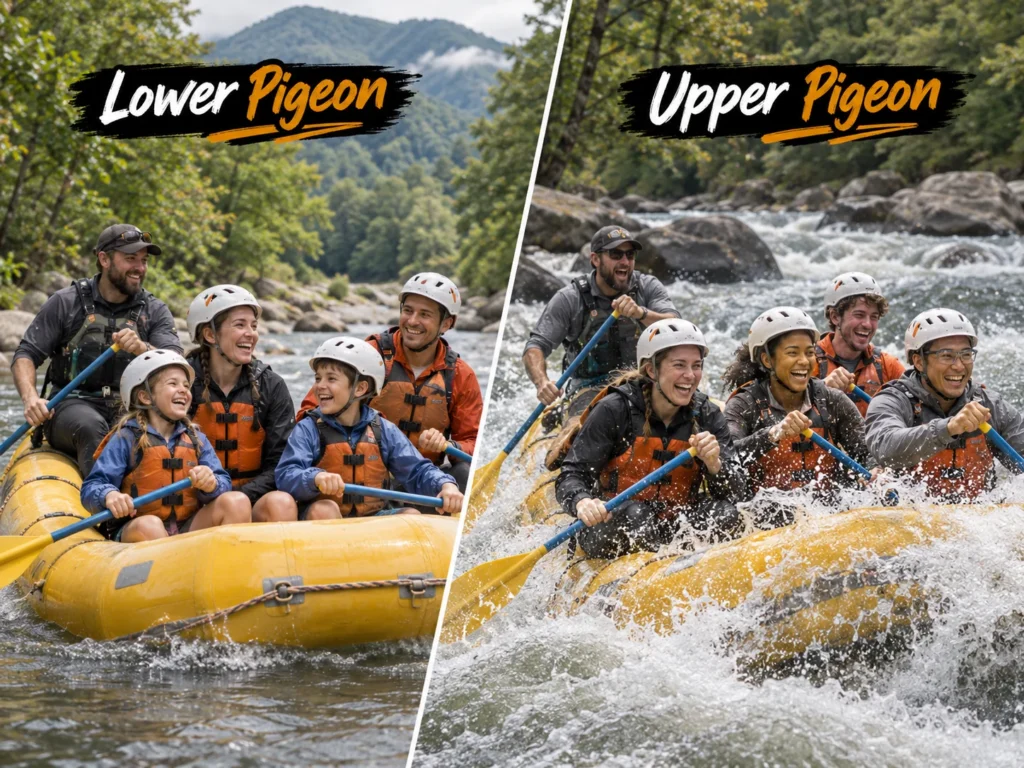
Smoky Mountain Outdoors describes its Lower Pigeon trip as a gentler, family-oriented outing for participants aged three and older, usually offered from late April through Labor Day. The operator describes the Lower River as a chance for scenery, splashes and a more relaxed pace. It should not be interpreted as risk-free: moving water, weather, temperature and operator instructions still matter.
The Upper Pigeon is more energetic. The same operator advertises a guided run with Class III–IV rapids, larger waves and a minimum rule of age eight or at least 70 pounds. In the main summer period, planned dam releases help shape operating days. Outside that window, natural flow conditions can be much less predictable. An Upper River booking should be a conscious choice, not a default upgrade prompted by marketing.
For rafting elsewhere, compare our beginner whitewater rafting trips across the USA. It places river sections side by side rather than claiming that an entire named river is automatically right for every first-timer.
Your travel logistics also change. Commercial Pigeon River rafting commonly checks in around Hartford, Tennessee, not at a launch point in the center of Gatlinburg. Reserve enough time for the drive, outfitters’ check-in, outfitting, shuttle travel, the river itself and changing afterward. If a booking page lists two hours, confirm whether that means paddling time or the entire visit.
Wear clothing that can get wet, shoes that stay on, and whatever thermal or protective equipment the operator requires. Do not carry unsecured phones or valuables into the raft. Always listen to the guide’s instructions about paddling, staying in the boat and responding if someone enters the water; no generic website article can substitute for a trip-specific safety talk.
4. Gatlinburg SkyBridge — Best for Trying a Height Challenge
Gatlinburg SkyBridge gives visitors a very different kind of nervous excitement. Instead of a rapid or an airborne cable, you cross a long pedestrian suspension bridge above the town and look through a glass section. The operator describes a span of nearly 700 feet and a section of transparent decking near the middle. It is a developed visitor attraction, not a technical climbing route.
This can be a useful first height test for someone who wants to know how it feels to look down through a suspended structure, but there is no universal safe or easy response to height exposure. A person who is comfortable on a coaster may dislike the movement or openness of a bridge, while a confident hiker may enjoy it. The ticket typically includes the mountaintop access experience; verify current admission and weather-dependent operating hours.
If you want to compare other types of pedestrian bridges and catwalk tours, our best bridge walks in the USA guide distinguishes a self-paced tourist bridge from guided, harnessed maintenance walkways and other viewing platforms. That distinction is especially useful before paying for a height-based experience.
5. Thrill Rides and Scenic Attractions Around Pigeon Forge
Not every exciting Smoky Mountains activity is a wilderness sport. Pigeon Forge also has purpose-built ride parks, chairlifts, mountain-top attractions and roller-coaster-style experiences that can fit an afternoon without wet clothes or extensive outdoor training. They differ in operating systems, admission structures, queue times and physical restrictions.
The key choice is whether you want one signature ride or a broader ticketed day. A standalone coaster can make sense on a travel or arrival day. A larger attraction might justify its price if your group also wants viewpoints, restaurants and less intensive activities. Do not equate a park’s advertised starting ticket with the total cost of a particular ride or add-on.
For visitors who prefer speed without committing to a high-exposure aerial course, this is often the best area to investigate. Families should still read the exact height and age rules for the chosen ride, especially when younger children are part of the group.
6. Hiking and Scenic Exposure Inside the National Park
The national park is an excellent complement to commercial thrills, but it is important not to blur the boundary. Great Smoky Mountains National Park is a federally managed natural area, while the coasters, commercial ziplines, SkyBridge and most organized Pigeon River rafting products discussed here take place at separate visitor attractions or river outposts outside the main park.
For many people, a well-chosen hike delivers enough excitement through elevation, changing terrain and exposed viewpoints without buying an adventure ticket. However, the National Park Service warns that trail difficulty depends on length, climb, footing and weather. Its current hiking advice emphasizes proper footwear, carrying essentials, informing someone of your plan and turning around when conditions become unsuitable.
Parking is not generally free for a longer stop: vehicles parked for more than 15 minutes need a parking tag, even though the park has no standard entrance fee. The NPS currently lists daily, weekly and annual tag options. A tag does not reserve a parking space, so crowded trailheads remain a planning issue.
Check the live park conditions page shortly before leaving your hotel. In November 2026, the NPS identifies Laurel Falls Trail as closed for rehabilitation, with reopening anticipated in 2027; older travel lists that still promote the trail as an open, simple stop are unreliable. Road closures, storm effects and shorter daylight hours can also change your plans. If trails are unsuitable, choose a visitor center, a lower-commitment scenic stop or a separate attraction.
An exciting day in the Smokies does not need a difficult summit hike. For a first adventure trip, pairing one paid guided activity with a moderate, properly researched walk can be more satisfying than cramming in several demanding excursions.
Where to Stay: Gatlinburg, Pigeon Forge, or Hartford?
Gatlinburg makes sense when walking between downtown attractions and accessing the national-park entrance is a priority. It is a practical base for SkyPark and certain in-town coaster experiences, though downtown traffic and parking can be considerable. Choose a hotel because its location matches your planned activities, not because it has a view of the mountains in a booking photo.
Pigeon Forge is often more convenient when mountain coasters, family attractions and the main visitor corridor are the focus. Some rides sit off the central Parkway, so the correct address matters. Sevierville can also be useful when lodging value and access from the north are more important than staying in Gatlinburg.
Hartford is primarily a river-outfitter area for Pigeon River rafting, rather than the base every first-time visitor should choose. It is normal to stay in Gatlinburg or Pigeon Forge and drive to the appointed rafting outpost. Allow a buffer for traffic, parking and the outfitter’s stated check-in time.
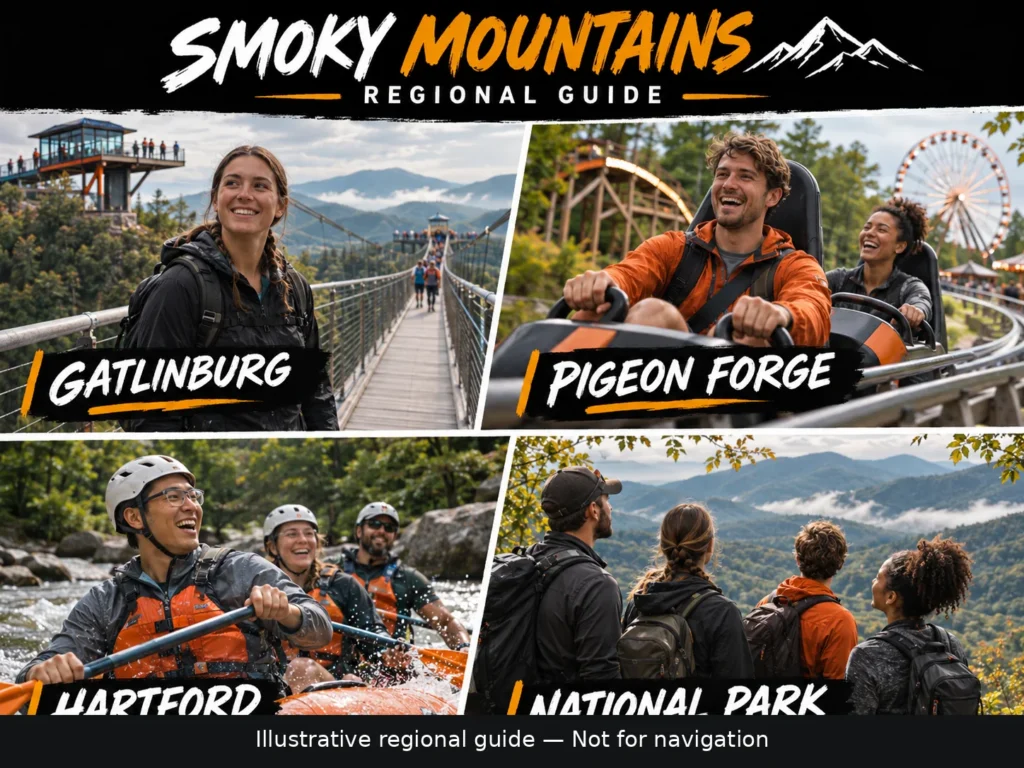
Before mixing activities from different bases, inspect actual addresses on a current map. A region guide can show the rough relationship between towns, but it cannot establish real driving times or current road conditions.
| Base | Practical use | Important note |
| Gatlinburg | SkyBridge, downtown attractions, park access | Parking and traffic can be heavy |
| Pigeon Forge | Mountain coasters and visitor corridor | Check exact attraction addresses |
| Hartford (rafting outposts) | Upper/Lower Pigeon departures | Typically a day-trip drive from visitor towns |
Three Realistic Smoky Mountains Adventure Itineraries
These are sample sequencing ideas, not reservation schedules. They leave room for weather changes, driving and fatigue. Book activity times and calculate actual journey duration only after choosing a hotel and checking operator calendars.
Two-Day Introduction: One Main Thrill and One Scenic Day
Day 1: Arrive and check into a Gatlinburg or Pigeon Forge hotel. Choose a single coaster or SkyBridge visit, then leave the evening open for a relaxed dinner and an optional repeat ride if lines and weather permit. Do not book several timed attractions immediately after a long drive.
Day 2: Check the national park’s trail and road conditions, then take a suitable morning walk or scenic drive. If heights are more appealing than hiking, select a prebooked zipline as your primary activity instead and avoid adding a second physically demanding course.
Three-Day Outdoor Mix: Raft, Zip, and Explore
Day 1: Get familiar with the area and ride one mountain coaster. Use the visit to check the next day’s weather and confirm the rafting operator’s meeting point, waivers and required shoes.
Day 2: Drive to Hartford for the exact Upper or Lower Pigeon trip your group selected. Keep the afternoon flexible because river check-in, equipment, shuttle and changing time can occupy much more of the day than the paddling segment alone.
Day 3: Choose a forest zipline if all participants meet its requirements, or spend the day on a park trail with an appropriate weather and fitness match. Do not assume a mixed-age party can always book one identical zipline product.
Four-Day Family Plan: Lower-Commitment Choices First
Day 1: Settle into Pigeon Forge, choose one mountain coaster that meets your children’s age, height and pairing rules, and rest after the journey.
Day 2: If family members qualify and want a river outing, consider a Lower Pigeon trip while it is operating; otherwise, use a flexible scenic or town activity. Bring spare clothes and allow the full visit time.
Day 3: Choose SkyBridge or a guided zipline according to height comfort, supervision rules, mobility and the current forecast. Keep a no-height alternative for anyone who would rather watch or do something else.
Day 4: Visit a national-park trail or overlook selected from the current NPS conditions report, then leave time for departure traffic. This itinerary deliberately does not promise every planned attraction will be open in every season.
Cost Planning: Compare the Complete Day, Not the Headline Ticket
An adventure weekend budget has several moving parts: activity tickets, taxes, any park admission or coaster add-on, hotel, transportation, parking, food and optional photographs. For rafting, check whether the operator includes outfitting and shuttle transfers; for ziplining, ask whether equipment is included and whether additional services are sold separately. At a national park stop, include a parking tag when required.
Instead of quoting invented statewide averages, compare three exact checkout baskets for your own trip. One could be a standalone coaster and parking; another might be a guided zipline plus transport; the third could be river rafting with its full check-in and return-driving commitment. Compare per-person costs only after confirming your party’s age and eligibility.
Season changes the calculation. Rafting departures are strongly linked to river flows and scheduled summer releases. Some coasters and scenic attractions advertise broader operating seasons but may close during storms. A cheaper nonrefundable activity can become an expensive choice if your travel dates or conditions are uncertain.
If affiliate booking links are added later, show the usual Life With Adrenaline disclosure, link to the exact activity rather than an unrelated general homepage, and never claim personal testing or verified availability without evidence.
Booking Checklist: Nine Questions That Prevent Bad Surprises
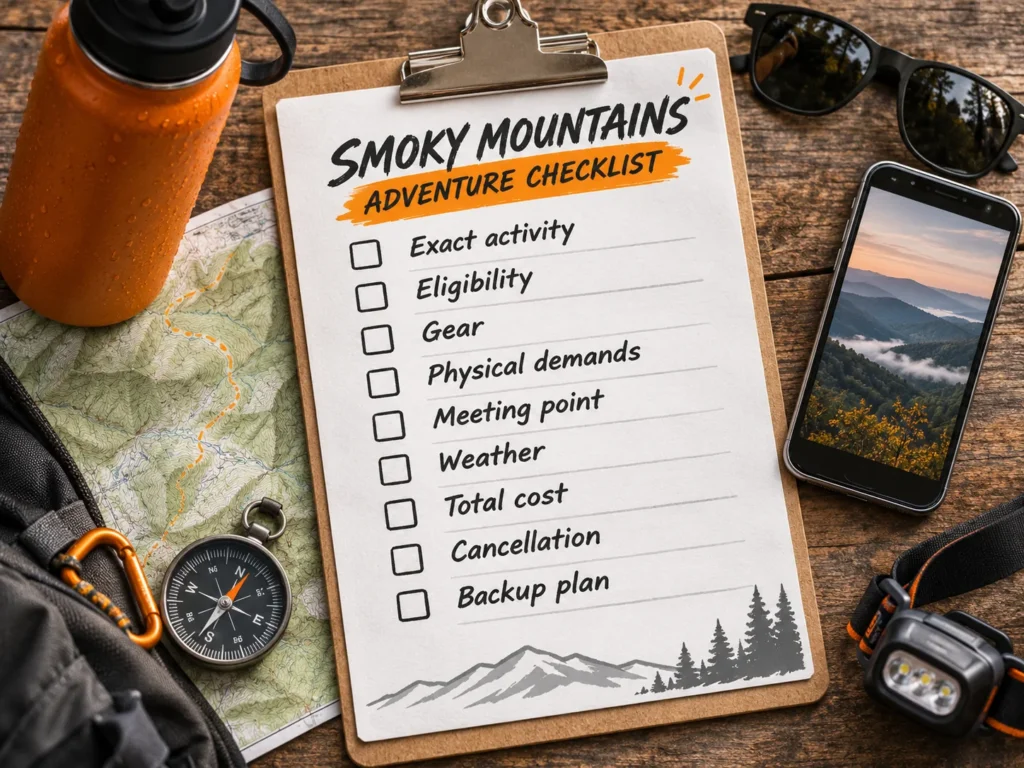
Before paying, write down the answers to these questions for the exact attraction and departure: What specific course or river section is included? Who qualifies by age, height, weight or health rules? Are instruction and protective gear provided? Is there any climbing, hiking, swimming exposure or participant braking? Where is the real meeting location and how early must we arrive? What happens in storms or changing river levels? What is the total price after taxes and admission add-ons? What are the cancellation and refund terms? What is the backup plan if a family member opts out or an activity closes?
Confirm these answers on the official operator’s current page or directly with its staff. A destination video, generated itinerary graphic or old social post cannot replace a trip-specific safety briefing or a current booking policy.
Frequently Asked Questions
What is the best adrenaline activity in the Smoky Mountains for a first-timer?
For a short, rider-paced attraction, a suitable mountain coaster is a practical starting point. For a longer guided challenge, consider a zipline course. For a group outing with paddling, choose a Pigeon River trip that matches everyone’s eligibility and comfort. There is no single activity that is best or safest for every participant.
Is rafting better on the Upper or Lower Pigeon River for beginners?
The Lower Pigeon is marketed as the calmer family-focused option and is commonly available for younger qualifying children, while the Upper Pigeon includes stronger Class III–IV whitewater and a higher published age-or-weight threshold. Both have water hazards and operator-specific requirements; choose the named trip, not just the river.
Can kids ride mountain coasters and ziplines near Gatlinburg?
Sometimes, but child eligibility differs by attraction. Rocky Top publishes minimum age and height rules and requires qualified drivers for smaller passengers. CLIMB Works publishes separate minimums and upper weight restrictions for its guided courses. Always check the precise rider or tour product and never infer eligibility from another business’s website.
Can you do rafting, ziplining and a mountain coaster in one day?
It may be physically possible with favorable schedules and travel times, but it is usually a poor default for first-timers. Rafting includes travel to Hartford, check-in and a shuttle. A zipline has fitting and multiple stages. A coaster is shorter but can have long queues. Spread the activities across two or three days for flexibility.
Is Great Smoky Mountains National Park free to enter?
The NPS does not charge its traditional entrance fee, but vehicles parked for more than 15 minutes require a valid parking tag. Some attractions discussed in this article are private businesses outside the park and charge their own admission.
Can I hike to Laurel Falls in late 2026?
No, the National Park Service still lists the Laurel Falls Trail as closed for rehabilitation in November 2026, with reopening anticipated in 2027. Check current conditions for a suitable alternative rather than relying on older suggested itineraries.
Final Recommendation
Start by choosing the kind of nervous excitement you actually want: controllable speed on a coaster, forest exposure on a guided zipline, shared paddling on a selected river section, or a self-paced bridge crossing. Then match the exact activity to the youngest or least comfortable person in your group and to the dates you will be there.
For most two- or three-day visits, one signature adventure each day is enough. Leave room for mountain weather, traffic, equipment briefings and a scenic stop. That approach creates a more memorable Smoky Mountains trip than a schedule built around the biggest advertised thrill on every billboard.
Sources and Fact-Checking
Sources below were checked for editorial preparation in November 2026. Conditions, prices, weight limits and hours may change. Verify the exact operator or park notice again immediately before publication and before booking.
NPS — Current Conditions / trail closures
NPS — Current Cautions and Closures
Rocky Top Mountain Coaster — FAQs
CLIMB Works Smoky Mountains — FAQ
Smoky Mountain Outdoors — Upper Pigeon
Smoky Mountain Outdoors — Lower Pigeon
Smoky Mountain Outdoors — Rafting FAQ
Gatlinburg SkyPark — SkyBridge
Gatlinburg SkyPark — HoursGreat Smoky Mountains NPS — Safety