Best Adrenaline Activities in Moab, Utah: 9 Adventures Compared
Direct answer: For most first-time visitors, Moab works best as a mix rather than a single ‘most extreme’ activity. Guided canyoneering gives you the strongest desert-and-rappel experience, a Hell’s Revenge 4×4 tour delivers big sensation with little physical effort, and half-day rafting or beginner mountain biking adds water or wheels. If pure fear is the goal, tandem skydiving is the most concentrated adrenaline choice. Choose by exposure, effort, time, and budget—not by a generic top-10 ranking.
Moab is one of the easiest places in the United States to build a multi-adventure trip because canyoneering, rafting, mountain biking, off-roading, climbing, ziplining, skydiving, and scenic flights are all available in the same desert base. The right choice depends less on which activity sounds most extreme and more on four practical questions: how much exposure you want, how hard you want to work, how much of your day you can give up, and what you want to spend. [S1]
For a first Moab trip, a useful starting mix is one skill-based desert activity such as guided canyoneering or beginner mountain biking, one lower-effort thrill such as a Hell’s Revenge Hummer tour, and one water or air experience. That combination gives you three very different ways to experience the landscape without turning every day into an endurance test.
The prices below were checked on September 19, 2026. They are current examples from specific operators, not Moab-wide averages. Taxes, booking fees, gratuities, photos, transportation, park fees, and seasonal promotions can change the amount you actually pay.
Planning the rest of your trip? Browse our adventure destinations to compare places and find their detailed guides.
For the next part of your decision, see Bentonville and Bella Vista Mountain Biking: A Beginner’s 2026 Guide.
Moab adrenaline activities at a glance
On small screens, scroll comparison tables sideways to see all columns.
| Activity | Adrenaline feel* | Physical effort | Booked time | Current example price | Best fit |
|---|---|---|---|---|---|
| Guided canyoneering | High exposure; controlled | Moderate | ~5 hr | $155 adult example | First-time rappelling + desert scenery |
| Hell’s Revenge guided Hummer | High perceived thrill | Low | ~2 hr | $115 adult example | Big sensation without a hard workout |
| Tandem skydiving | Very high | Low physical / high mental | Allow a half day | From $189 | Pure adrenaline and aerial views |
| Moab Daily rafting | Moderate | Low-Moderate | ~4 hr | $105 adult example | Beginners, families, hot-weather variety |
| Westwater Canyon rafting | High | Moderate | ~10 hr | $244 | A full-day whitewater commitment |
| Intro rock climbing | Moderate-High | Moderate-High | ~5 hr | $155 adult example | Skill-building and vertical challenge |
| Beginner mountain biking | Moderate | Moderate-High | ~4.5 hr | $145 | Active travelers who want to ride Moab terrain |
| Ziplining | Moderate-High | Low-Moderate | 2-3 hr | $159 adult | Controlled height exposure |
| Scenic airplane flight | Low-Moderate | Very low | 30+ min | From $209 | Big landscape, minimal exertion |
*Editorial sensation comparison, not a safety rating. Prices checked September 19, 2026 and tied to specific operator examples. Recheck before booking.
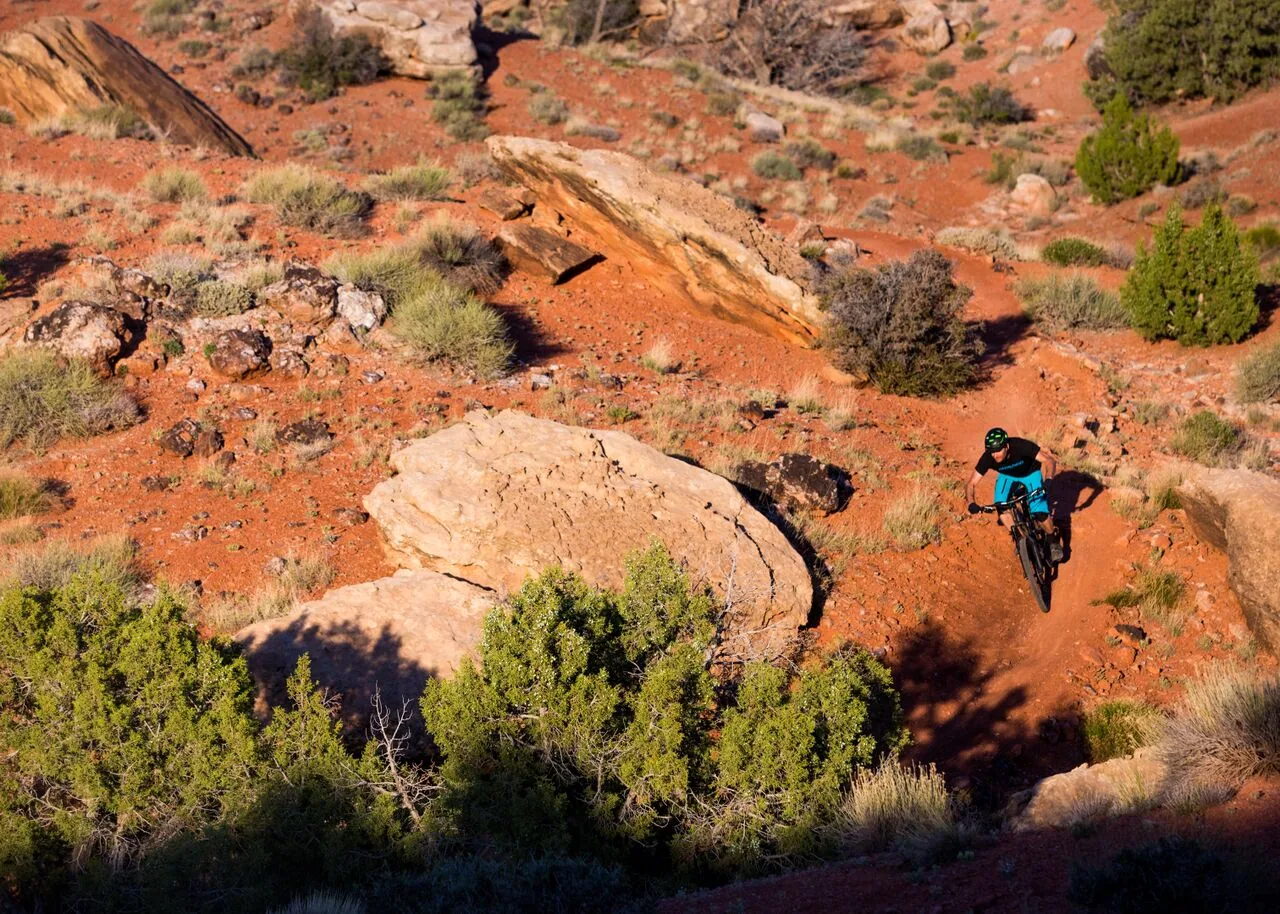
Featured photograph: Leslie Kehmeier / BLM Utah. Mountain biking in Moab, Utah. Photo: Leslie Kehmeier / BLM Utah, via Wikimedia Commons. Public domain in the United States; resized and compressed for the website. The photograph does not identify the trail or imply that it is suitable for beginners. Image license.
The best Moab activity depends on whether you want more fear, more effort, or simply a new perspective on the landscape.
How to use this guide
The ‘adrenaline’ descriptions in this guide are editorial comparisons of the sensation most first-time participants are likely to notice — speed, height, exposure, uncertainty, or technical movement. They are not safety ratings. Inherent risk varies by activity, route, conditions, guide, participant, and equipment, and no outdoor adventure is risk-free.
Moab is also unusually variable by season. The National Park Service describes April-May and mid-September-October as the most temperate and popular periods, while summer daytime temperatures can exceed 100°F. Late-summer storms can produce flash floods, which is especially important when your itinerary includes canyons or unpaved roads. [S3]
1. Guided canyoneering: the signature Moab vertical adventure
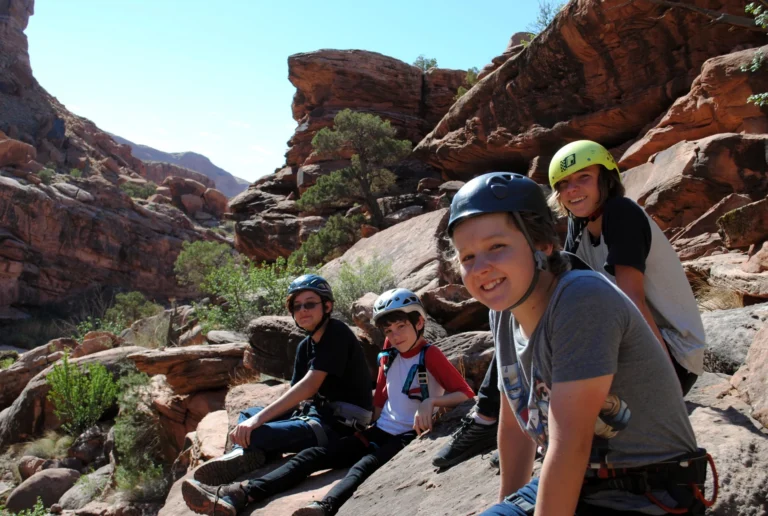
If you want one activity that feels distinctly Moab, guided canyoneering is a strong candidate. It combines hiking and scrambling with rappels through or beside sandstone canyons, so the adrenaline comes from exposure and trusting the rope system rather than from speed. Discover Moab notes that local guides can introduce technical canyon terrain to visitors without previous climbing or rappelling experience, provided the participant is reasonably fit. [S1]
A current Morning Glory Arch example from Moab Adventure Center runs about five hours from March through November. The September 2026 price was $155 for ages 13+ and $130 for youth ages 10-12. That is a useful benchmark for a half-day-style guided canyon experience, but it should not be treated as a universal Moab price. [S7]
Who it fits: first-timers who can hike on uneven desert terrain and want a real height/exposure experience with professional instruction. Who may prefer something else: travelers who dislike being on rope, have very limited mobility, or want an activity with almost no physical work.
One important planning distinction: a commercial ‘Moab canyoneering’ tour is not automatically inside Arches National Park. If you independently canyoneer in Arches, the NPS requires a permit for each route and imposes route and group-size rules. Check the park’s current canyoneering page before entering a technical route. [S13]
If canyoneering is the activity you want to build the trip around, our Moab canyoneering guide for beginners compares the main guided routes by rappel height, physical effort, water, duration, and first-timer commitment.
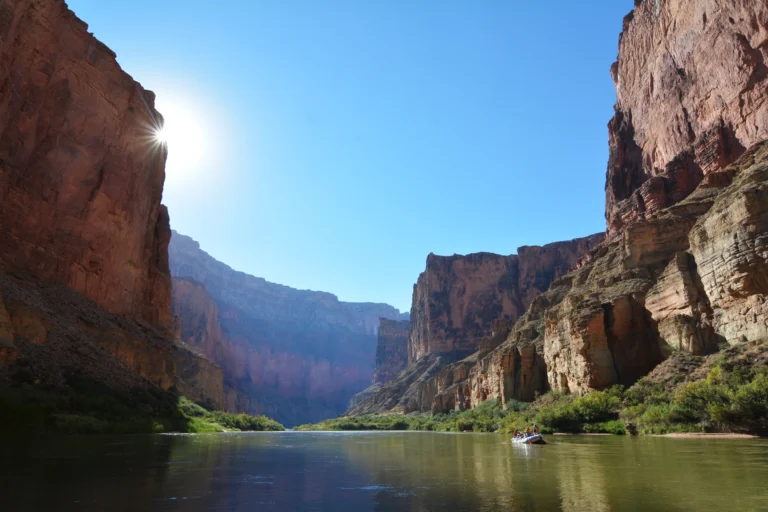
Guided Moab canyoneering combines hiking, scrambling, and controlled rappels through sandstone terrain.
2. Hell’s Revenge by guided Hummer: high sensation, low physical effort
A guided 4×4 tour is one of the cleanest choices for a group with mixed fitness levels. The vehicle does the hard work while the terrain creates the sensation: steep slickrock climbs, sharp angles, open views, and sections that look far more dramatic from the passenger seat than they do on a map. Discover Moab specifically describes Hell’s Revenge and Fins & Things as genuinely steep and notes that visitors can take guided tours rather than drive themselves. [S1]
For a current benchmark, Moab Adventure Center listed its two-hour Hell’s Revenge Slickrock Hummer Tour at $115 for adults 13+ and $95 for youth ages 5-12, operating February through November. A longer combined Hell’s Revenge and Fins & Things tour was listed separately at a higher price, so do not compare only the tour names — compare route, duration, and vehicle format. [S7]
This is a particularly useful same-day partner for canyoneering or mountain biking because it delivers a second style of thrill without adding another long workout. If you are self-driving instead of booking a guided trip, your planning changes substantially: vehicle capability, trail rules, navigation, recovery equipment, and land-management restrictions become your responsibility.
3. Tandem skydiving: the biggest fear-factor jump
For raw anticipation and freefall, tandem skydiving is the outlier on this list. It requires less sustained physical effort than biking, climbing, or canyoneering, but the mental commitment is much higher. Skydive Moab currently offers an 8,000-foot-above-ground-level tandem option at $189 and a 13,000-foot option with a regular price of $269. The operator lists the 13,000-foot jump as roughly 55 seconds of freefall and the 8,000-foot option as roughly 20 seconds. [S10]
The operator requires tandem participants to be at least 18. It lists a maximum weight of 250 pounds, an additional $1 per pound above 200 pounds, and possible additional restrictions for some participants over 220 pounds. Photo and video options cost extra. These are operator-specific rules and should be rechecked immediately before booking. [S10]
Most jumps are scheduled in the morning, which makes skydiving a good first-day or early-trip activity: if weather delays the jump, you still have later days to reschedule. Do not build a tight, nonrefundable afternoon around an exact landing time; aviation and weather operations can move.
If this would be your first jump, our first-time skydiving guide walks through the full experience from check-in and training to freefall, canopy flight, and landing.
4. Moab Daily rafting: the easiest water-based adrenaline add-on
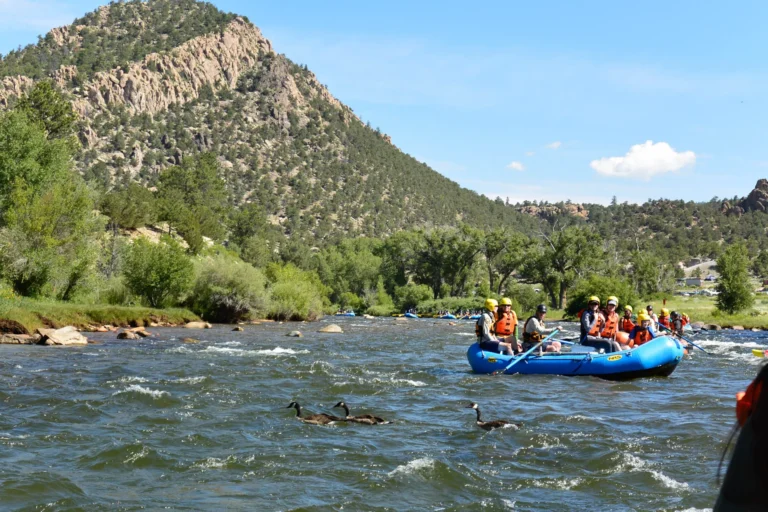
The Colorado River gives Moab an important counterpoint to the dry desert. The Fisher Towers / Moab Daily section is commonly positioned as the more accessible whitewater option, while Westwater and Cataract are the bigger commitments. Discover Moab describes the Moab Daily as family-oriented whitewater and notes that river trips range from mild to wild. [S1]
A current morning half-day example runs about four hours from April through October. Moab Adventure Center listed it at $105 for adults 13+ and $88 for youth ages 5-12 in September 2026. The attraction here is not maximum technical difficulty; it is that you can get splashy river movement, canyon scenery, and a very different sensory experience without consuming your entire day. [S7]
For a first-time group, this is often easier to combine with a park visit, scenic flight, or relaxed evening than a full-day whitewater trip. River level and weather still influence the experience, so a particular section can feel different across the season.
If rafting is the activity you want to compare more seriously, see our best whitewater rafting trips in the USA for beginners for guided river sections with different levels of intensity, time commitment, and physical effort.
5. Westwater Canyon rafting: when you want the river to be the main event
If a half-day float feels too gentle, Westwater Canyon moves the river higher on the adrenaline scale and turns it into a full-day objective. The current operator example we checked runs about 10 hours, May through September, with a listed price of $244 and a minimum age of 12. The operator describes Class III-IV rapids on this trip. [S7]
The important decision is not simply ‘rafting or no rafting.’ It is whether you want rafting to be one component of a Moab day or the main activity for that day. A 10-hour booking effectively removes the possibility of a second major tour, and that can be exactly the right tradeoff if whitewater is one of your priorities.
Do not choose a harder river trip only because a class number sounds more exciting. Water levels, individual swimming comfort, guide requirements, and the actual trip format matter. Confirm the operator’s current age, swimming, medical, equipment, and weather policies before paying.
6. Intro rock climbing: slower than skydiving, more skill-intensive than it looks
Rock climbing produces a different kind of adrenaline. Instead of a single burst, the pressure builds as you make moves, manage your feet, and look down from a position you reached under your own power. For first-timers, the value of a guided introduction is not just equipment; it is route selection, belay management, movement coaching, and a realistic progression for the group.
A current introductory climbing example near Moab is about five hours, operates April through November, and was listed at $155 for adults 13+ and $130 for youth ages 5-12. [S7]
Choose climbing over canyoneering if you are more interested in learning upward movement and technique. Choose canyoneering if the idea of hiking through a desert objective and descending by rappel is more appealing. Both can involve exposure, but they feel very different psychologically.
7. Beginner mountain biking: the best choice when effort is part of the fun
Moab’s mountain-bike reputation can intimidate beginners because famous routes such as Slickrock, Captain Ahab, and the Whole Enchilada dominate photos and videos. The official Utah tourism site cautions that Moab riding is generally technical, but BLM’s Moab Brands / Bar M system gives riders a much broader progression: roughly 31 miles of trails with options from beginner routes such as Lazy EZ to expert terrain. [S2][S5]
For riders who want instruction and logistics handled, a current beginner Moab Brands guided tour is about 4.5 hours, operates March through November, and was listed at $145 per person for adults 13+ and youth ages 7-12. The package includes a guide, full-suspension bike, helmet, water bottle, and shuttle transportation according to the operator page. [S8]
This is a better adrenaline choice for someone who wants physical engagement rather than passive exposure. Expect uneven terrain and real pedaling even on an introductory route. If you are considering an e-mountain bike, rules changed in 2026: BLM opened many selected Moab-area mountain-bike trails to Class 1 e-bikes, including Moab Brands and Klondike Bluffs, while access still depends on the exact trail and land manager. Verify the current map before riding. [S6]
If pedal assist is part of your plan, compare our best e-mountain biking destinations in the USA to see how Moab stacks up against places with simpler Class 1 access, rentals, and beginner logistics.
Moab Brands gives newer riders a progression into desert singletrack without starting on the destination’s hardest trails.
8. Ziplining: a controlled way to test your comfort with height
Ziplining sits between scenic sightseeing and technical rope sports. You still leave the ground and move quickly through open space, but the route and equipment system are highly structured compared with climbing or canyoneering.
Raven’s Rim currently lists its Moab zipline at $159 for adults ages 16-65, $144 for seniors 65+, and $119 for youth ages 6-15. The tour takes about two to three hours. Published requirements include a 50-270-pound weight range, an adult companion for children under 16, and a recommendation against participation during pregnancy. Taxes and fees are extra. [S11]
Choose this when you want height exposure without dedicating half a day to hiking and technical movement. It also works well for groups in which one person wants a bigger sensation than a scenic flight but another person does not want to rappel or climb.
9. Scenic airplane flight: the landscape-first option
A scenic flight belongs in an adrenaline guide only with an honest label: for most people it is less intense than rappelling, whitewater, or freefall. Its value is perspective. From the air, the scale of the Colorado Plateau, backcountry arches, canyon systems, and national-park terrain becomes much easier to understand, and the experience requires almost no physical effort.
Redtail Air currently lists a 30-minute backcountry arches flight at $209 per person and a 30-minute Arches National Park flight at $228 per person; longer routes cost more. [S9]
This is especially useful for a mixed-ability group, a recovery day after biking or climbing, or a traveler who wants a memorable experience but does not want technical exposure. It is also a strong weather-flexible companion to a multi-day itinerary, although aviation schedules are still weather-dependent.
Which Moab adventure fits you best?
For the nervous first-timer: start with a guided Hummer tour, Moab Daily rafting, or ziplining. These let you experience terrain, water, or height without immediately committing to rope technique or a hard bike ride.
For the fit beginner: guided canyoneering and beginner mountain biking provide the strongest mix of scenery, movement, and skill-building. If you enjoy the physical process as much as the final view, they are more satisfying than a passive ride.
For the biggest fear challenge: tandem skydiving is the most concentrated mental hurdle in this group. It is short in active duration but can dominate the emotional memory of the trip.
For a family with younger children: check exact operator minimum ages before planning. In the examples researched here, the half-day rafting product accepts youth ages 5-12, the Hummer tour youth bracket starts at 5, the zipline starts at age 6, beginner guided biking starts at 7, and the Morning Glory canyoneering example starts at 10. These are not universal Moab rules. [S7][S8][S11]
For the low-effort traveler: guided off-roading and scenic flying deliver the most landscape for the least sustained exertion. Ziplining can also work if its age, weight, and health requirements fit your group.
If minimizing physical effort is one of your main priorities, compare our adrenaline activities that don’t require extreme fitness for more beginner-friendly options beyond Moab.
Most major adventure zones are reached from the same Moab base, but land-manager rules differ by route.
How many days do you need for an adrenaline-focused Moab trip?
Two days: pick one signature half-day activity each morning and one lower-effort activity later in the day. A practical example is canyoneering in the morning plus a Hummer tour later on Day 1, then half-day rafting plus a scenic park visit or short flight on Day 2. Leave buffer between bookings rather than assuming every tour ends exactly on schedule.
Three days: use the extra day to create three different environments. Day 1 can be canyoneering plus off-roading. Day 2 can be beginner mountain biking early, followed by a lighter afternoon. Day 3 can be a half-day Moab Daily trip or a full-day Westwater trip, depending on how much whitewater matters to you. This is the sweet spot for variety without making every day feel rushed.
A balanced three-day Moab plan mixes one major adventure per day with lighter time for recovery and park scenery.
Four days: add one major fear or skill objective — tandem skydiving, intro climbing, or a second river day — and keep one half-day flexible. That flexibility matters in Moab because heat, thunderstorms, wind, aviation conditions, and river conditions can force a change. If skydiving is important, schedule it early in the trip to preserve rescheduling options.
Do not confuse ‘possible’ with ‘pleasant.’ Moab’s compact geography makes it tempting to book a morning, afternoon, and evening activity every day. In hot weather, that can turn a vacation into a recovery problem. One primary adventure plus one secondary experience is usually a better daily rhythm than three demanding tours.
Best time of year for Moab adventure activities
Spring and fall are the easiest seasons for an activity-heavy itinerary. The NPS identifies April-May and mid-September-October as the temperate, popular periods, with typical daytime highs in the 60s to 80s°F. Those conditions are much friendlier for biking, climbing, and canyon hiking than midsummer. [S3]
Summer changes the planning logic. Arches’ climate data show average July highs around 100°F, and NPS safety guidance says summer temperatures regularly exceed 100°F. Rangers recommend shifting strenuous activity toward mornings and evenings and carrying substantial water. In August 2026, Arches and Canyonlands also reminded visitors to avoid strenuous activity during the hottest middle portion of the day. [S3][S14]
Late summer also brings monsoon risk. A storm does not have to be directly overhead to create dangerous water movement downstream in a canyon. If your plan includes canyoneering, washes, or unpaved backcountry roads, check the forecast and current land-manager conditions the same day, not only when you book. [S3][S13]
Winter can be excellent for quieter sightseeing and some tours, but cold temperatures, snow, and ice can change road and trail conditions. Many of the operator examples in this guide run mainly from spring through fall, so a winter trip needs a fresh availability check.
What should you budget for the activities?
For activity-only planning, the current examples show how quickly a multi-adventure trip adds up. A two-activity pairing of the $115 Hummer example and $105 half-day rafting example is about $220 per adult before taxes, tips, photos, or other extras. Add the $155 canyoneering example and the total reaches about $375. Add a $145 beginner mountain-bike tour and four guided experiences total about $520 before extras. [S7][S8]
That is not a complete Moab trip budget. Lodging, rental cars or airport transportation, meals, park entrance passes, fuel, gratuities, optional photo/video packages, and travel to Utah can easily exceed the activity cost. Hotel rates also move sharply with season and event demand, so this article does not invent an accommodation average.
The cheapest strategy is not automatically the best value. A guide can be most valuable when you are new to the technical activity, unfamiliar with desert route-finding, or would otherwise need to rent specialized equipment and manage shuttles or permits yourself. On the other hand, experienced visitors may prefer self-guided biking or park activities where rules and skills allow.
Permits, park access, and rules that can change your plan
Arches National Park does not require an advanced timed-entry reservation in 2026. Visitors can enter during operating hours, but the NPS warns that entrance lines and limited parking can still occur in peak periods. A valid entrance pass is still required. This is a year-specific rule and should be rechecked if you are reading this for a later season. [S4]
Canyoneering inside Arches is different from simply booking a Moab-area commercial canyon tour. If you plan your own route in Arches, you need the park’s canyoneering permit and must follow route and group-size rules. The NPS currently offers free in-person self-registration, while online reservation may carry a Recreation.gov fee. Fiery Furnace has separate permit requirements. [S13]
Canyonlands backcountry roads have their own rules. Day-use permits are required on the White Rim Road and certain Needles backcountry roads for vehicles, motorcycles, and bicycles. ATVs, UTVs, and OHVs are not permitted in Canyonlands National Park. If a self-drive off-road or bike itinerary crosses park land, verify the exact route rather than assuming Moab-area vehicle rules apply everywhere. [S12]
For mountain biking, land manager matters as well. BLM trail access can differ from national-park rules, and 2026 brought expanded Class 1 e-bike access on selected BLM systems. Always match your exact bike and trail to the current agency map. [S6]
Safety: what changes from one Moab activity to another
Moab’s activities do not share one risk profile. Canyoneering combines falls, rope systems, route-finding, heat, and flash-flood exposure. Mountain biking adds speed, terrain, heat, and mechanical issues. Whitewater adds moving water, swimming, cold-water and entrapment hazards. Off-roading adds steep terrain, vehicle movement, and route-specific driving risk. Skydiving, climbing, ziplining, and aviation each have their own equipment and operational systems.
That is why an operator’s participant limits matter. Age, weight, mobility, pregnancy, recent injuries, cardiovascular concerns, medications, and other health issues can affect eligibility. Do not use this article as personalized medical clearance. Read the current operator restrictions and speak with an appropriate healthcare professional if you are unsure whether a specific activity fits your health situation.
Heat deserves separate attention because it affects almost every land-based activity. NPS guidance for Arches and Canyonlands recommends cooler morning or evening hours during extreme summer heat, 2-3 liters of water per person for front-country hikes, and at least 4 liters for backcountry travel. Your guide may supply some water, but never assume that removes your responsibility to arrive hydrated and prepared. [S14]
For technical or unfamiliar activities, the strongest reason to hire a qualified local guide is not that guided recreation becomes ‘safe.’ It is that route choice, equipment systems, instruction, shuttle logistics, current conditions, and emergency planning are handled by people operating in that environment. You still need to follow instructions, disclose relevant restrictions, and make conservative decisions.
Before you book: a practical Moab checklist
- Choose your main objective. Decide whether the trip should be built around heights, water, technical skill, speed, or scenery.
- Check current operator rules. Reconfirm minimum age, weight range, fitness expectations, footwear/clothing requirements, and any health exclusions for every person in the group.
- Verify what the price includes. Taxes, booking fees, park fees, gratuities, photo/video packages, bike upgrades, and hotel pickup may be separate.
- Protect the weather-dependent activity. Put skydiving or the experience most vulnerable to conditions early enough in the trip that you have a rescheduling window.
- Check the land manager. Arches, Canyonlands, BLM land, state parks, and private/operator access can have different permit and vehicle rules.
- Look at the forecast twice: once before the cancellation window and again on the day of a canyon, river, bike, climbing, or backcountry activity.
- Avoid stacking two hard, exposed activities in summer. A strenuous morning paired with an air-conditioned or lower-effort afternoon is usually smarter.
- Leave transfer time between bookings. Tour duration is not the same as the exact time you will be back at your hotel or ready for another activity.
- Recheck Arches entry procedures if your trip is after 2026. The no-timed-entry rule cited here is specifically for the 2026 season. [S4]
FAQ
What is the best adrenaline activity in Moab for a first-timer? There is no single winner. Guided canyoneering gives the most distinctive mix of Moab terrain and vertical exposure; a guided Hummer tour is easier physically; Moab Daily rafting is a more forgiving water-based introduction. Choose based on the type of fear or effort you actually want.
Can beginners go canyoneering in Moab? Yes, some guided Moab-area trips are explicitly designed for first-time rappellers, and Discover Moab notes that prior climbing or rappelling experience is not required for many guided introductions. You still need adequate mobility and fitness for the chosen route, and independent canyoneering requires much more skill and planning. [S1][S7]
Is Moab mountain biking beginner-friendly? Parts of Moab are beginner-friendly, but the destination as a whole includes a great deal of technical terrain. The BLM Moab Brands / Bar M system provides beginner-to-expert progression, and guided beginner tours are available. Do not choose a famous trail only because you recognize the name. [S2][S5][S8]
Can I do two adventures in one day? Yes, especially when one tour lasts two to five hours. Canyoneering plus an evening Hummer tour, or half-day rafting plus a scenic flight, can work. Leave buffer time and reduce the load in extreme heat.
Do I need an Arches timed-entry reservation in 2026? No. NPS lifted the advanced timed-entry requirement for 2026, but a park entrance pass is still required and lines or limited parking can occur. Recheck for later years. [S4]
Do I need a car in Moab? A rental car is useful for an independent itinerary because major trailheads and parks are spread around the area, but some guided operators provide shuttles or meeting-point transportation. Canyonlands Regional Airport is only minutes from Moab and currently has nonstop service from Denver year-round and Salt Lake City seasonally, according to Discover Moab. Verify flight schedules for your travel dates. [S15]
Final recommendation
For a first adrenaline-focused Moab trip, do not try to collect the longest possible list of activities. Build contrast instead. Start with one signature skill-based experience — guided canyoneering is the most distinctive choice for many visitors — add one low-effort terrain thrill such as a guided Hell’s Revenge tour, then choose water, wheels, or air based on your group.
If you have three days, that usually means canyoneering + off-roading, one mountain-bike or climbing session, and one river day. If freefall is a personal goal, put the skydive early in the itinerary and let it replace, not merely add to, another demanding booking. Moab rewards ambition, but the trip works better when you leave enough time to recover, watch the weather, and actually look at the landscape.
If you are still comparing Moab with other U.S. destinations, see our best adventure vacations in the USA for first-timers before committing the whole trip to one base.
Sources
[S1] Things To Do In Moab | Activities, Guides, Rentals — Moab Office of Tourism / Discover Moab. https://www.discovermoab.com/attractions/
[S2] Best Things To Do in Moab — Utah Office of Tourism / Visit Utah. https://www.visitutah.com/places-to-go/cities-and-towns/moab/things-to-do
[S3] Weather — Arches National Park — National Park Service. https://www.nps.gov/arch/planyourvisit/weather.htm
[S4] Arches National Park Lifts Entry Reservation Requirement for 2026 — National Park Service. https://www.nps.gov/arch/learn/news/news02182026.htm
[S5] Bar M Trail System — Bureau of Land Management. https://www.blm.gov/visit/bar-m-trail-system
[S6] E-Bikes — Moab Field Office — Bureau of Land Management. https://www.blm.gov/e-bikes-moab-field-office
[S7] Moab Adventures | Tours — Moab Adventure Center. https://www.moabadventurecenter.com/tours
[S8] Moab Brand Trails Mountain Bike Tour: Beginner — Moab Adventure Center. https://www.moabadventurecenter.com/tours/mountain-biking-beginner-moab-brand-trails
[S9] Moab Scenic Airplane Tours — Redtail Air. https://www.flyredtail.com/airplane-tours
[S10] Tandem Skydive / Prices — Skydive Moab. https://www.skydivemoab.com/tandemskydive
[S11] Moab Zipline Adventure Tours — Raven’s Rim. https://www.ravensrim.com/zipline-tour
[S12] Day-Use Permits — Canyonlands National Park — National Park Service. https://www.nps.gov/cany/planyourvisit/dayusepermits.htm
[S13] Canyoneering — Arches National Park — National Park Service. https://www.nps.gov/arch/planyourvisit/canyoneer.htm
[S14] Arches and Canyonlands Urge Visitors to Take Precautions During Extreme Heat — National Park Service. https://www.nps.gov/arch/learn/news/08042026.htm
[S15] Moab Airport and Airline Service — Moab Office of Tourism / Discover Moab. https://www.discovermoab.com/plan/transportation-services/airline-service/