What to Wear Canyoneering: Shoes, Layers, and What to Bring
Quick Answer: What To Wear Canyoneering?
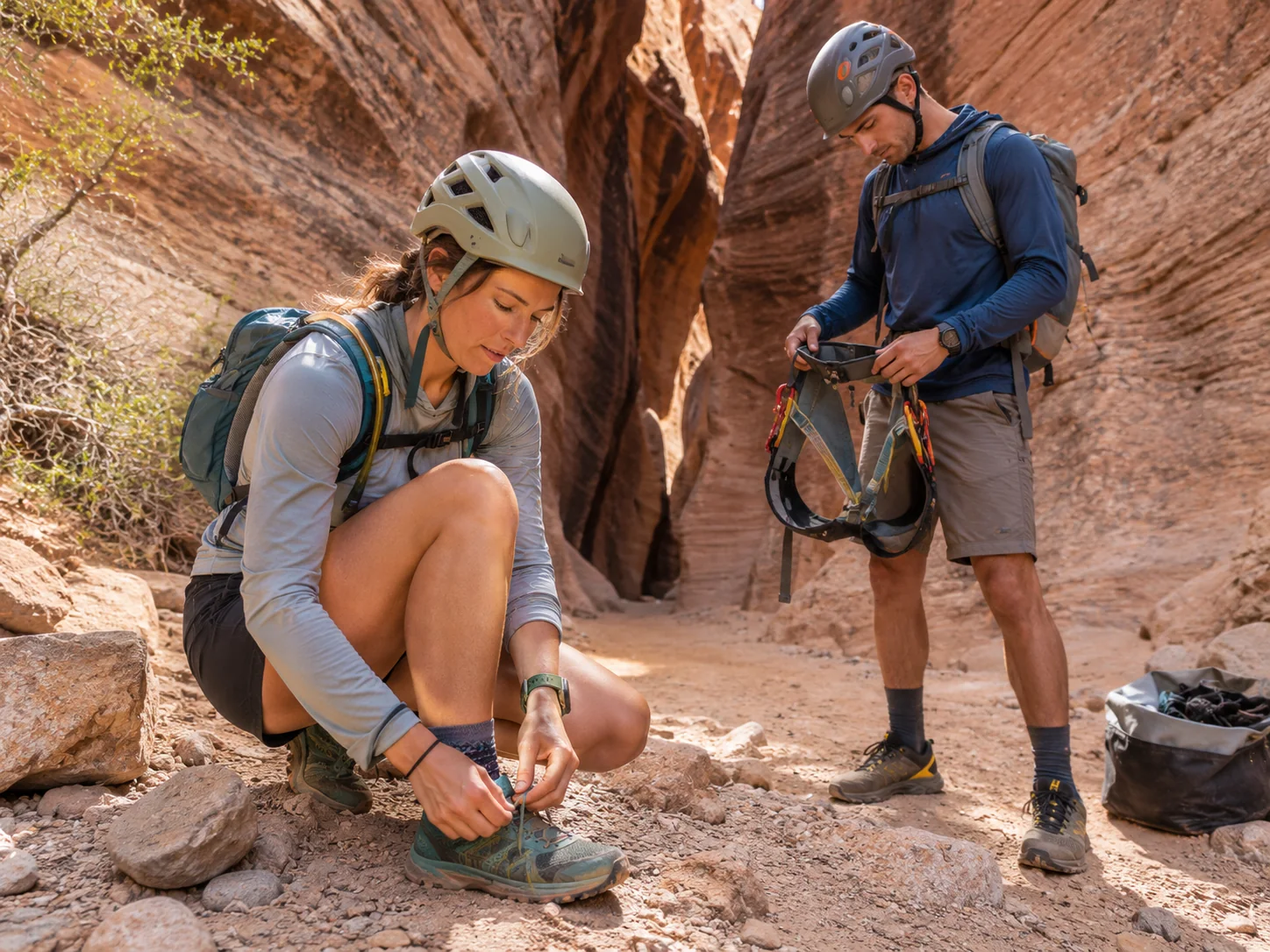
For a first guided canyoneering trip, start with sturdy closed-toe shoes, comfortable quick-drying clothes, sun protection, and a small pack with water and any food the operator asks you to bring. Then change that list based on whether the canyon is dry, wet, or cold. A guided dry slot near Moab does not require the same clothing as a waterfall rappel in Hawaii or a chilly Utah canyon with long swims.
Do not buy a rope, harness, helmet, or descender just because you have booked a beginner trip. Many guide services supply technical equipment, but you must confirm the exact inclusions, shoe requirements, and sizing on your booking. Magnum Expeditions, for example, says it supplies helmets, harnesses, rappel equipment, and gloves while guests bring footwear, water, and snacks. Zion Guru recommends athletic clothing that can get wet, sturdy closed-toe shoes, and sun protection for its guided canyon trips. [S1][S2]
The simplest useful question to send your guide is: “Will we be fully immersed, and what clothing and footwear do you require for the forecast and this exact route?” That one answer will help prevent more packing mistakes than a generic online shopping list.
Start With the Canyon, Not Your Closet
Canyoneering combines some mixture of hiking, scrambling, rappelling, squeezing, and sometimes wading or swimming. The balance changes from one route to another. An easy-looking photograph cannot tell you how much cold water, abrasion, exposure, or uphill hiking awaits. The National Park Service specifically warns that technical canyon routes require appropriate clothing, equipment, and skills; some Zion canyons demand wetsuits or drysuits even during hot weather. [S3][S4]
| Trip format | Wear first | Ask about before booking |
| Mostly dry canyon | Closed-toe trail shoes, breathable long or short layers, sun protection | Abrasion, hot approach hikes, stream crossings, supplied technical gear |
| Wet canyon or waterfall rappel | Secure closed-toe wet-capable shoes, synthetic layers that can get wet | Neoprene socks, wetsuit, footwear rental, swimming and dry storage |
| Cold-water / shoulder-season canyon | Operator-approved thermal protection and layers, suitable footwear | Required wetsuit or drysuit, water temperatures, duration of immersion |
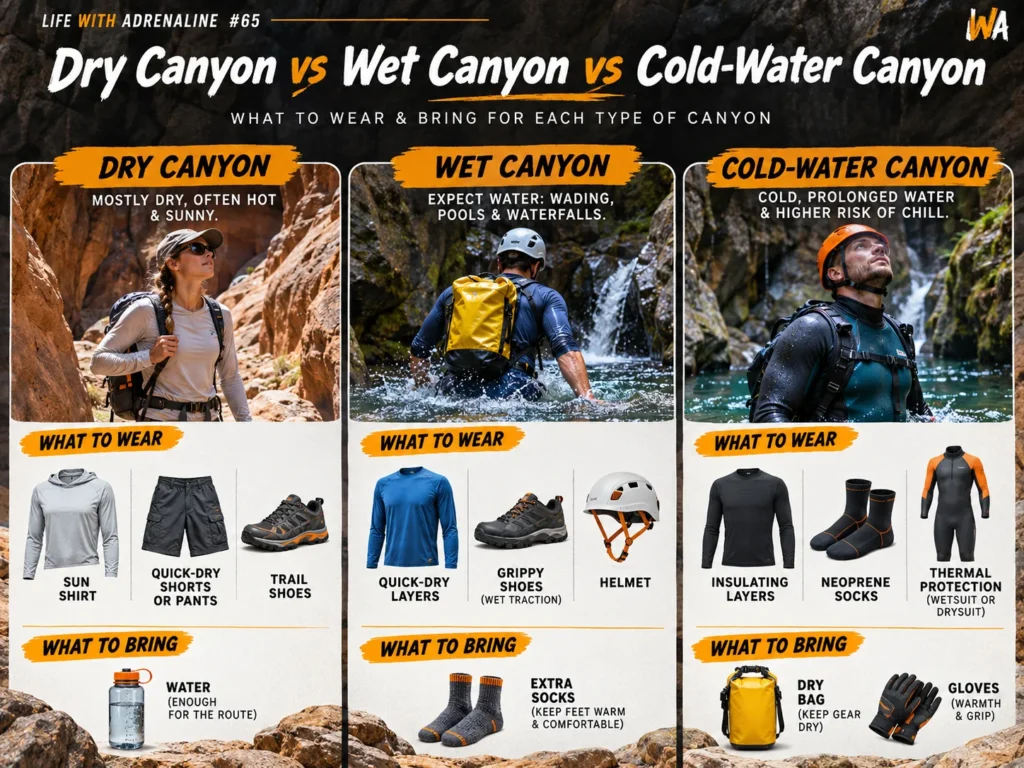
This is a decision guide, not a safety rating. A dry route can still involve steep drops, heat, and flash floods. A short wet outing can be physically demanding. If the operator cannot explain the exact route and required gear, get that information before paying a non-refundable deposit.
Canyoneering Shoes: What Actually Works?
For dry approaches, think traction and fit
A well-fitting trail runner or light hiking shoe is often a practical starting point for a guided dry-canyon trip when the operator allows it. Look for a grippy sole, a secure heel, enough toe protection for rock steps, and comfort during the advertised approach and exit hike. You may rub sandstone, descend loose dirt, or step through shallow water even on a mostly dry itinerary. Brand-new shoes that have never been walked in are a poor experiment on a remote canyon day.
Heavy boots are not automatically better. Their support and protection may help on a specific route, but stiffness, heat, and how the sole behaves on slickrock matter, too. Magnum Expeditions recommends soft, flexible soles such as trail runners or lightweight hiking shoes that can get wet on its Moab outings; that advice belongs to its trips, not every canyon in the country. [S1]
For wet routes, secure footwear matters more than staying dry
In a streambed, traction on smooth rock, a stable fit, and protection from unseen edges become especially important. Your shoes may stay soaked for hours. Closed-toe footwear that stays attached during swimming or current is generally more appropriate than flip-flops or loose water sandals. Zion National Park advises closed-toe shoes and a walking stick for The Narrows because the riverbed is uneven and slippery. The Narrows is a river hike rather than a guided technical rappel, but the footing lesson is relevant to wet approaches. [S5][S6]
Do not assume waterproof boots are the best wet-canyon purchase. If they fill with water, their weight and drainage can be problematic. Some routes are best done in dedicated canyon shoes or rentals sized for neoprene socks. Ask the provider whether its footwear kit is included, optional, or required—and whether a shoe you already own is acceptable.
What about neoprene socks?
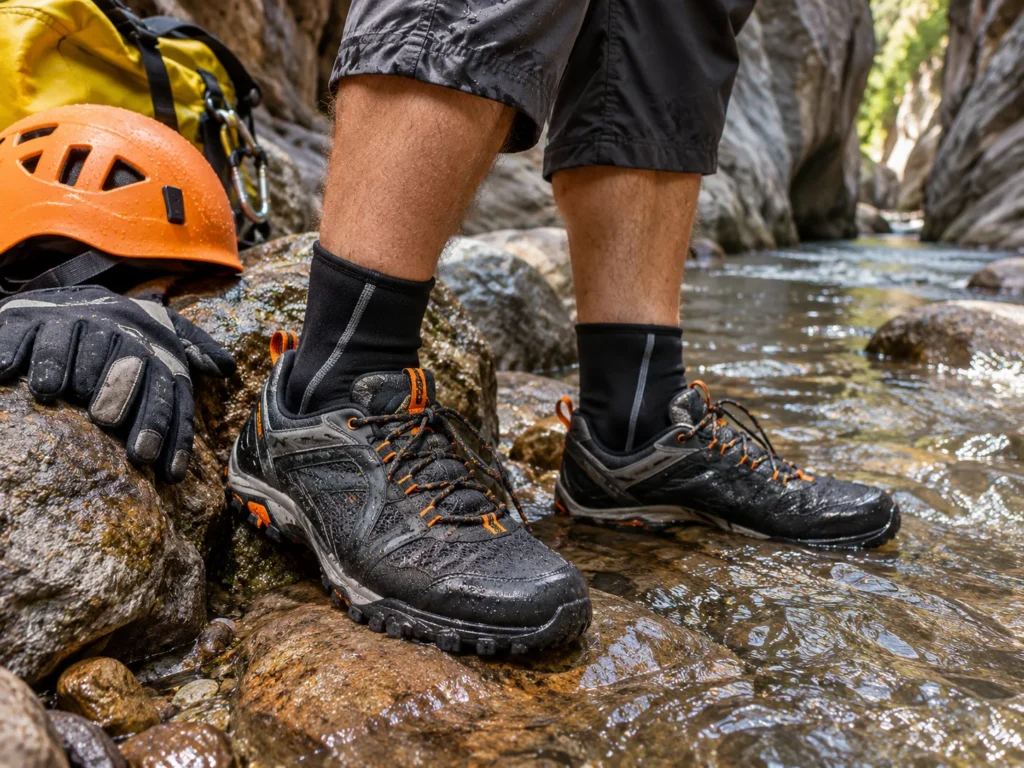
Neoprene socks can provide insulation and reduce direct contact with cold water when appropriately fitted, but they are not a universal requirement. They change shoe fit, so try the entire combination rather than ordering your normal shoe size blindly. The NPS notes that neoprene socks and additional thermal protection may be necessary in the Narrows during colder periods. Cold water can exist even beneath hot desert sunshine. [S6]
If you have sensitive feet or a history of blisters, ask about sock thickness, shoe sizing, sand intrusion, and the expected time spent wet. A liner that works on a two-hour outing may feel different during a full day of walking. Do not rely on a generic temperature threshold to decide whether cold-water equipment is needed; use the guide’s route-specific requirement.
Shirts, Pants, and Base Layers: Move Freely and Dry Reasonably Fast
A breathable, quick-drying synthetic top paired with flexible hiking pants, leggings, or shorts is a good starting point for many beginner trips. Your clothing needs to let you step high, bend your knees, lean back in a harness, and fit underneath a helmet and any thermal layers. Avoid bulky waistbands or loose fabric that can bunch up under the harness or interfere with equipment.
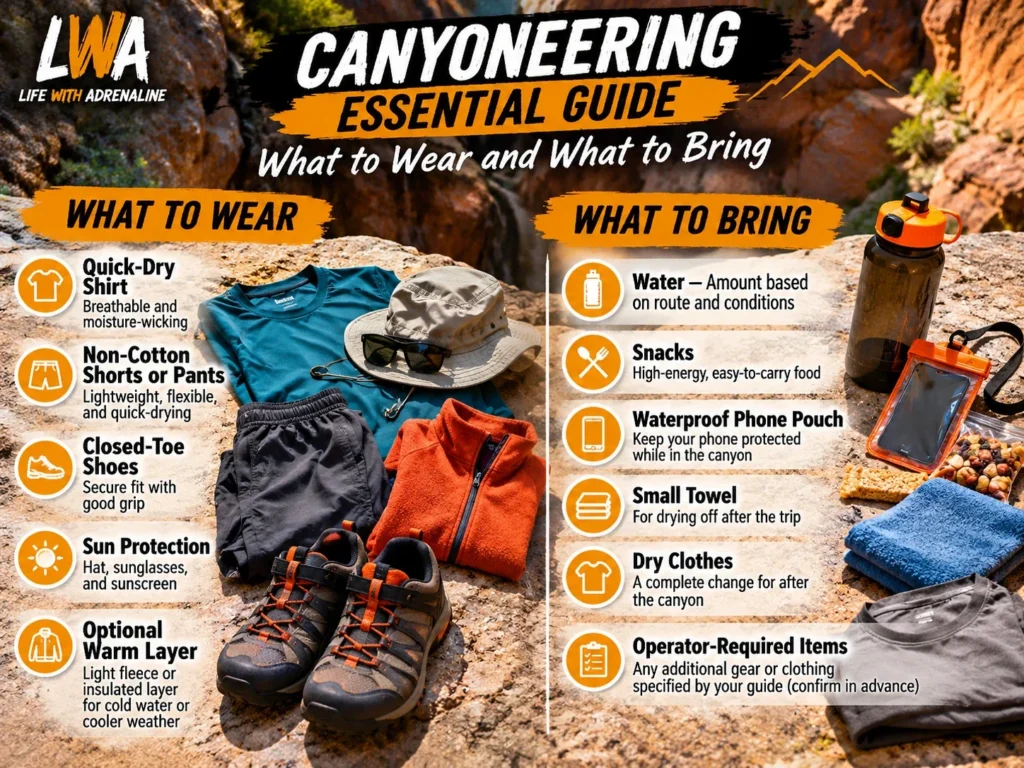
For sun-exposed approaches, a light long-sleeve sun shirt and lightweight pants can be more useful than bare skin. They limit direct sun exposure and can reduce minor scrapes when you brush rock, though ordinary fabric is not protective climbing equipment. In a wet canyon, choose fabrics that remain manageable after immersion. Cotton holds moisture and can be uncomfortable in cold, shaded canyon sections; don’t treat a warm parking lot as proof the water will be warm. REI’s hiking clothing guidance emphasizes durable, moisture-managing layers and footwear appropriate to terrain. [S7]
For shorts, check whether your harness will rub exposed thighs and whether the route involves sitting or sliding on abrasive rock. For pants, avoid loose hems that catch underfoot. If you are wearing a wetsuit or drysuit, follow the provider’s instructions for the layers underneath; ordinary outerwear should not be improvised as a substitute for thermal protection.
Dry Canyon vs. Wet Canyon vs. Cold Canyon: The Packing Difference
A dry sandstone canyon in summer may call for sun protection, breathable layers, plenty of water, and sturdy shoes. But desert weather still changes quickly, and a route may have a shaded section or unexpected water. On a hot day, prioritize carrying enough water and protecting skin; do not rely on clothing alone to manage heat.
A wet canyon means planning for immersion rather than just a chance of rain. A secure footwear system, insulation if required, and protection for genuinely dry essentials are more important than keeping your outer shirt spotless. Some waterfall-rappelling operators provide technical gear and specific water-ready equipment, but inclusions vary by product. Ask whether you should arrive wearing a swimsuit, whether they supply a wetsuit, and where dry clothes can be kept for the trip home.
A cold canyon is a separate preparation decision. The NPS states that wetsuits—or even drysuits—are necessary on many Zion canyon routes despite high air temperatures. The Park Service also describes the technical Subway top-down route as requiring cold-water protection even in warm weather. That is a reason to follow trip-specific guidance, not a reason for a beginner to buy a drysuit for a casual first guided booking. [S3][S8]
Make two lists before you leave: one for what you will wear inside the canyon and one for what must be dry at the finish. Dry socks, a change of clothes, and a towel can make the return drive much more pleasant. Confirm whether your personal dry bag travels through the canyon or stays in the vehicle, and whether there are size and weight limits.
Do You Need Canyoneering Gloves, a Helmet, and a Harness?
On a commercial beginner trip, let the guide specify and fit the technical system. A helmet, harness, rappel device, ropes, and sometimes gloves are typically provided by operators that include technical equipment, but the exact kit varies. Magnum Expeditions explicitly lists its technical gear; verify the current inclusions for any other company rather than assuming the same package. [S1]
Gloves can help when handling rope under instruction, but a particular material or thickness is not universally appropriate. Oversized gloves can compromise dexterity; the provider may supply a tested style and ask you not to substitute your own. Follow its instructions during the equipment check and ask for an adjustment if a strap pinches, rides up, or feels loose. A photo or diagram on a blog is not a rope-handling tutorial. For a related look at how clothing and equipment interact with a different harness-based activity, see our via ferrata gear and safety guide; the technical systems are not interchangeable.
Avoid bringing technical gear bought solely from an online list unless the operator approves it. Equipment compatibility, fitting, condition, and route technique matter more than owning a large kit. The goal of a first guided tour is to arrive prepared for your role as a participant, not to self-assemble the system your guide is responsible for managing.
What to Bring in Your Small Daypack
Your bag should fit the route and the guide’s rules. Large packs can be awkward in slots, on rappels, or during swimming, and some operators specify exactly what can be carried. For a guided dry-canyon half-day, the personal kit may be quite simple: water, snacks if required, sun protection, necessary personal medication in appropriate storage, and a compact warm or wind layer if conditions warrant. Magnum Expeditions asks guests to bring their own food and snacks and lists at least 3 liters of water per person on its FAQ; that is an example of one operator’s instruction, not a universal hydration prescription. [S1]
For a wet or long day, ask whether you need a dedicated dry bag, insulated layer, headlamp, additional food, or replacement socks. Keep essentials such as identification, keys, and your phone protected according to the guide’s instructions. Waterproof pouches can fail; a dry bag is not proof that electronics will survive immersion. If your trip also includes river rafting, our what to wear whitewater rafting guide covers that separate activity’s clothing considerations.
| Pack or wear | Usually your responsibility | Confirm with guide |
| Closed-toe shoes and suitable socks | Yes, unless rental footwear is supplied | Approved soles, wet use, neoprene sizing |
| Breathable clothing and extra dry layers | Usually | Temperature, wetsuit/drysuit instructions |
| Water, food, sun protection | Usually | Quantity, bag size, food restrictions |
| Helmet, harness, rope system | Frequently supplied on guided trips | Exact inclusions and fitting |
| Specialty footwear, wetsuit, dry bag | Varies widely | Included, rented, or required separately |
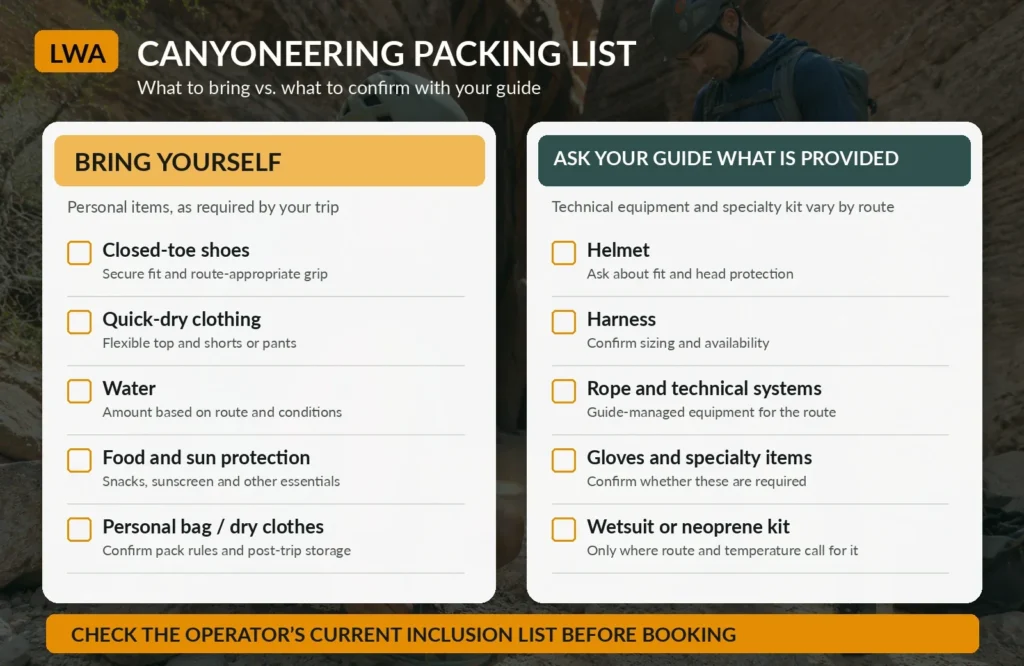
Don’t make the list longer just because more products exist. One properly fitted pair of shoes matters more than three fashionable backup accessories that never leave your car.
Common Clothing Mistakes That Make a Canyon Day Harder
The first mistake is treating every canyon like a hike on a marked trail. Rappelling can expose clothing and shoes to very different stresses from ordinary walking. Even a route sold as beginner-friendly may require scrambling, navigating tight spaces, or getting fully wet. Read the actual itinerary rather than choosing your outfit from the operator’s hero photo.
The second mistake is wearing loose sandals or slippery everyday sneakers when the route calls for secure, grippy, closed-toe footwear. The third is wearing an outfit chosen for the forecast high temperature without accounting for canyon shade and cold water. A fourth is buying technical hardware before asking what the company provides. A fifth is packing a heavy bag that cannot be used on the advertised route.
Finally, avoid assuming a guide can solve every clothing mismatch on arrival. Many providers can loan or rent certain items, but not every size, footwear model, or thermal layer is guaranteed. If your only acceptable shoes are unavailable at check-in, the trip may not be appropriate that day. Confirm before traveling, especially if you have unusual sizing needs.
A Ten-Minute Pre-Trip Packing Check
Start by opening the actual operator confirmation, not a generic destination article. Find the route name and meeting time. Then check these nine questions:
- Terrain: Is this a dry canyon, wet canyon, or mixed route with possible swimming?
- Shoes: Are closed-toe trail shoes accepted, or are canyon shoes or rentals required?
- Socks: Are neoprene socks needed, and is footwear sized for them?
- Layers: What is the expected air and water exposure, including shade and wind?
- Technical gear: Which helmet, harness, ropes, devices, and gloves are supplied?
- Personal kit: How much water, food, and sun protection should I carry?
- Bag rules: May I bring a daypack or dry bag on the technical section?
- Fit: Are there clothing, weight, size, or equipment-fit restrictions?
- Afterward: Where do dry clothes, a towel, keys, and valuables stay?
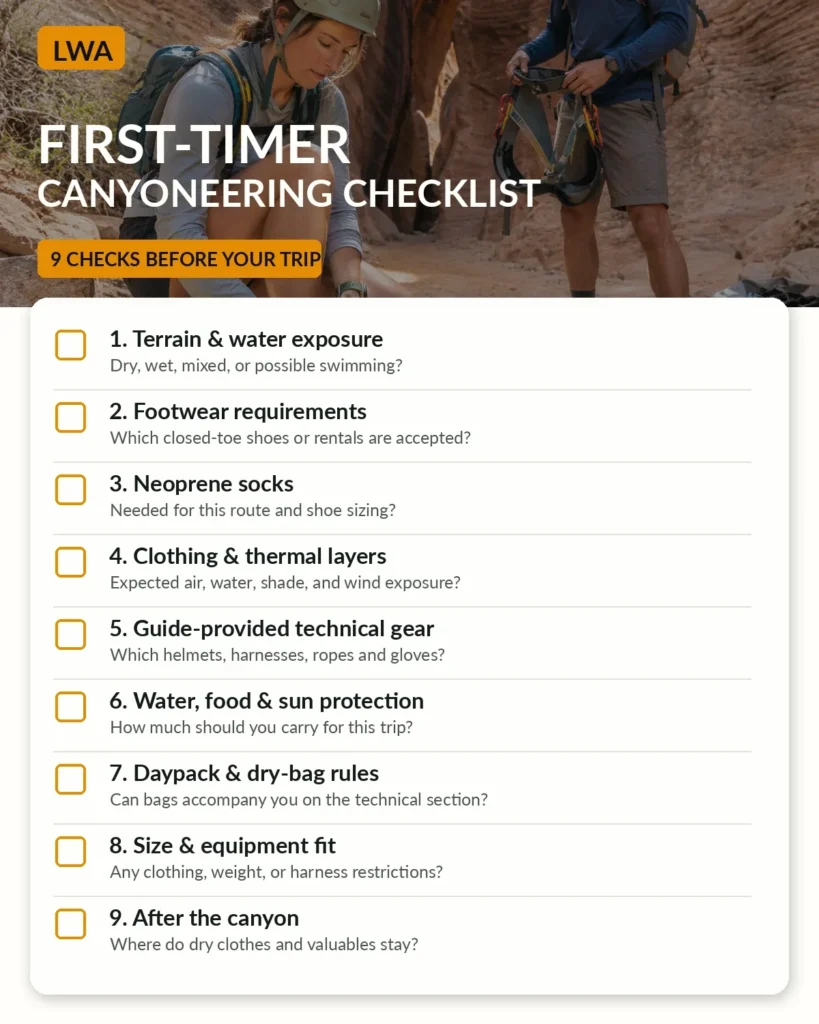
If two answers are unclear, email the guide with the route name and trip date. Better questions reduce shopping, guesswork, and day-of surprises.
Frequently Asked Questions
Can I wear regular sneakers canyoneering?
Sometimes, if they are sturdy, well-fitting, closed-toe shoes with adequate traction and the operator allows them. Slippery fashion sneakers or shoes that will not stay secure when wet are poor choices. Confirm the shoe policy for the exact route rather than assuming an ordinary gym shoe will be accepted.
Are hiking boots better than trail runners for canyoning?
Not automatically. A dry approach may suit supportive hiking footwear, while flexible, grippy shoes can be preferable on some scrambling or wet routes. The right choice depends on fit, terrain, water, and the operator’s instructions. Ask whether footwear needs to drain and whether rental canyon shoes are available.
Do I need a wetsuit in summer?
Possibly. The outside air can be hot while the canyon is shaded and water remains cold. Zion National Park specifically warns that some technical canyons require thermal protection even in warm conditions. Your guide or route plan should determine what is required. [S3][S8]
Can I wear cotton clothes?
For a fully dry, short approach, cotton may be wearable but is rarely the most versatile choice. When clothes become wet and conditions cool, moisture-holding fabric can create discomfort. Quick-drying synthetic fabrics and appropriate insulating layers are generally more adaptable; do not use them in place of a required wetsuit or drysuit.
Should I buy my own helmet or rappelling gear for a first trip?
Usually not before confirming the guide’s equipment policy. Many beginner operators supply the technical kit and perform fitting and instruction. Owning gear does not mean you know how to use it safely or that it is compatible with their procedures.
The Bottom Line: Dress for the Route You Booked
A useful canyoneering packing list starts with secure shoes, clothes that let you move, water and weather protection, and a clear understanding of which technical gear the operator provides. Everything else follows the route. For a dry Moab introduction, the priority might be breathable hiking layers and a good approach shoe. For a cold wet canyon, thermal protection and footwear compatibility may dominate the entire decision.
If you are still comparing places, explore our best canyoneering trips in the USA for beginners. For desert-specific expectations, see Moab canyoneering for beginners; for permissions and the differences between park routes and guided experiences nearby, read Zion canyoneering for beginners. A route-specific email to your guide is still the last step before packing.
Sources and Verification
Guidance and operator packing pages checked November 17, 2026. Equipment requirements, water conditions, access rules, and operator inclusions may change. Confirm with your operator and the managing land agency before travel.
[S1] Magnum Expeditions — Frequently Asked Questions. https://magnumexpeditions.com/faqs/
[S2] Zion Guru — Canyoneering Guided Tours. https://www.zionguru.com/tours/canyoneering
[S3] National Park Service — Zion Wilderness Safety. https://www.nps.gov/zion/planyourvisit/wilderness-safety.htm
[S4] National Park Service — Canyoneering in Zion. https://www.nps.gov/zion/planyourvisit/canyoneering.htm
[S5] National Park Service — The Narrows. https://www.nps.gov/zion/planyourvisit/thenarrows.htm
[S6] National Park Service — The Narrows Safety. https://www.nps.gov/zion/planyourvisit/narrowssafety.htm
[S7] REI — How to Choose Hiking Clothes. https://www.rei.com/learn/expert-advice/how-to-choose-hiking-clothes.html
[S8] National Park Service — Subway Top Down. https://www.nps.gov/zion/planyourvisit/subway-top-down.htm