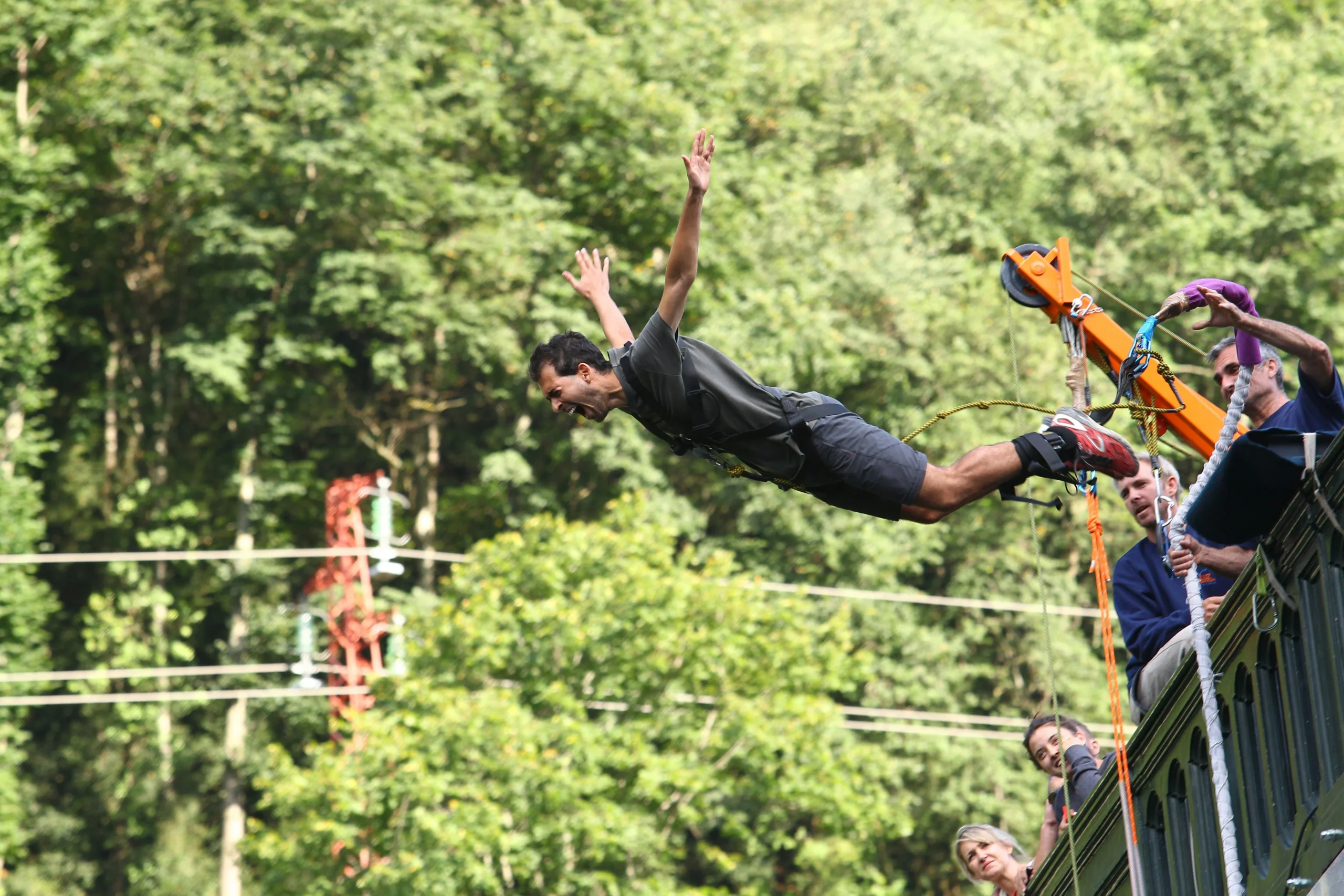
Bungee Jumping Requirements: Age, Weight, Health, and What to Wear
You don’t need to be an experienced athlete to try bungee jumping. But being excited about the jump isn’t the same as being eligible to do it.
Before booking, you need to check four things: your age, your weight, your health, and the specific operator’s participation rules. You also need clothing that works with the harness and enough physical ability to reach the jump platform.
There is no single set of bungee jumping requirements across the United States. Rules vary by state, operator, equipment setup, and location. Someone who qualifies at one site may not qualify at another.
This guide explains the requirements first-time jumpers should verify, how real U.S. operators differ, and how to prepare without overlooking an important restriction.
Bungee Jumping Requirements at a Glance
Here’s what to check before choosing a location:
- Age: Minimum ages vary, with some operators accepting jumpers as young as 12 and certain state regulations requiring participants to be at least 16 or 18.
- Weight: Published operating ranges differ. Examples include 80–300 pounds and 90–265 pounds, with some operator-specific exceptions.
- Health: Pregnancy, cardiovascular conditions, neurological disorders, and certain injuries may prevent participation.
- Fitness: Some jumps require little walking, while others involve miles of hiking over difficult terrain.
- Clothing: Comfortable athletic clothing is generally practical, but footwear and personal-item rules vary.
- Experience: Many commercial operators accept beginners without previous bungee jumping experience.
The key distinction is between general eligibility and eligibility for the exact experience you want to book.
A published age or weight range is a starting point, not a guarantee that an individual participant will be accepted.
How Old Do You Have to Be to Bungee Jump?
There is no universal minimum age for commercial bungee jumping throughout the United States.
Some operators accept younger teenagers. Others must follow state requirements that set higher minimum ages.
Real examples of bungee jumping age requirements
| Location or rule | Minimum age | Requirements for minors |
| Bungee America, California | 12 | Guardian-signed waiver for participants under 18 |
| Great Bungee, West Virginia | 16 | Parent or legal guardian involvement, including onsite presence |
| Pennsylvania regulations | 16 | Parent or guardian consent and onsite presence |
| Illinois regulations | 18 | Participants under 18 are not eligible under the cited rule |
Sources: Bungee America, Great Bungee, Pennsylvania Code, and Illinois Administrative Code. Requirements checked October 2026.
The California and West Virginia entries describe specific commercial operators. The Pennsylvania and Illinois entries describe state regulatory requirements; they do not establish that a particular commercial jump is available there.
That distinction matters when planning a trip.
Can you bungee jump at 12, 14, or 16?
Potentially, depending on the location.
Bungee America’s Bridge to Nowhere operation accepts jumpers from age 12. The Great Bungee Company in Harpers Ferry requires participants to be at least 16.
Illinois regulations governing covered bungee jumping operations establish a minimum age of 18.
For anyone under 18, parental consent is another important requirement.
Some operators require a signed waiver. Others also require a parent or legal guardian to attend in person.
For example, Pennsylvania regulations require the parent or guardian to be present at the approved jump site and complete the authorization there.
Don’t assume that an online signature is sufficient. Confirm the operator’s current consent and identification requirements before traveling.
Is there a maximum age for bungee jumping?
Not necessarily.
Bungee America states that it has no maximum age limit. However, its Bridge to Nowhere experience includes a rugged 10-mile round-trip hike.
That creates a practical issue separate from age.
Can you meet the physical demands of reaching the jump platform, complete the required procedures, and satisfy the operator’s health restrictions?
Older participants shouldn’t assume that age alone disqualifies them. Equally, the absence of a published maximum age does not amount to medical clearance.
If you have relevant health concerns, discuss the activity with a qualified healthcare professional before making a reservation.
What Is the Weight Limit for Bungee Jumping?
Bungee jumping weight limits depend on the equipment, cord configuration, harness system, and operating procedures used at each location.
Participant weight affects the way the jumping system must be configured. Different operations therefore establish different accepted ranges.
Real U.S. bungee jumping weight limits
| Operator | Minimum weight | Published maximum |
| Bungee America, California | 90 lb | 265 lb standard; exceptions by special arrangement |
| Great Bungee, West Virginia | 80 lb | 320 lb on main pages; 300 lb on another accessible FAQ |
| Central Oregon Bungee Adventures | 80 lb | 300 lb |
Operator-published requirements checked October 2026. These figures are site-specific and may change.
Bungee America states that participants over its standard 265-pound maximum may be considered through a special arrangement, subject to operator approval and an additional fee.
Central Oregon Bungee Adventures publishes an 80–300-pound range.
Great Bungee’s current main FAQ and jump page list 320 pounds, but another accessible FAQ still lists 300 pounds. Until the operator confirms which figure governs a particular reservation, anyone approaching or exceeding 300 pounds should seek written clarification.
Can you bungee jump if you’re under the minimum weight?
Not if you fall below the operator’s approved minimum for that jump.
Minimum weight requirements are related to the equipment and operating setup. They are not optional suggestions.
Never try to compensate for being underweight by carrying extra objects or misrepresenting your weight.
Instead, ask whether the operator offers another approved experience appropriate for your circumstances.
What if you’re over the maximum weight?
Another operator may have a higher published limit, but that does not automatically establish eligibility.
For example, someone weighing 280 pounds exceeds Bungee America’s standard maximum but falls within Central Oregon Bungee Adventures’ published range.
That individual would still need to satisfy all applicable harness, health, and operating requirements.
If your weight is near an operator’s published limit, provide your accurate weight before booking and ask whether additional restrictions apply.
Will they weigh you before the jump?
You should expect your weight to be checked or otherwise verified as part of the operator’s procedures.
Weight is important for selecting or configuring the appropriate jumping equipment.
Do not rely on an estimate from several months earlier, particularly if your weight has changed.
If the operator specifies a jump weight that includes clothing or equipment, follow that definition.
Medical Conditions That Can Prevent Bungee Jumping
Bungee jumping involves acceleration, deceleration, changes in body position, and forces transmitted through the harness and body.
These forces may make participation unsuitable for people with certain medical conditions.
Some restrictions are mandatory under applicable regulations, while others depend on an operator’s policy and an individual’s circumstances. Medical advice does not override a legal prohibition or an operator’s decision to decline participation.
The following conditions appear in U.S. regulatory requirements or commercial operator restrictions.
Heart conditions and high blood pressure
Cardiovascular conditions are particularly important to disclose.
Illinois regulations list heart conditions and high blood pressure among medical conditions that disqualify participants under the applicable rule.
Great Bungee also identifies hypertension among its restrictions.
If you have a diagnosed cardiovascular condition, do not assume that feeling well during everyday activities means a bungee jump is appropriate.
Review the operator’s policy and seek medical advice before booking.
Pregnancy
Pregnancy is expressly listed as a disqualifying condition in Illinois regulations and as a restriction by Great Bungee.
If you’re pregnant, do not assume that previous jumping experience or general physical fitness changes those restrictions.
Follow the applicable operator’s rules and seek appropriate medical guidance.
Epilepsy and neurological conditions
Epilepsy and neurological disorders are specifically addressed in Illinois regulations.
Great Bungee also lists epilepsy among its restrictions.
If you have a seizure disorder or another neurological condition, an online eligibility guide cannot determine whether jumping is appropriate.
The applicable regulations, operator requirements, and medical circumstances must be considered.
Back, neck, joint, and ligament problems
A previous injury may affect your suitability for bungee jumping, particularly if it involves your spine, neck, joints, or supporting ligaments.
Illinois regulations identify neck, back, and leg injuries or disabilities among disqualifying conditions.
Great Bungee also lists skeletal, joint, and ligament problems.
Even if an injury has healed, its nature and your recovery history may matter.
Discuss relevant injuries with the operator before booking rather than assuming they are no longer important.
Asthma and respiratory conditions
Some operators restrict participation for serious respiratory conditions.
Great Bungee specifically identifies extreme asthma or respiratory disorders.
This does not mean that every person with asthma is automatically disqualified from every U.S. bungee operation.
It means that the condition must be considered in relation to the operator’s actual rules and appropriate medical advice.
Recent surgery, eye conditions, and medication
Recent surgery, significant eye conditions, a history of fainting, or medications that affect alertness, balance, or cardiovascular function are reasons to seek further guidance before booking.
These are additional screening considerations, not a universal list of automatic disqualifications.
Tell the operator about relevant circumstances and consult a qualified healthcare professional when appropriate.
A signed participation waiver is not medical clearance. It does not establish that a particular jump is medically suitable for you.
Do You Need to Be Physically Fit to Bungee Jump?
You generally don’t need specialized athletic training for a commercial beginner bungee jump.
But the physical demands of the overall experience can vary substantially.
The jump itself may last only seconds. Getting to the platform, completing the required procedures, and returning afterward can take much longer.
Consider two very different U.S. experiences.
Harpers Ferry: A more accessible site visit in terms of travel effort
Great Bungee operates at a private quarry in Harpers Ferry, West Virginia.
The operator asks participants to arrive 45 minutes before their scheduled appointment.
It estimates that registration, briefing, and the jump process typically take between 45 minutes and two hours, depending on the group and circumstances.
This makes the experience different from a wilderness bungee location requiring a lengthy hike.
However, a shorter approach does not automatically establish accessibility for every mobility limitation.
Contact the operator if you have concerns about stairs, standing, moving around the platform, or other physical requirements.
Bridge to Nowhere: The hike is part of the challenge
Bungee America’s Bridge to Nowhere location in California requires a five-mile hike in each direction.
The route follows rocky and rugged terrain through the Angeles National Forest.
According to the operator, participants cross the San Gabriel River several times on the way to the bridge. The group typically spends about two hours hiking to the location at a brisk pace.
That means the full experience can be physically demanding even though the actual jump lasts only a short time.
Before booking, consider whether you can comfortably complete approximately 10 miles of hiking, including uneven terrain, river crossings, and changing outdoor conditions.
Check the access requirements first
Before choosing a location, ask:
- Can I reach the jump platform using the required route?
- Is there a long hike, steep staircase, or difficult approach?
- How much walking and standing should I expect?
- Are there mobility or accessibility restrictions?
- What happens if I cannot complete the approach or return journey?
A short jump does not necessarily mean an easy day.
For a broader comparison of locations, see our guide to the best bungee jumping places in the USA.
What Should You Wear for Bungee Jumping?
Comfortable, well-fitting athletic clothing is usually a practical starting point.
The best outfit is one that works with the operator’s harness and does not interfere with its equipment.
However, there is no universal dress code for all U.S. bungee jumping locations.
Clothing: Comfortable and secure
A practical outfit might include:
- A fitted athletic shirt
- Comfortable shorts or athletic pants
- Weather-appropriate layers
- Clothing without dangling accessories
- Secure footwear appropriate for the site
Avoid bulky or loose clothing that could interfere with harness placement.
The operator may require you to change, adjust, or remove certain items before jumping.
Shoes: Check the operator’s exact policy
Footwear requirements vary considerably.
Great Bungee requires suitable shoes or sandals with a secure strap and does not permit flip-flops or boots.
Bungee America allows participants to jump with or without shoes, but getting to its Bridge to Nowhere site is a separate matter.
For the Bridge to Nowhere hike, Bungee America requires shoes suitable for rocky terrain and river crossings.
The operator recommends sturdy hiking or running shoes that can get wet and specifically advises against sandals, flip-flops, and flimsy footwear on the approach trail.
It also advises bringing dry footwear and socks for later.
Because the group does not stop to change shoes at the river crossings, choosing appropriate hiking footwear matters before the trip begins.
Central Oregon Bungee Adventures permits jumping barefoot or with shoes, but its full-body harness setup has additional clothing restrictions.
The lesson is simple: check the requirements for both the jump and the journey to the platform.
Jewelry, phones, glasses, and cameras
Loose objects can fall during a jump or interfere with equipment.
Follow the operator’s personal-item policy.
Great Bungee asks participants to empty their pockets and leave personal cameras behind.
Bungee America permits certain mounted cameras, but handheld cameras are not allowed during the jump, and the jump master makes the final decision.
Central Oregon Bungee Adventures asks participants to remove rings and jewelry and tie back long hair.
If you wear prescription glasses, a smartwatch, or another item you need to keep with you, ask the operator how it should be handled.
Do not assume that an accessory permitted at one site will be allowed at another.
What Happens During the Bungee Jumping Safety Check?
A commercial bungee jump should involve more than simply stepping onto a platform and attaching a cord.
Although procedures differ, participants can generally expect several preparation stages.
1. Registration and eligibility screening
The operator may check your identification, age, weight, signed waiver, and relevant medical information.
Participants under 18 may require additional consent procedures.
Answer screening questions accurately.
If you are uncertain whether a health condition is relevant, raise the question before equipment fitting begins.
2. Safety briefing
Staff explain the procedures you need to follow before, during, and after the jump.
These may include positioning instructions, signals, and recovery procedures.
Listen carefully and ask questions if anything is unclear.
You should not improvise a jumping technique or body movement that staff have not approved.
3. Harness and equipment preparation
The operator selects and fits equipment according to its approved procedures.
Some locations offer different jumping formats.
Great Bungee, for example, advertises both ankle-harness and body-harness jumps.
However, the presence of a particular harness design does not independently demonstrate that an operation is safe.
Equipment maintenance, inspection, staff training, site conditions, and operating procedures all matter.
4. Final instructions and the jump
Before leaving the platform, follow the jump master’s instructions.
Do not change your planned jump technique without permission.
After the jump, remain attentive to the recovery instructions.
If staff delay or cancel a jump because of weather, equipment concerns, or participant eligibility, respect the decision.
Seven Questions to Ask Before Booking
A short eligibility check can help prevent disappointment at the jump site.
- What are your current minimum age and weight requirements? Ask about your circumstances, including any exceptions.
- Which medical conditions or medications require additional screening? Request the operator’s current restrictions.
- What documents are required? Confirm identification, waivers, and parental consent.
- How do participants reach the platform? Ask about hiking distances, stairs, and accessibility.
- What clothing and footwear are allowed? Include the approach route, not just the jump.
- Can I bring a camera or personal accessories? Confirm what must be removed or secured.
- What happens if I cannot jump? Ask about cancellations, rescheduling, and refunds before paying.
That final question matters because booking conditions vary.
An operator declining your participation does not automatically mean you will receive a refund.
If you’re comparing the total cost of different experiences, read our guide to bungee jumping costs in the USA before choosing a package.
Common First-Time Mistakes
Most preparation problems are avoidable.
Assuming every U.S. operator has the same age limit. Legal and company requirements can differ substantially.
Relying on an approximate weight. Accurate weight information is important for eligibility and equipment setup.
Ignoring health restrictions because the jump is short. A brief activity can still involve substantial physical forces.
Choosing an outfit based only on photos. Clothing must work with the actual harness and operator rules.
Overlooking the approach to the platform. A jump site may require a demanding hike or other physical effort.
Assuming cameras are always permitted. Camera and accessory policies vary.
Booking before checking restrictions. Eligibility should be confirmed before payment.
If you’re choosing between different height-based adventures, our bungee jumping vs. skydiving comparison explores how the experiences differ.
Frequently Asked Questions
Can you bungee jump if you are overweight?
Possibly. Eligibility depends on the operator’s weight range, harness requirements, health restrictions, and participant screening. There is no single nationwide weight limit.
If you’re near or above a published maximum, seek confirmation directly from the operator.
Can you bungee jump if you wear glasses?
Possibly, depending on the operator’s policies for eyewear and loose items.
Ask whether glasses can be worn, whether they require an approved retention method, or whether they must be removed.
Can you bungee jump with a fear of heights?
Fear of heights does not automatically make someone medically ineligible.
However, the experience may be much more challenging for someone with intense fear or panic symptoms.
Discuss your concerns with the operator. Do not feel obligated to jump simply because you’ve already paid.
Can you bungee jump without training?
Many commercial operations accept first-time jumpers without prior bungee jumping experience.
You must still complete the operator’s briefing, screening, and equipment procedures.
Can two people bungee jump together?
Some people expect a tandem option similar to certain skydiving experiences.
However, tandem bungee jumping is not universally offered.
Bungee America and Great Bungee do not permit tandem jumping in their standard operations.
Check the exact format before booking.
Is there a maximum height for bungee jumping?
Some operators may have harness-fit or body-size restrictions even when no specific maximum height is prominently advertised.
If you’re unusually tall or concerned about harness fit, ask the operator for confirmation.
Final Checklist: Are You Ready to Book?
Before paying for your first bungee jump, make sure you have:
- Confirmed the minimum age and identification requirements.
- Checked your accurate weight against the operator’s rules.
- Reviewed relevant medical restrictions.
- Considered the physical demands of reaching the site.
- Chosen suitable clothing and footwear.
- Checked the rules for glasses, cameras, and personal belongings.
- Understood the cancellation and refund conditions.
Bungee jumping doesn’t require you to become a professional athlete. It requires you to choose an appropriate operation, provide accurate information, and follow the instructions given on the day.
The most useful question isn’t simply whether you’re brave enough to jump.
It’s whether you’ve confirmed that this particular jump is suitable for you.
Sources
The following official operator and regulatory sources were reviewed on October 12, 2026. Policies may change.
- Bungee America — Frequently Asked Questions. Age, weight, hiking, clothing, and camera policies.
- Bungee America — Details About Your Day. Access route and footwear requirements.
- Bungee America — Parent Consent Form. Requirements for participants under 18.
- The Great Bungee Company — FAQs. Age, weight, medical restrictions, and participation procedures.
- The Great Bungee Company — The Jump. Published requirements and harness options.
- The Great Bungee Company — Additional FAQ. Conflicting maximum weight information.
- Central Oregon Bungee Adventures — FAQ. Weight, clothing, footwear, and equipment policies.
- Pennsylvania Code — § 139a.34. Jumper restrictions.
- Illinois Administrative Code — Section 6000.340. Medical restrictions and age requirements.