Shark Cage Diving Requirements: Swimming, Age, Seasickness, and What to Bring
You do not need to be a scuba diver—or even a confident swimmer—to join some shark cage diving tours. But you do need to meet the particular operator’s rules, be able to use its entry system, and prepare for a boat trip that may feel rougher than you expect.
For first-timers, the most useful questions are simple: Can I get into and out of the cage? Is my child old enough? What if I get seasick? What should I bring? The answers differ by location and tour format, so this guide uses published U.S. operator policies as examples rather than inventing one nationwide rule.
Shark Cage Diving Requirements at a Glance
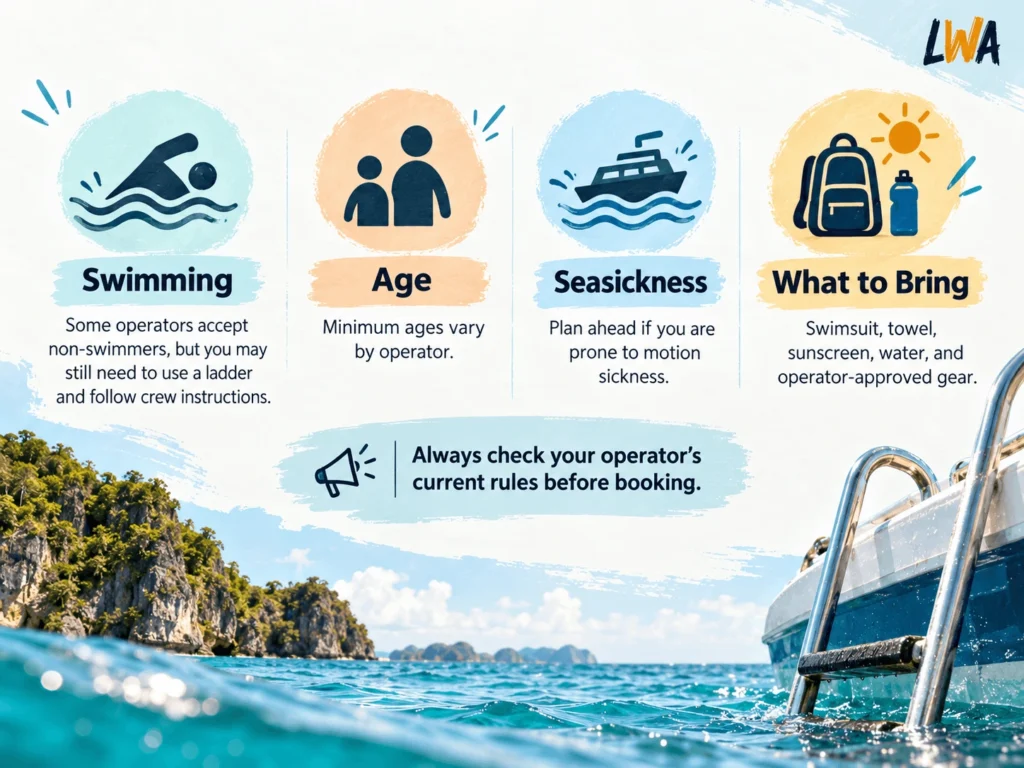
- Swimming: Some surface-cage operators welcome non-swimmers, provided they can enter the cage and follow instructions.
- Age: There is no universal U.S. minimum; operators have different child, infant and observer policies.
- Fitness and mobility: Climbing a ladder and handling boat movement may matter more than swimming distance.
- Health: Confirm relevant medical conditions, medication, pregnancy considerations and accessibility needs directly.
- Seasickness: Offshore boats can rock even when the weather seems pleasant; prepare before departure.
- Gear: Many Oahu surface-cage tours provide masks and snorkels, but you should bring swimwear, a towel and sun protection.
A useful first decision is whether you are booking a floating surface cage, a more specialized offshore cage expedition, or an aquarium encounter. Their access, age, duration and equipment requirements are not interchangeable.
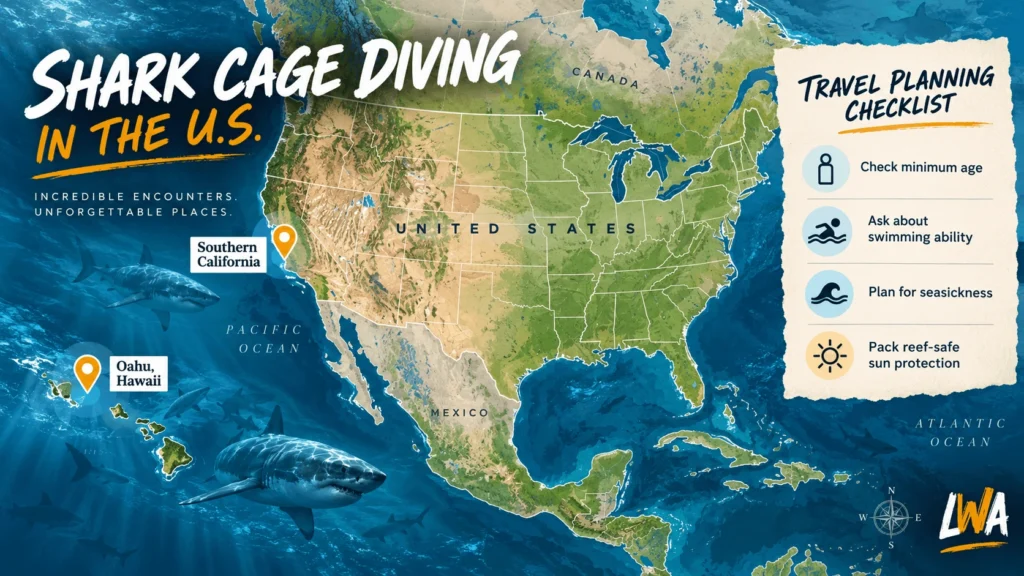
If you are comparing locations and encounter formats, start with our best shark cage diving experiences in the USA. The destination guide complements the eligibility rules explained here.
Do You Have to Know How to Swim for Shark Cage Diving?
Not always. North Shore Shark Adventures explicitly advertises “No swimming required” for its Oahu cage tour. Hawaii Shark Encounters says that many of its participants cannot swim and that no scuba or snorkeling experience is necessary. These are specific surface-cage operations, not a promise about every shark-diving experience. [S1][S3]
What non-swimmers actually do in a surface cage
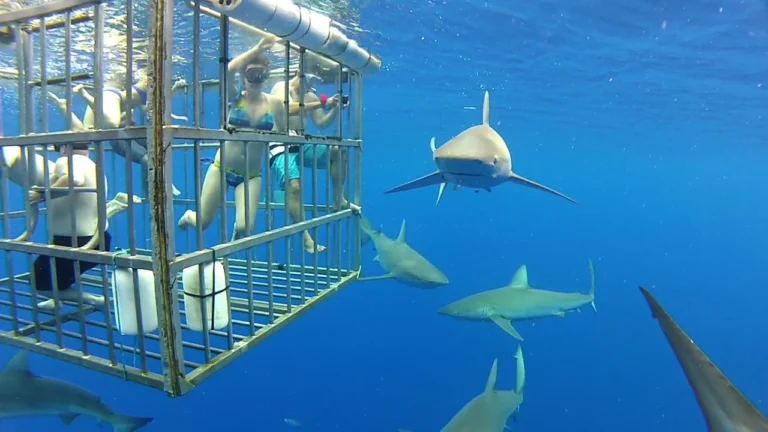
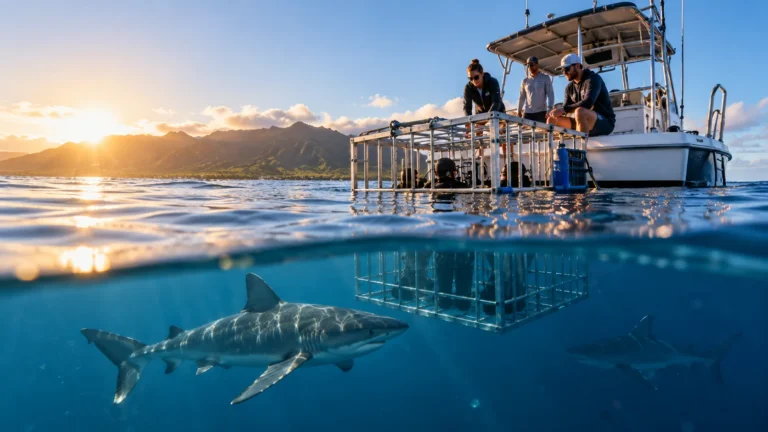
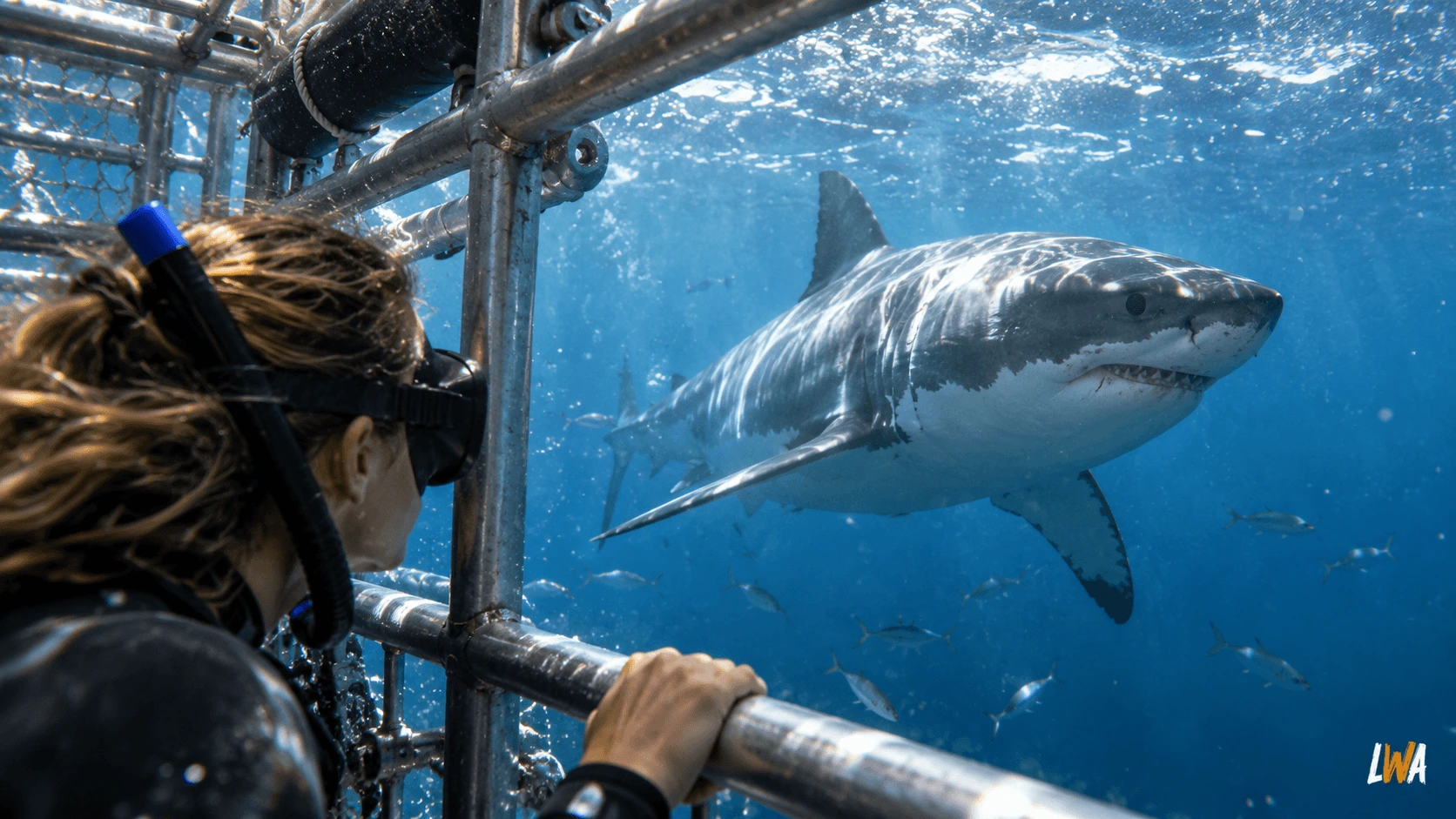
On these Oahu tours, a cage stays alongside the boat with its upper section above the water. Participants enter the cage, hold its structure or handrail as instructed, and use a mask and snorkel to look beneath the surface. You are not expected to swim around outside the cage. North Shore Shark Adventures says the top stands about two feet above the water and swimming outside the cage is not allowed. [S2]
That setup can make the experience possible for someone who is not a swimmer. It does not remove the need to be comfortable putting your face into the water, following crew commands and moving safely in a wet, rocking environment.
The ladder test matters more than a swim test
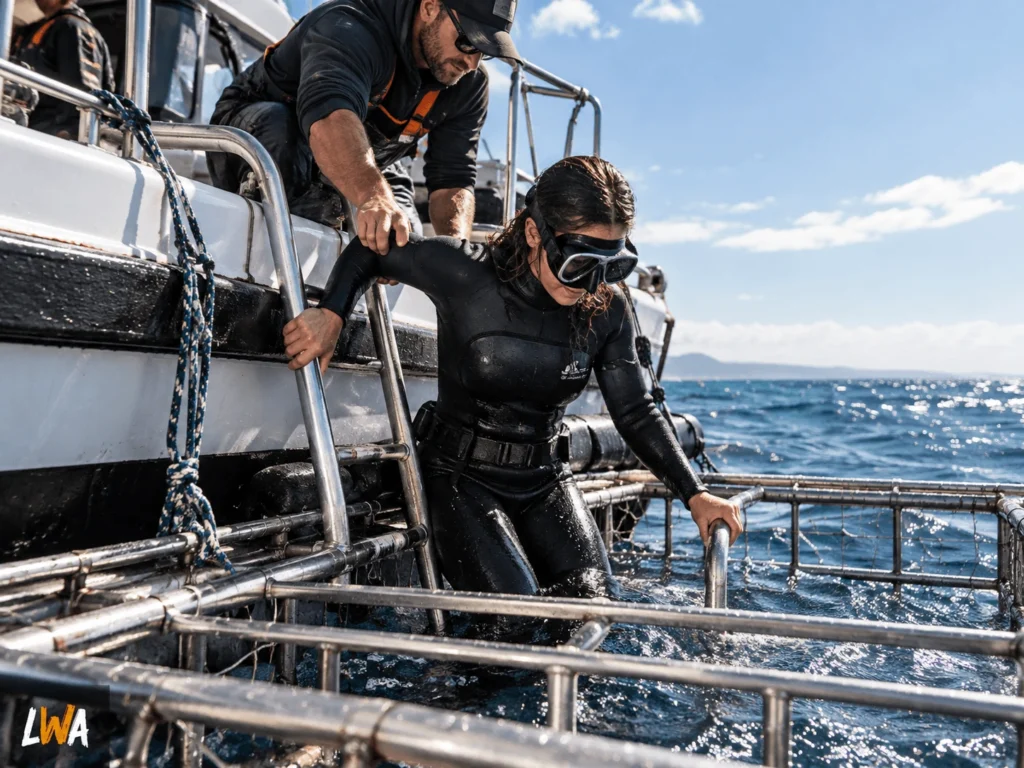
Hawaii Shark Encounters says guests need enough strength to climb down into the cage and pull their body weight back up the ladder. North Shore Shark Adventures likewise says participants should have the strength and agility to descend and climb a vertical ladder, although crew can assist. [S2][S3]
If you have limited mobility, an injured shoulder or knee, difficulty with ladders, or anxiety about stepping from boat to cage, explain your circumstances before booking. Ask for a plain-language description of the entry and exit—not just whether the tour is “beginner-friendly.”
What if you would rather stay on the boat?
Some operators sell observer or boat-rider spots. Hawaii Shark Encounters says guests can watch sharks from the boat without entering the cage, and North Shore Shark Adventures publishes separate boat-rider tickets. A boat-only place is not automatically suitable for someone who gets severely seasick, and the operator must confirm space and any age rules. [S1][S3]
How Old Do You Have to Be to Shark Cage Dive?
There is no single age cutoff for all American shark cage dives. Even among Oahu operators, rules and booking categories differ. Always distinguish an advertised “all ages” boat tour from permission for a very young child to enter the cage.
Examples from current Oahu operators
| Operator | Age information | Editorial caution |
| North Shore Shark Adventures | All ages advertised; cage pricing 3–13 / 14+; infant restrictions | Confirm whether each young guest is a cage diver or boat rider |
| Hawaii Shark Encounters | Does not consider tour suitable for under 5 | Ask about child’s ability to use ladder |
| Haleiwa Shark Tours | Adult band 13+, child 12 and under | Confirm cage eligibility for youngest guests |
North Shore Shark Adventures lists an all-ages tour with infant reservations before 9 a.m. and separate cage-diver prices for ages 3–13 and 14+. Its tour page says the captain and operator control how the outing runs. Hawaii Shark Encounters says it does not consider its tour appropriate for children younger than five. Haleiwa Shark Tours advertises family age bands, but families should confirm whether younger children can enter the cage or only ride on the boat. [S1][S3][S4]
A child’s age is only one part of readiness. Can the child follow instructions, use a mask, hold the rail, handle a boat ride and enter/exit safely? Parents should ask about the current crew-to-participant procedures and any weather-related minimum-age decisions.
What about infants and toddlers?
An “all ages” label does not mean an infant can safely be brought on every departure, or that the infant can enter the cage. North Shore Shark Adventures requires infant reservations and limits infants to tours before 9 a.m., reflecting its concerns about changing ocean conditions later in the morning. Confirm the precise boat-only rule for the child’s age and never assume the crew can provide childcare. [S1]
Fitness, Health and Accessibility: What Should You Check?
The key practical demands of a surface-cage tour are boarding a moving boat, maintaining balance on wet surfaces, getting in and out of a cage, and coping with wave motion. Some operators can assist passengers, but assistance has limits and should be arranged in advance.
Tell the operator before booking if you have a condition affecting balance, breathing, heart health, mobility, consciousness, or your ability to follow instructions. Ask about pregnancy policies and whether the captain may decline participation due to sea conditions. A general article cannot provide medical clearance. Consult a healthcare professional for individual health questions.
Hawaii Shark Encounters requests advance notice for guests who need special arrangements and suggests early trips when sea conditions are typically more favorable. North Shore Shark Adventures also describes assistance but maintains a ladder-strength requirement. These policies illustrate why “no swimming required” is not the same as “no physical requirements.” [S2][S3]
How Bad Is Seasickness on a Shark Cage Diving Tour?
For many first-timers, seasickness—not sharks—is the more immediate concern. Oahu cage boats travel offshore, and some time may be spent drifting or holding position while participants rotate through the cage. Hawaii Shark Encounters notes that the boat keeps moving even on calmer days. [S3]
Who should plan for motion sickness?
Anyone who has felt nauseated on boats, ferries or winding road trips should plan ahead. You do not need a history of seasickness to experience it, and a forecast that looks sunny does not guarantee a flat sea. An early departure may improve comfort on some Oahu days, but conditions are variable. [S1][S3]
What can you do without medication?
- Check the operator’s current weather and sea-conditions guidance before traveling.
- Keep your eyes toward the horizon when you can rather than reading or staring at a screen.
- Stay hydrated, avoid excess alcohol, and consider a light meal rather than a heavy one before the trip.
- Choose a position recommended by the crew and ask where you can get fresh air if you feel ill.
- Tell staff early if you begin to feel nauseated.
These approaches are consistent with public guidance from the CDC and NOAA. None can guarantee you will avoid symptoms. [S5]
Should you take motion-sickness medicine?
Some medicines can reduce motion sickness, but they may cause drowsiness and have contraindications. Timing matters: preventive products often work better before symptoms begin. Ask a pharmacist or healthcare professional which options, if any, fit your age, medications and health; follow the product directions. Do not give children adult motion-sickness medicine or guess a dose. [S5][S6]
If you are responsible for an infant or child on the boat, consider how feeling sleepy or unwell would affect your ability to supervise them. This is a practical planning question as well as a health question.
What to Wear for Shark Cage Diving
For a warm-water surface cage on Oahu, comfortable swimwear and a rash guard are a practical starting point. The operator’s instructions take priority. North Shore Shark Adventures says wetsuits are not needed for its tours and are not rented; Hawaii Shark Encounters says most visitors use ordinary swimsuits. [S2][S3]
- Wear swimwear you can move in, with a comfortable covering for sun exposure if desired.
- Bring a dry T-shirt or light layer for the windy return to harbor.
- Use secure footwear suitable for a wet boat deck, following the operator’s rules.
- Keep long hair tied back and avoid loose accessories that could fall overboard.
A surface snorkel tour is different from a cold-water offshore expedition: never assume the warm-water clothing advice applies to every U.S. destination.
What to Bring: The Practical Packing List
- Reservation confirmation, required identification and any consent documentation.
- Swimwear, a towel and a dry change of clothes or light cover-up.
- Sun protection suitable for your needs, including sunscreen and a hat for the boat.
- Water and any permitted light snacks, after checking the operator’s rules.
- A secure waterproof camera or phone pouch, but only if the operator allows it.
- Any personal medical items and a seasickness plan discussed with your clinician or pharmacist when needed.
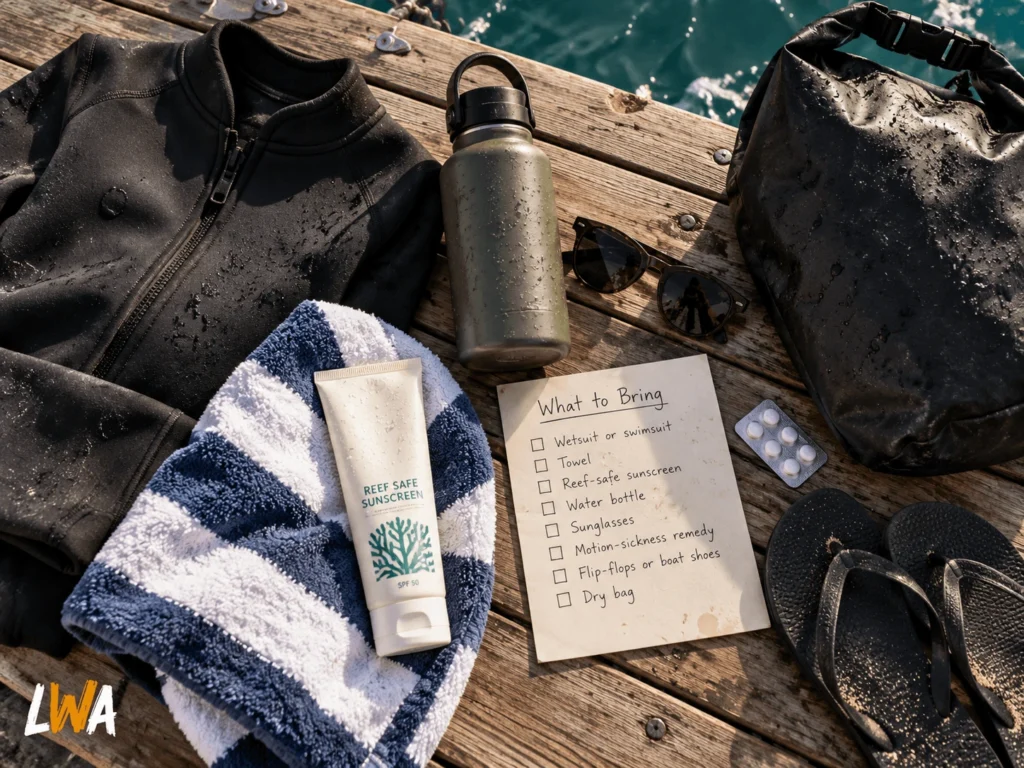
Leave expensive jewelry and unnecessary valuables ashore. North Shore Shark Adventures and Hawaii Shark Encounters provide masks and snorkels, so buying a snorkeling set solely for these particular tours is usually unnecessary. [S2][S3]
For a comparison of what Oahu operators actually include and how their tours work, see our Oahu shark cage diving guide.
What Happens on the Day? A First-Timer Timeline
Before the boat departs
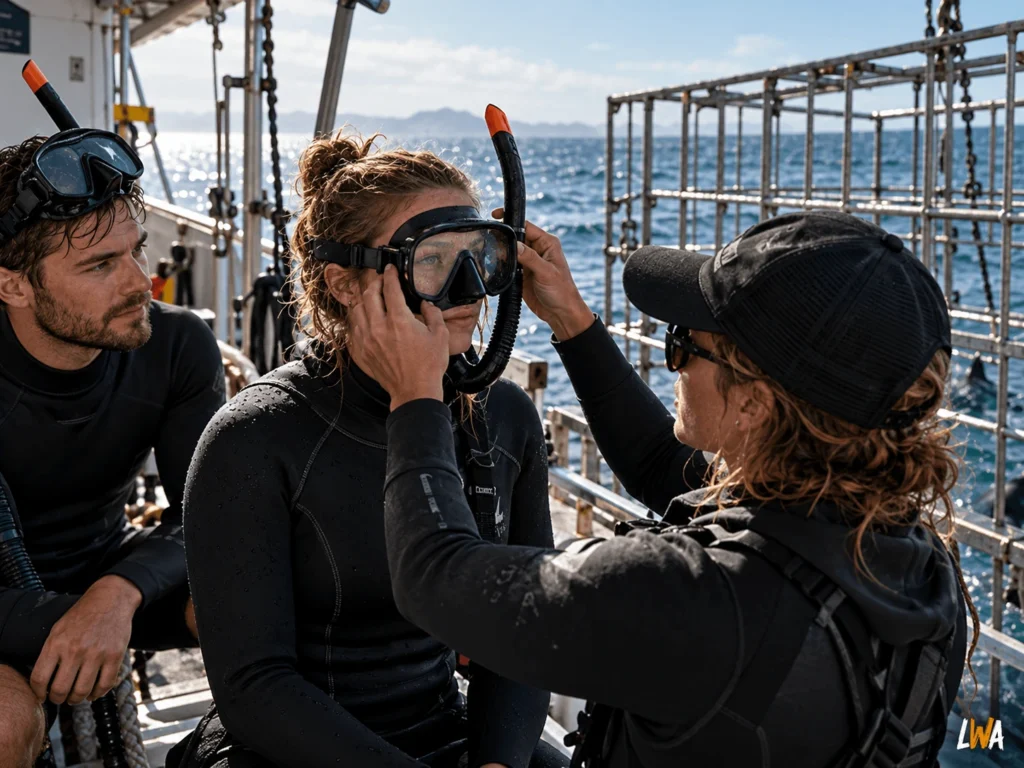
Check in on time, complete any waiver or age verification, ask questions about the ladder and the mask, and listen to the safety briefing. North Shore Shark Adventures asks guests to arrive approximately 30 minutes early; confirm the schedule for your actual reservation. [S1]
On the ride offshore
The operator travels to its viewing location. Stay seated or move only as instructed. The sea can be uneven even when the harbor looks calm. Do not assume that a short boat journey means the entire trip is short: operators may rotate groups through the cage.
Entering the cage and watching sharks
Wait for crew direction; descend using the specified ladder and handholds; keep arms and other body parts inside the cage; and do not attempt to touch or feed wildlife. Follow the operator’s snorkeling and recovery procedures. North Shore Shark Adventures reports roughly 20 minutes per person in the cage during its standard tour. [S2]
Returning to port
After the cage time, change into dry clothing if appropriate, recover from the boat motion, and allow adequate time before another fixed appointment. Tour durations commonly quoted in Oahu include around 1.5 to 2 hours, but exact total time depends on check-in and the operator’s schedule. [S1][S3]
Before You Book: Six Questions Worth Asking
- Does your exact cage format allow non-swimmers, and is there any required swim or snorkeling skill?
- What is the minimum age for entering the cage—not merely boarding the boat?
- What ladder, balance and mobility requirements must each participant meet?
- How long is the complete trip, and what sea conditions trigger changes or cancellation?
- What gear is provided, and what clothing or personal items should we bring?
- If a child, non-swimmer or seasick guest decides not to enter, what happens to their booking and payment?
These questions help you make a decision before paying rather than discovering a restriction at the dock. For an Oahu-specific breakdown of operators and trip formats, see our Oahu shark cage diving guide. For a separate look at what different U.S. cage experiences cost, read our shark cage diving cost guide.
Frequently Asked Questions
Can you shark cage dive if you cannot swim?
Yes, with certain surface-cage operators such as North Shore Shark Adventures and Hawaii Shark Encounters. You still need to meet the entry, ladder and operator-specific requirements. Do not generalize that policy to offshore or scuba-based experiences. [S1][S3]
Do you need scuba certification?
No for the Oahu surface-cage snorkeling tours described here. More specialized dives may have different rules; confirm the format before reserving. [S3]
Can children go shark cage diving?
Some operators accept families, but minimum ages differ. Hawaii Shark Encounters says children under five are not appropriate for its tour, while North Shore Shark Adventures advertises different age categories and specific infant rules. Confirm cage entry separately from observer eligibility. [S1][S3]
What if I get seasick?
Tell crew, follow their directions and use preventive measures agreed with a healthcare professional where appropriate. Seasickness medicine can cause drowsiness, so follow medical and product guidance rather than improvising. [S5][S6]
Are sharks guaranteed to appear?
Some operators advertise sighting guarantees, but wildlife encounters and their terms are operator-specific. Read the exact refund or rebooking policy rather than assuming every tour offers a guarantee. [S1]
The Bottom Line
The right shark cage diving tour is not necessarily the most dramatic photograph or the lowest price. It is the one whose swimming, ladder, age, health and sea-condition requirements match the people in your group. Start with those details, then choose the destination and time of day.
Sources
[S1] North Shore Shark Adventures — Oahu Shark Diving Tour. https://sharktourshawaii.com/shark-diving-tour/
[S2] North Shore Shark Adventures — FAQ. https://sharktourshawaii.com/faq/
[S3] Hawaii Shark Encounters — FAQ. https://hawaiisharkencounters.com/faq/
[S4] Haleiwa Shark Tours — Shark Cage Diving. https://www.haleiwasharktours.com/shark-cage-diving/
[S5] CDC Travelers’ Health — Motion Sickness. https://wwwnc.cdc.gov/travel/page/motion-sickness
[S6] CDC Yellow Book — Motion Sickness (2026). https://www.cdc.gov/yellow-book/hcp/travel-air-sea/motion-sickness.html