Great Sand Dunes Adventure Guide: Sandboarding, Sledding, and What Else to Do
Quick Answer: How Should a First-Timer Plan Great Sand Dunes Adventure?
Great Sand Dunes is a rare Colorado destination where the main adventure is delightfully simple: climb a sandy slope, slide down, and decide whether you want to do it again. The hard part is not understanding the activity. It is arriving with the right equipment, finding a slope that fits your group, and having enough energy to enjoy the walk back up.
For most first-timers, one dedicated dunes session plus a flexible scenic activity is a stronger plan than an ambitious summit hike. Rent a purpose-built sandboard if you want to stand; choose a purpose-built sand sled if you would rather sit. Pick up the gear before entering the park, start below the highest ridges, and schedule a hot-weather visit for early morning or evening. [S1][S2]
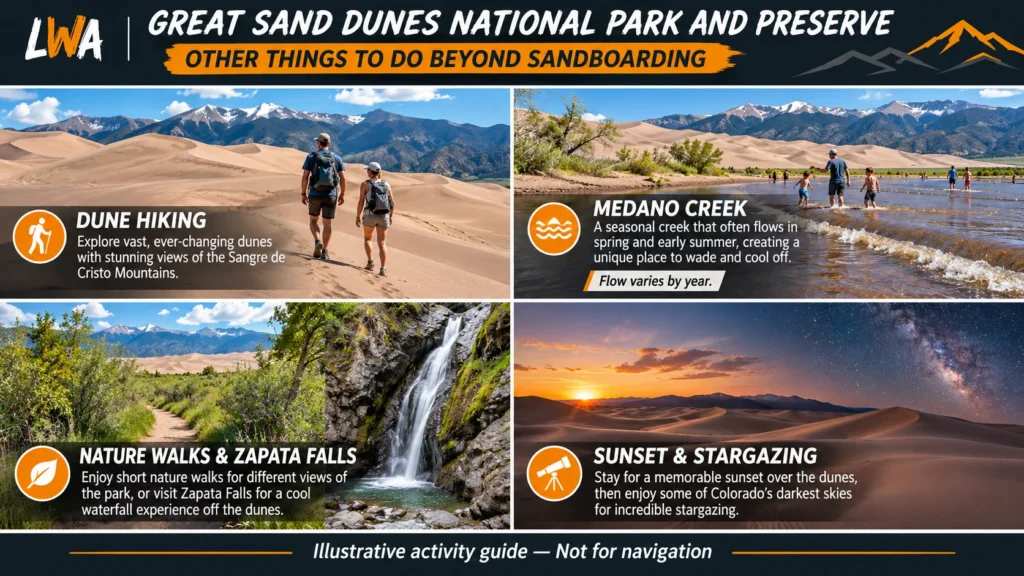
The park also rewards people who never slide at all. You can hike a dune ridge, watch the light change across the Sangre de Cristo Mountains, explore short nature trails, look for seasonal water in Medano Creek, and stay out after dark for remarkable skies. The trick is to treat these as distinct experiences—not a checklist to rush through in the midday sun.
At a Glance: Which Great Sand Dunes Adventure Fits Your Trip?
This is a planning comparison, not a ranking of safety. Every option depends on weather, effort and the visitor’s readiness; creek depth and rental access change through the season.
| Experience | Best fit | Main commitment | Before you go |
| Stand-up sandboarding | Visitors who want to learn a board sport | Balance and repeated sand climbs | Rent an actual sandboard; choose a short first slope |
| Seated sand sledding | Visitors who prefer sitting to standing | Climb back up after each run | Get a real sand sled; inspect the landing area |
| Dune hiking / High Dune | Hikers wanting a sweeping view | Slow, strenuous walking in soft sand | Start early; allow more time than a trail app suggests |
| Medano Creek | Families hoping for seasonal water play | Only possible when water reaches the visitor area | Check this year’s current conditions |
| Nature trail / waterfall outing | People wanting variety after the sand | Driving and trail access vary | Check directions and current road/trail status |
| Sunset and stargazing | Photographers and night-sky visitors | Cold, darkness and return logistics | Carry layers and a reliable light |
1. Sandboarding or Sand Sledding: Which Should You Choose?
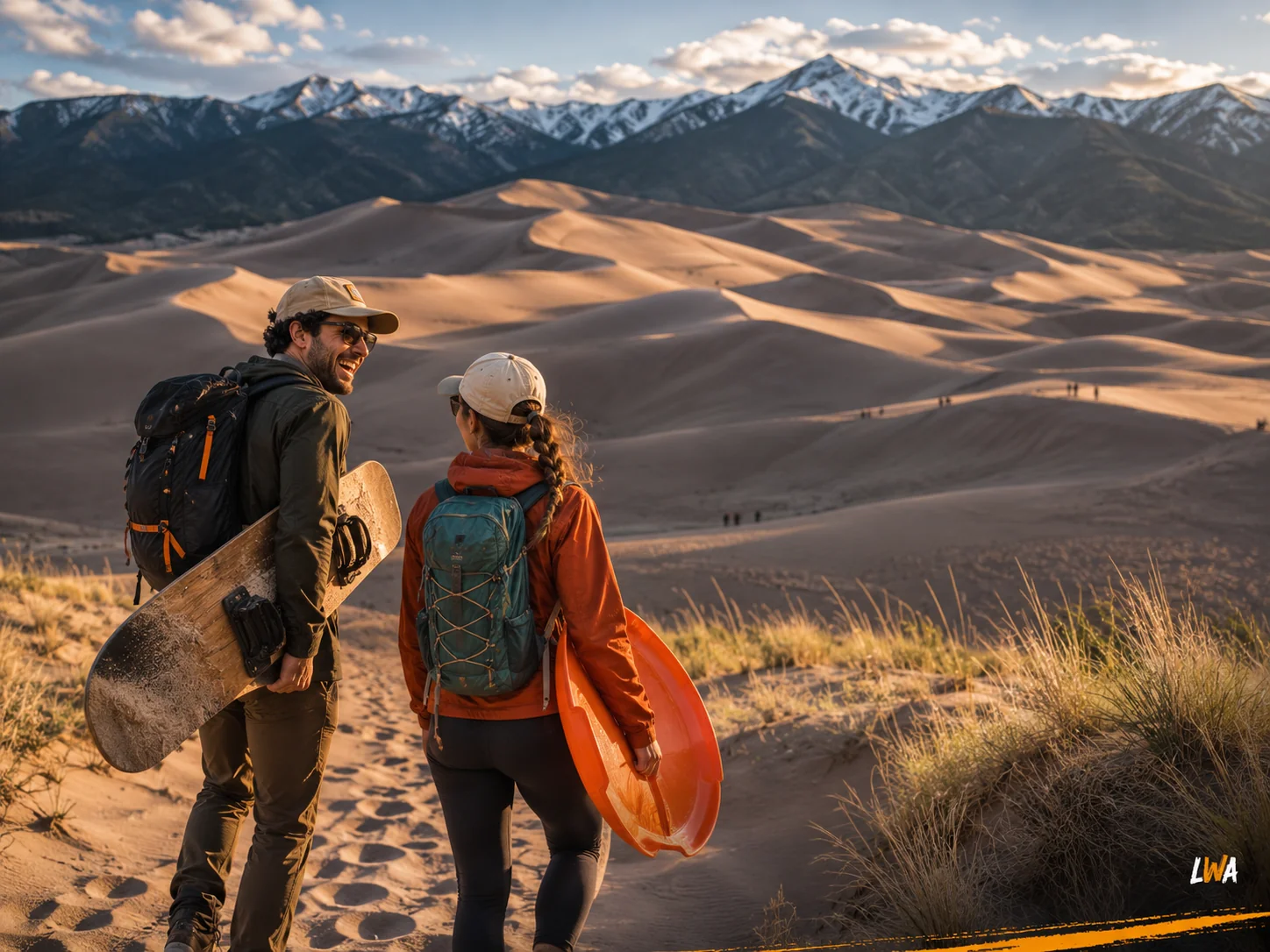
The choice is less about who is adventurous and more about how you want your body to move. Sandboarding means standing on a board with foot straps, balancing while descending a dune. Sand sledding uses a specially designed sled with a seating surface and handles. A confident skier or snowboarder may appreciate the standing stance, but snow skills do not erase the differences in friction and speed on sand.
A first-time rider who does not want to balance on a board can begin with a sled. This does not make sledding automatically risk-free: the slope angle, speed, sand hardness and runout still matter. Smaller slopes and a clear, gentle landing area are more important than choosing the most dramatic photograph in the rental shop. [S1]
The National Park Service explicitly warns that cardboard, ordinary plastic saucers and standard snow sleds perform poorly on dry sand. Purpose-built sand equipment uses a slick base and special wax. Bringing a snowboard from home to avoid rental fees is usually a false economy unless conditions are unusually wet and the equipment is suitable. [S1]

If you are comparing Colorado with other destinations, our best sandboarding places in the USA guide explains how the Great Sand Dunes experience differs from Oregon’s Sand Master Park, Utah’s Coral Pink dunes and White Sands in New Mexico. This article focuses on making one Great Sand Dunes visit work on the ground, not on choosing the best dune system nationally.
2. Where Can You Rent Sandboards and Sand Sleds?
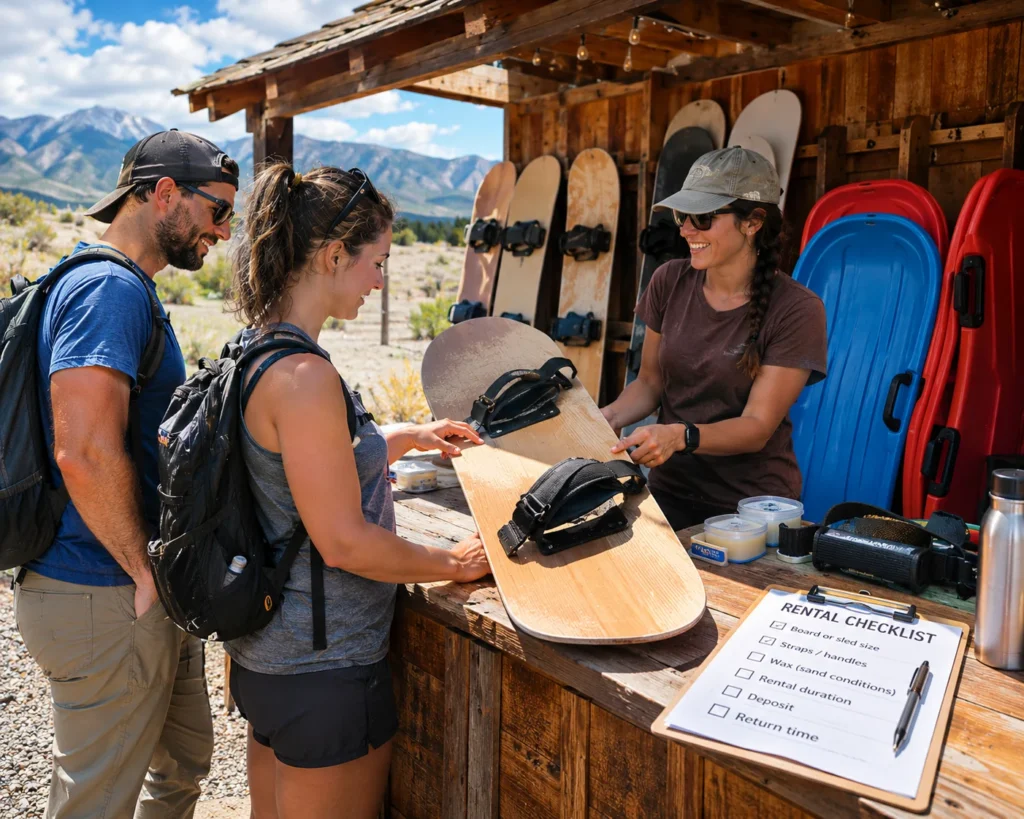
Not at the national park. The National Park Service does not operate a sandboard or sled rental desk. You must obtain your board or sled from a private business in the surrounding San Luis Valley before your dunes session. Some rental locations are a substantial drive away, so the first logistical question is not “Which dune?” but “Where and when do we pick up the gear?” [S1]
Great Sand Dunes Oasis is one example near the park entrance. Its published board-shop page, checked in November 2026, listed sandboards and sleds at $20 per day plus tax. It also described deposit rules, a return deadline and the possibility of extra overnight charges. Those details belong to this operator; they are not a park-wide rental rate or an assurance that equipment will be available on your chosen date. [S8]
NPS also identifies other rental options in communities including Blanca, Hooper and Alamosa. Distance, opening months and whether the shop rents during frozen or wet-sand conditions can differ. The closest option is not always the best match if your visit starts before opening hours or continues after the return deadline. [S1]
Before reserving lodging, verify the exact rental outlet address, opening hours, board-versus-sled inventory, deposit, return time and cancellation policy. Ask whether wax is supplied, whether a child-size option is available and how the shop handles a rain-affected day. A simple written confirmation can prevent an expensive second round-trip drive.
| Cost item | Verified example / basis | Practical reminder |
| Park entrance | $25 per private vehicle (2026 NPS schedule) | Separate from any gear rental; valid pass may cover entry |
| Rental board or sled | $20/day plus tax at Great Sand Dunes Oasis (operator page) | Example only; verify deposit, return and season |
| Accommodation | Depends on campsite or room | Book before peak weekends |
| Food, gas and extras | Trip-specific | Remote location makes last-minute errands less convenient |
3. Where Should You Take Your First Run?
The first high ridge is a tempting landmark, but you do not have to climb there to have a good time. NPS identifies smaller and medium-sized slopes reached from the main Dunes Parking Area and notes that getting into the sand already requires walking. Reaching the first high ridge is substantially more demanding. The park also says that riding beyond that first ridge can make assistance more difficult if someone is injured. [S1]
A good first-run procedure is deliberately unglamorous: walk to a modest slope, inspect it from top to bottom, keep other visitors out of the runout, and make one short descent. Look for vegetation, hidden obstacles, hard surfaces and a landing area that allows you to stop without colliding with people. Do not copy a social-media video that starts halfway down a steep dune.
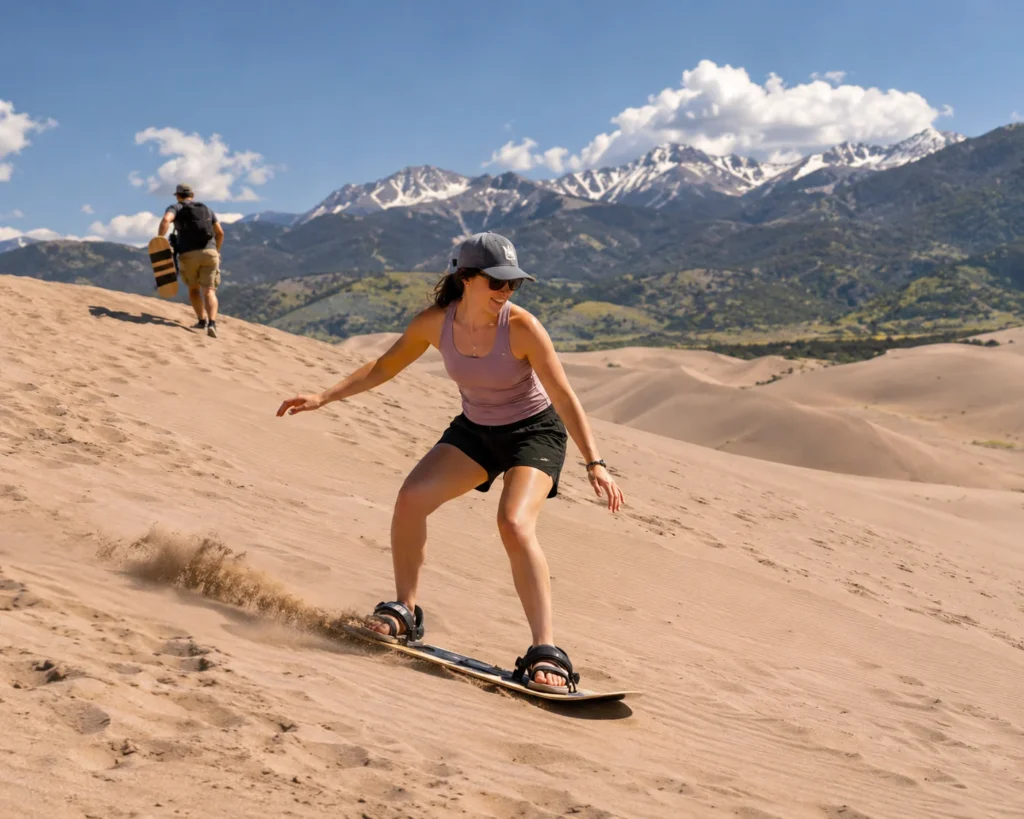
If the first try feels controlled, make a few repeat runs before moving higher. You will learn how much the climb costs you physically. The walking is often the workout: every descent requires a return trip uphill through loose sand, where normal hiking pace is a poor predictor of effort.
Keep closed-toe shoes or boots accessible for walking between runs. In summer, dune surfaces can reach about 150°F, and the park cautions visitors about burns and heat exposure. A sunny air-temperature forecast does not tell you what your feet will experience on dark or exposed sand. [S2][S3]
4. How Much Time Should You Reserve for Sandboarding?
Budget a minimum of about two hours at the dunes for a short sliding session, not counting pickup and return of the rental gear. NPS describes sandboarding and sledding as a two-to-eight-hour activity depending on how far visitors hike and how long they stay. That range is a reminder that “a few slides” and “climb the highest ridge” are very different plans. [S1]
For a relaxed first visit, think in layers. Spend the first part of the day getting oriented, walking to the lower slopes and trying a few descents. If the group still has energy and conditions are good, continue to a more distant ridge. Leave time to walk back, clean sand out of shoes, and return gear before the shop closes.
If your schedule is squeezed between a long drive and a sunset commitment, reduce the activity ambition rather than speed up the dune climb. You cannot shortcut the physical effort by driving closer to the high slopes from the regular visitor parking area. Experienced travelers sometimes enjoy the dunes more when they spend less time chasing a summit.
5. High Dune Hiking: The Extra Challenge Hidden Behind the View
High Dune on First Ridge is a named hiking objective rather than the only place to slide. NPS reports an average round-trip hiking time of around two hours over roughly 2.5 miles, but says it may take four hours for visitors unaccustomed to elevation and soft sand. There is no formal trail across the dunefield, and an app’s straight-looking line rarely reflects how you will actually zigzag uphill. [S5]
The summit rewards hikers with a broad view over the dunefield and toward the mountain ranges, but its appeal should not turn it into a compulsory stop for a family carrying rental sleds. A visitor who enjoys a low dune and returns comfortably has not missed the point of Great Sand Dunes.
The dune field lies around 8,200 feet above sea level at the main visitor area. At this elevation, visitors arriving from lower terrain may notice they need to slow down, hydrate and build in more breaks. The combination of altitude, loose sand, direct sunlight and wind can make a modest-sounding distance feel much harder than an ordinary walk. [S2]
For a meaningful challenge beyond casual sliding, choose either a longer dune hike or a longer board session on the same day, not both by default. Carry water and a layer for changing weather, and consider who in the group will still have enough energy for the return.
6. Medano Creek: Plan for a Possibility, Not a Promise
Photos of people splashing in shallow water at the base of enormous dunes can make Medano Creek look like a permanent feature. It is not. In an average year, late spring tends to offer the best opportunity for seasonal flow near the main visitor area, but the actual arrival, depth and duration vary with snowpack, temperature and precipitation. [S3][S9]
The National Park Service specifically noted unusually dry conditions during the 2026 water year, making generic “go in May for the creek” advice unreliable for an individual trip. Current reports can also change over weeks. Treat the park’s up-to-date creek report—not a social post, an old itinerary or even a remembered average date—as the source for your visit. [S2][S9]
If the water reaches the visitor area and the setting is appropriate, the creek can offer a pleasant contrast to hot sand. If it is absent, you still have a complete destination: sandboarding, scenic dune walking, the visitor-center area and night skies. A good itinerary is enjoyable even when the seasonal water does not cooperate.
7. What Else Can You Do Around Great Sand Dunes?
Short Nature Walks and a Quieter Break
Not everyone needs another high-effort objective after hiking in soft sand. NPS suggests the Montville Nature Trail as a comparatively shaded walk with environmental and local-history interest. It gives families a change of surface and scenery without turning the entire visit into a second dunes climb. [S7]
Ask a ranger about current conditions, particularly after storms or seasonal transitions. Even short paths can have exposure, uneven footing or temporary closures. The appeal here is variety rather than another test of endurance.
Zapata Falls as a Separate Stop
Zapata Falls, south of Great Sand Dunes, is often included in broader San Luis Valley plans. NPS includes it among activities for visitors with a few more hours, but this is not a stroll from the main dunes parking area. It requires an additional drive and a trail approach; conditions and access should be checked with the relevant managing authority before you commit the afternoon. [S7]
For a sand-focused trip, think of Zapata Falls as a second-day or weather-alternative outing rather than a guaranteed same-day extra after several hours of sledding. A tired group may prefer a quiet dinner and a sunset viewpoint.
Sunset and Night Skies
The dunes can feel completely different once direct sun drops and the wind eases. Sunset brings long shadows that highlight the ridge shapes, and Great Sand Dunes is recognized for its dark skies. Night access to outdoor areas is possible, but that should not be confused with permission to camp or sleep in a vehicle anywhere you like. Camping uses designated sites and applicable permits. [S2][S6]
If you return after dark, bring warm layers and a reliable headlamp, know the route to your vehicle, and check the moon phase and forecast. Sand loses heat while mountainous terrain can become cold quickly. An easy stargazing stop near a familiar access point is often better than wandering deep into a trail-less dunefield at night.
8. Best Time to Visit: Conditions Matter More Than the Calendar
Spring brings cooler temperatures and sometimes wind; it is also the season when Medano Creek may flow in average snow years. Summer is popular but demands early or late dune sessions because sand surfaces can become dangerously hot and afternoon thunderstorms may produce lightning. Fall often brings pleasant walking temperatures, though days shorten and evening temperatures drop. Winter visits are possible, but frozen sand, snow and reduced rental options change the activity entirely. [S2][S3]
For stand-up sandboarding, dry sand and accessible rental equipment matter more than picking a month from a “best time” list. For creek play, seasonal flow is the deciding variable. For photography or stargazing, light, wind, clouds and the moon are central. These are different trip goals, so one universal best month would mislead more than help.
Strong wind can make walking or enjoying the surface uncomfortable even on an otherwise mild day. Before departure, check the NPS conditions page and weather forecast and decide what you will do if the dunes are too hot, too windy, wet or stormy for the ride you imagined.
9. Where to Stay: At the Park or in the San Luis Valley?
Piñon Flats Campground is the most direct overnight option for visitors who want to be near the dunes at dawn or after sunset. NPS describes it as a seasonal, reservation-based campground, normally April through October. It is not an unrestricted overnight parking lot, and reservations can fill during popular travel periods. [S6][S10]
Alamosa provides a larger town base with more everyday amenities and some rental services, while smaller communities near the park may shorten certain drives. The tradeoff is simple: being close to the dunefield can make a dawn boarding session easier, while being based in town can simplify restaurants, groceries or a longer regional trip.
Choose lodging by the order of activities: where you pick up your board, when you intend to reach the dunes and when the rental must be returned. A cheap room can become less attractive if it creates two long drives across the valley before and after an already strenuous outdoor day.
10. A Realistic One-Day Great Sand Dunes Itinerary
If visiting in warmer weather, begin with rental pickup and reach the dunes early. Get your bearings at the visitor area, walk out toward modest slopes, test equipment on a short run and reserve time for repeat rides. Return toward the parking area before midday heat or storm exposure builds. After lunch, switch to a low-demand activity such as the visitor center or a short shaded walk. [S1][S2]
If your rental return time permits, a late-day visit can be rewarding, but do not assume the shop allows late returns. For a single-day trip, choose either an early morning ride or a late afternoon ride based on the confirmed rental logistics. Driving a long way to collect equipment after sunrise can defeat the plan to beat summer heat.
A short scenic evening stop makes a strong closing activity if the weather is settled. Bring layers, a light and enough time to exit without scrambling around in darkness. The itinerary should have a single centerpiece—your sliding session—not three overlapping commitments.
11. Two-Day Itinerary: Sliding, Scenery and a Backup Plan
On Day 1, prioritize dunes time and leave room for sunset. Stay close enough that the morning or evening start feels realistic. On Day 2, use a flexible menu: a longer dune walk if everyone is rested, a seasonal creek visit if NPS reports water, a nature trail, or a separately planned Zapata Falls outing with confirmed access. [S7][S9]
This extra day is especially useful for families and visitors traveling from sea level. The dunes can be physically demanding in ways that are easy to underestimate, and a second day protects the trip from a windy or stormy first afternoon. You do not need to schedule everything in advance to have an organized trip.
12. What Does a First-Timer Need to Pack?
Bring sturdy closed-toe shoes, sun protection, a hat, sunglasses, drinking water and a way to carry small items without dropping them into the sand. Windproof eyewear can be useful on gusty days. Keep your normal footwear nearby while boarding so you can climb and walk safely between rides. [S2]
For a morning-to-evening visit, pack layers that work both in direct sun and after sunset. A simple cloth for cleaning sand from hands and footwear is practical, along with a protected case for your phone or camera. Do not underestimate how rapidly moving sand can affect exposed electronics.
Children and first-time participants need clear boundaries around where to ride and where others stand. Do not position spectators below a descending board or sled. When a member of the group is tired, switch activities rather than treating another trip to the top as a required final run.
13. Nine Questions Before You Rent or Head Onto the Sand
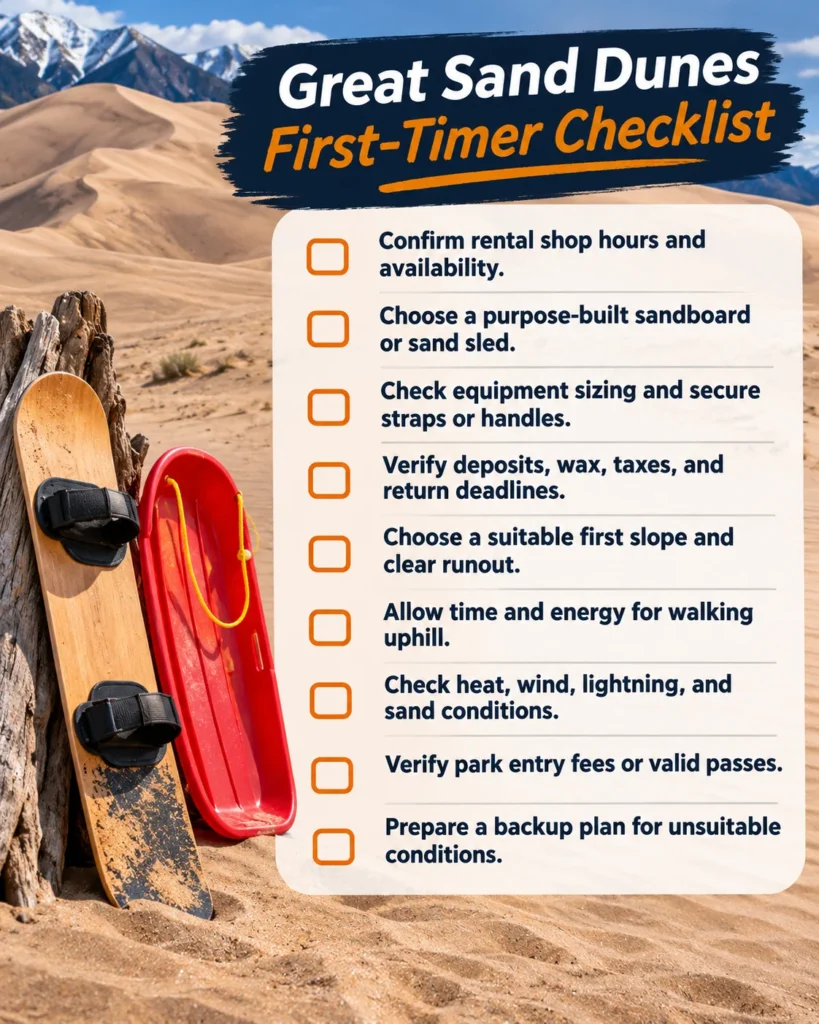
Confirm the following in this order: (1) Is the exact rental shop open on your travel date? (2) Is the gear a purpose-built board or sled? (3) Does it have suitable sizing and straps or handles? (4) What deposit, wax, taxes and return rules apply? (5) Which slope fits your group’s first attempt? (6) How much uphill walking are people comfortable with? (7) Are hot sand, wind or lightning concerns expected? (8) Do you have the correct park pass and lodging arrangements? (9) What is the plan if the sand or weather prevents sliding?
Write the answers down before driving. The smallest planning failures often create the largest frustrations here: forgotten rental hours, an unexpectedly long walk to a suitable slope or a family arriving at midday in summer without enough water. Practical preparation is more valuable than trying to predict how adventurous everyone will feel.
Frequently Asked Questions
Can beginners sandboard at Great Sand Dunes?
Yes, the park permits sandboarding on suitable, non-vegetated dune areas. Beginners should start with shorter slopes, use purpose-built equipment and understand that repeated uphill walks on soft sand are physically demanding. [S1]
Can I rent a sandboard inside the national park?
No. The National Park Service does not rent equipment; obtain a sandboard or sand sled at a private business outside the park before arriving. Check shop hours and return policies carefully. [S1]
Is sand sledding better for a first-timer than sandboarding?
It can be a better match for someone who prefers sitting to balancing on a board. Neither option is automatically safe for every person or slope, and both require walking uphill after each run.
How much does Great Sand Dunes cost?
The NPS published a $25 private-vehicle entrance fee for 2026; a valid applicable pass can change your out-of-pocket cost. Rentals are separate. One nearby shop published $20 per board or sled per day plus tax when checked in November 2026, but rates and availability must be reconfirmed. [S4][S8]
Can you visit the dunes without a reservation?
The park does not use a general timed-entry reservation system, but campgrounds and some overnight backcountry activities have their own reservation or permit requirements. Sliding itself does not require a separate activity reservation. [S4][S6]
When does Medano Creek have water?
In average years the strongest seasonal flow is generally in late spring, but some dry years do not bring meaningful water to the main visitor area. Check the current NPS creek report shortly before your visit. [S9]
What else can you do besides sandboarding?
Consider dune hiking, a short nature trail, sunset photography, stargazing or a separately planned Zapata Falls visit. Match each to current weather, access and the energy your group has after walking in sand. [S7]
Final Take: Make the Sand the Main Event
Great Sand Dunes is best enjoyed as a place with a memorable primary activity and plenty of flexibility around it. Rent proper equipment, start on a slope that fits your ability, allow time for the uphill walk, and protect yourself from heat, wind and lightning. Add scenic or seasonal experiences only when they genuinely improve the day.
If your trip is part of a larger Colorado vacation, our Colorado adrenaline activities guide can help you decide whether a San Luis Valley stay makes sense alongside rafting, biking or mountain attractions elsewhere in the state. For a broader beginner activity shortlist, start with our best adrenaline activities in the USA guide. The goal is a trip that feels exciting without becoming a logistical obstacle course.
Sources and Verification
Official and operator sources checked November 17, 2026. Access, prices, creek levels, rental availability, and road conditions can change; verify again before traveling.
[S1] National Park Service — Sandboarding and Sand Sledding. https://www.nps.gov/thingstodo/sandboarding-and-sand-sledding.htm
[S2] National Park Service — Current Conditions. https://www.nps.gov/grsa/planyourvisit/conditions.htm
[S3] National Park Service — Conditions to Expect Each Month. https://www.nps.gov/grsa/planyourvisit/conditions-to-expect.htm
[S4] National Park Service — Fees and Passes. https://www.nps.gov/grsa/planyourvisit/fees.htm
[S5] National Park Service — Hiking. https://www.nps.gov/grsa/planyourvisit/hiking.htm
[S6] National Park Service — Camping. https://www.nps.gov/grsa/planyourvisit/camping.htm
[S7] National Park Service — Plan Your Visit. https://www.nps.gov/grsa/planyourvisit/index.htm
[S8] Great Sand Dunes Oasis — Board Shop — Ride. https://greatdunes.com/ride/
[S9] National Park Service — Medano Creek. https://www.nps.gov/grsa/planyourvisit/medano-creek.htm[S10] National Park Service — Piñon Flats Campground. https://www.nps.gov/grsa/planyourvisit/pinonflatscampground.htm