Best Beginner Mountain Biking Destinations in the USA: 9 Places to Start Right
For a first mountain-bike vacation, Bentonville, Arkansas is the strongest all-around choice. It combines genuinely beginner-friendly riding, dense bike infrastructure, multiple rental and guide options, easy access from town, and strong off-bike attractions. Park City is the best choice for structured progression in a huge trail system, while Bend and Fruita stand out for riders who want flowy terrain in very different landscapes. The right destination still depends on when you travel, how fit you are, and whether you want a lesson, lift access, desert riding, forests, or a family-friendly base.
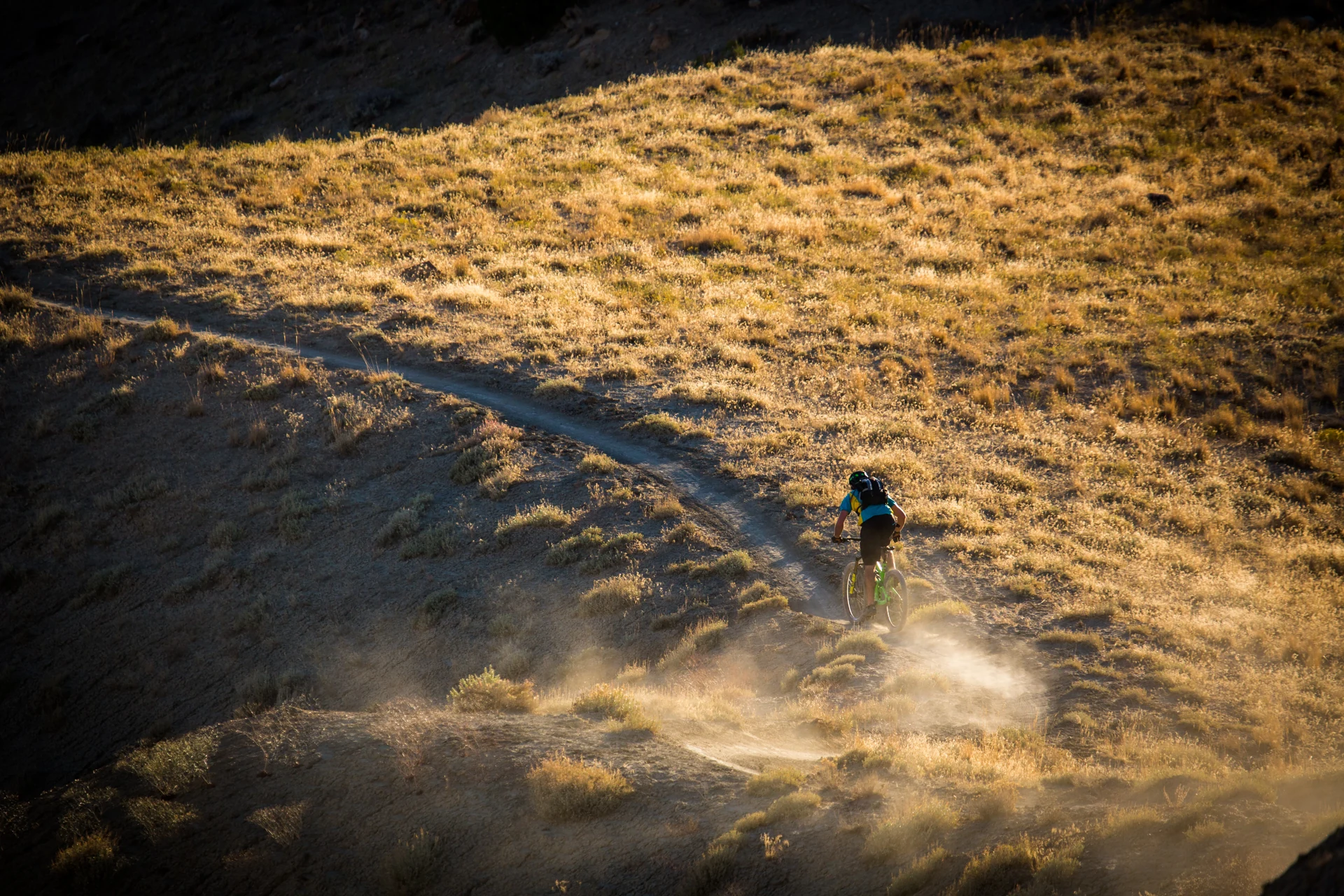
Mountain biking in Fruita, Colorado, photographed in 2015. Photo: Zach Dischner, via Wikimedia Commons, CC BY 2.0. Resized and converted to WebP. The photograph does not identify a specific trail or establish beginner suitability or current conditions. Source photograph · Image license.
A famous mountain-bike town is not automatically a good place to learn. Some destinations are celebrated because expert riders love steep rock, exposure, jumps, or long descents. A new rider needs almost the opposite: an easy first hour, clear route choices, room to practice braking and cornering, and an obvious next step when confidence improves.
That is how this list is built. We looked for destinations with real beginner progression, practical rentals or coaching, manageable logistics, and enough non-riding value that the trip still feels worthwhile if your legs or nerves need a break. We also checked current official destination and land-management information on September 10, 2026.
Still comparing this with another kind of adventure? Start Here helps you choose a reading path based on the questions you need answered before booking.
What “Beginner-Friendly” Really Means in Mountain Biking
Start with an important distinction: a green trail does not necessarily mean an easy day. IMBA-style difficulty systems primarily describe technical challenge, not how long the ride is or how much climbing you will do. Ratings are also relative to the local trail network, so a green trail in one destination can feel different from a green trail somewhere else. [S1]
Trail color tells only part of the story: distance, climbing, altitude, and conditions can turn an easy-looking route into a demanding day.
For this guide, a strong beginner destination needs more than a few green symbols on a map. We favored places where a rider can begin on smooth or forgiving terrain, find a clear progression toward slightly harder trails, rent an appropriate bike without complicated logistics, and get instruction or a guided ride when useful. We also considered weather, trail access, navigation, parking, elevation, surface style, and what a non-rider can do while you are on the trail.
We use “beginner” to mean someone who already knows how to ride a bicycle but has limited experience on singletrack. If you are still learning basic balance, braking, or shifting on pavement, a paved greenway, skills area, or coached session is a better first step than heading straight onto a narrow trail.
The Best Beginner Mountain Biking Destinations in the USA at a Glance
On small screens, scroll comparison tables sideways to see all columns.
| Rank | Destination | Best for | Beginner progression | Support | Main caution |
|---|---|---|---|---|---|
| 1 | Bentonville, AR | Best overall first trip | Easy entry + clear progression | Excellent | Hot/humid periods; busy trails |
| 2 | Park City, UT | Structured progression | Practice loops to advanced-beginner flow | Excellent | Altitude; snow/season; resort complexity |
| 3 | Bend, OR | Variety | Multiple beginner trail systems | Strong | Season and trail-system choice matter |
| 4 | Fruita/Grand Junction, CO | Desert flow | Beginner-to-advanced BLM systems | Strong | Sun, wind, rocks; desert exposure |
| 5 | Brevard/DuPont, NC | East Coast forest | Multi-use roads + selected singletrack | Strong regionally | Parking; wet conditions; no e-bikes at DuPont |
| 6 | Kingdom Trails, VT | Families / skills | Village trails, pump tracks, ride-arounds | Strong | Membership required; condition-based season |
| 7 | Duluth, MN | City-based flow | Mission Creek + beginner Hartley option | Good | Weather; don’t mistake long routes for easy days |
| 8 | Roanoke, VA | Value / short trip | Explore Park + skills center | Good | Harder regional terrain nearby |
| 9 | Tucson, AZ | Winter desert | Fantasy Island + mellow desert options | Good | Heat, cactus, rocks, rain-sensitive soil |
This ranking is not a claim that one destination is objectively safer than another. Mountain biking includes falls, collisions, changing trail surfaces, weather exposure, and equipment risk. The ranking reflects how easy it is for a new rider to build a sensible first trip around appropriate terrain and support.
The nine picks span the Ozarks, Rockies, Pacific Northwest, Appalachians, Northeast, Upper Midwest, and Southwest.
1. Bentonville, Arkansas — Best Overall for a First Mountain Bike Trip
Bentonville earns the top spot because it removes several forms of beginner friction at once. Visit Bentonville’s current beginner guide highlights beginner and family-friendly routes, more than ten bike-rental businesses, and guide services offering lessons and rides tailored to ability. The Razorback Greenway also gives nervous riders a low-stress paved option before they commit to singletrack. [S3]
For a true first day, the attraction is not one heroic trail. It is the ability to move gradually from paved riding and easy connectors into purpose-built singletrack around Slaughter Pen or Coler, then stop when you have had enough. That matters more than squeezing in maximum mileage. Downtown access, trailside amenities in popular areas, and a strong bike culture make it relatively easy to ask for route advice or adjust the plan.
Bentonville also works well for mixed-interest groups. Crystal Bridges Museum of American Art, downtown food and public art give non-riders substantial alternatives, and Visit Bentonville promotes several cost-free experiences alongside trail riding. [S4]
The main caution is weather. Late spring, summer, and fall can be hot and humid, and the official beginner guide recommends carrying adequate water, sunscreen and weather-appropriate clothing. [S3] If you are unused to humidity, plan shorter rides and start earlier rather than assuming a green trail means low physical demand.
Best for: first-time adults, couples with different confidence levels, families, and travelers who want the easiest combination of riding plus off-bike vacation value. If Bentonville is your first choice, our Bentonville and Bella Vista mountain biking guide shows where to start, how to progress through the trail systems, when to add Bella Vista, and how OZ Trails Bike Park fits into a beginner trip.
2. Park City, Utah — Best for Structured Progression
Park City is a strong second choice because its beginner progression is unusually explicit. Visit Park City’s April 2026 guide starts with the Round Valley Practice Loop, described as short, smooth and low in elevation gain, then moves through increasingly demanding beginner routes. PorcUclimb to Downward Dog is wide, gently graded and smooth enough to practice shifting and braking before moving to trails with rollers, berms and steeper climbing. [S5]
That progression is valuable if your goal is to improve during the trip rather than simply survive one scenic ride. The same official guide lists current local services for guided rides and lessons, with providers able to build a ride around skill, fitness and comfort level. [S5]
Park City does demand more awareness of altitude and season than Bentonville. Even when the trail itself is technically easy, riding at mountain elevation can feel harder if you live near sea level. Snow also determines when many higher routes become practical. A new rider should start on lower, smoother terrain and avoid planning the trip around a famous high-elevation route just because it appears on a “must ride” list.
Lift-served riding is optional. It removes climbing but adds speed, gravity-specific equipment, and bike-park rules. If that is the style you want to try, compare the best lift-served bike parks in the USA for beginners before choosing a resort.
Best for: beginners who want coaching, a visible green-to-blue progression, mountain scenery and a destination that can support both pedal-access and future lift-served riding.
3. Bend, Oregon — Best for Variety Without Forcing Big Terrain
Bend gives beginners something many famous western destinations do not: multiple trail systems that official tourism guidance specifically calls beginner-friendly. Visit Bend points new riders toward Phil’s Trail for straightforward navigation, flowy terrain and minimal elevation change; Maston for fairly flat riding; and Peterson Ridge near Sisters for loop options with a few manageable technical sections. [S10]
That variety makes Bend useful for gradual progression. Start with a short outing near town, repeat familiar segments, then try a slightly harder loop without committing to a remote all-day ride. Bend also offers enough off-bike activity for mixed-interest groups.
The support side is strong too. Visit Bend currently lists Cog Wild as offering mountain-bike lessons for different skill levels and ages, plus tours and shuttles. [S10] A lesson is especially useful if you have road-cycling fitness but little experience with body position, loose corners or braking on dirt.
The catch is seasonal and terrain-specific. Spring through fall sees the most conventional dirt riding, while winter often shifts toward fat biking or lower-elevation conditions. [S10] Bend also has serious intermediate and advanced terrain, so do not treat the destination name itself as a difficulty label. Choose the trail system first, then the exact route.
Best for: active travelers who want a real mountain-bike town, multiple styles of beginner terrain and room to return later as skills improve.
4. Fruita and Grand Junction, Colorado — Best Beginner Desert-Flow Trip
Beginner terrain feels different by region: smooth desert flow, pine-forest singletrack, and Appalachian trails each ask something different from first-timers.
Fruita is one of the better ways to experience desert mountain biking without starting with the most technical desert destination. The Bureau of Land Management describes the Fruita trail systems as ranging from beginner to advanced, with the North Fruita Desert/18 Road area built around mountain-bike recreation. The official BLM page lists year-round season dates but also makes clear that the terrain spans a broad difficulty range. [S6]
For a beginner, the appeal is flow and visibility. Compared with dense forest, open desert can make it easier to see the trail ahead and understand how rollers and corners connect. That does not make the terrain harmless. Loose surfaces, exposure to sun and wind, and rocks can increase the consequences of poor line choice. Treat the first ride as a skills session, not a mileage challenge.
Fruita also has practical support in town. The Colorado Tourism Office currently lists Over the Edge Sports as a family-friendly bike shop offering rentals and tours. [S7] That makes it possible to arrive without a bike, get local route advice, and avoid hauling equipment across the country for a first trip.
Fruita fits riders already comfortable braking and shifting who want a first taste of desert singletrack. A rider with no dirt experience should start in a skills area or with coaching before a longer loop.
Best for: new riders who want dry-climate scenery, flowy desert character and a lower-key alternative to Moab.
5. Brevard and DuPont State Recreational Forest, North Carolina — Best East Coast Forest Progression
Brevard is a major mountain-bike hub, but the word “Pisgah” can mislead a first-timer into assuming the whole region is easy to sample. Explore Brevard promotes more than 350 miles of regional singletrack across terrain for multiple skill levels. [S9] For a genuine beginner, DuPont State Recreational Forest is often the more controlled starting point than simply choosing a famous Pisgah route.
The North Carolina Forest Service says bikes are welcome on nearly all DuPont trails, but the forest is multi-use rather than a dedicated bike park. Riders should expect hikers, horses and other cyclists, control speed, and use the MTB-friendlier parking areas such as Corn Mill Shoals, Fawn Lake, Lake Imaging or Guion Farm. The agency also warns that summer parking can fill early and tells visitors to check current road and trail closures. [S8]
There is one rule that can change the trip for some groups: electric bicycles, including pedal-assist bikes, are not allowed on DuPont roads or trails. [S8] If an e-MTB is part of your fitness or accessibility plan, verify the exact trail rules first and compare our best e-mountain biking destinations in the USA for places where Class 1 eMTB access is easier to plan.
Brevard is best for beginners who want forest scenery, waterfalls and a strong outdoor-town base, but it rewards conservative route selection. A green or easy route should be checked for distance, climbing and surface, not just color. The region also makes a good trip for groups that include stronger riders, because more demanding terrain is nearby without forcing the beginner onto it.
Best for: East Coast travelers, mixed-skill groups and riders who want forest roads and singletrack progression rather than desert or resort riding.
6. Kingdom Trails, Vermont — Best Northeast Family and Skills Network
Kingdom Trails is one of the clearest Northeast choices for a family or beginner who wants purpose-built progression. The association’s current family and beginner page identifies the Village Trails as beginner singletrack with a balance-bike park, two pump tracks, a beginner jump park and skills features. Darling Hill adds moderate terrain with fewer technical features, and mapped technical features include ride-around options. [S11]
The network is substantial: Kingdom Trails says its summer mountain-bike system includes more than 85 miles of singletrack and doubletrack on private land. The summer network opens as conditions allow in spring and closes in early November as conditions allow. [S12] That condition-based language is important. Do not build a shoulder-season trip around a calendar assumption; check the current trail report first.
Unlike many public trail systems, Kingdom Trails requires membership for access. One-day and annual membership options are available, and one-day access is tied to the date of purchase. [S13] The association also lists adult skill clinics and guided instruction among local programs. [S14]
The main beginner challenge is navigation: the network includes road crossings and connections, and official guidance warns riders to stay alert on roadway sections. [S11] Choose one compact beginner zone instead of linking a huge tour.
Best for: families, Northeast road trips, riders who enjoy pump tracks and skills areas, and beginners who want a vacation town built around trail culture.
7. Duluth, Minnesota — Best City-Based Flow and Cooler-Climate Option
Duluth stands out because the trail experience is woven into the city rather than isolated at a resort. Visit Duluth’s current guide describes more than 110 miles of purpose-built, mountain-bike-optimized multi-use trails. It specifically labels Mission Creek as beginner terrain with about 23 miles of rollers, berms and flow. [S15]
Hartley Park adds another useful progression point. The guide calls the rebuilt Pines Loop suitable for beginner riders and kids and notes that Hartley Nature Center has rental bikes. [S15] That combination is practical for a first trip: you can ride a small amount, stop, and still have urban food, Lake Superior scenery and other activities nearby.
Do not confuse the 42-mile Duluth Traverse with a beginner day. Distance creates its own difficulty. Choose one trail center, ride a short session, and learn how your hands, legs and concentration respond to singletrack.
Weather and trail conditions can also be decisive in the Upper Midwest. Wet trails and freeze-thaw periods can affect access, so check the local condition report immediately before riding rather than relying on an itinerary made months earlier.
Best for: summer travelers who prefer cooler northern weather, families, and beginners who want a city trip with mountain biking rather than a remote bike-only vacation.
8. Roanoke, Virginia — Best Value-Oriented Introduction
Roanoke is a useful beginner destination because you can sample purpose-built terrain without making every ride a paid attraction. At Explore Park, Visit Virginia’s Blue Ridge lists more than 14 miles of trails, including nine miles of purpose-built bike trails, with routes ranging from easy to moderately difficult. The Blue Ridge Bike Center includes beginner and intermediate skill-development features. [S16]
Explore Park admission is currently free, and the same destination source points riders to Roanoke Mountain Adventures for rentals and guided trips. [S16] That gives a new rider a flexible choice: pay for equipment or guidance when needed while keeping the trail-access portion of the day simple.
Roanoke also works for groups who want more than biking. Explore Park itself includes hiking, paddling, fishing, camping and an aerial-adventure course, while the broader Blue Ridge region adds scenic driving and city amenities. [S16] That matters if your first ride leaves you more tired than expected.
The limitation is that Roanoke’s wider mountain-bike region includes much harder terrain. Stay disciplined about your route selection. The fact that advanced riders travel to the area should not pull a beginner toward a trail chosen for reputation rather than fit.
Best for: Mid-Atlantic travelers, budget-conscious beginners, mixed-activity weekends and riders who want a skills area before longer singletrack.
9. Tucson, Arizona — Best Winter Desert Choice
Tucson is the most situational pick on this list, but it is valuable because it gives U.S. riders a desert option when many northern destinations are cold or snow-covered. Visit Tucson places Fantasy Island in its beginner category, describing interconnected loops close to town that less-experienced riders can enjoy, with only a few semi-technical sections. Sweetwater Preserve is another option that can work for beginners who want a little more challenge. [S17]
The desert environment is the reason to go and the reason to be careful. Rocks, cactus, sun exposure and heat make mistakes feel different from a soft forest trail. Plan short early rides, carry more water than you would on a mild-weather spin, and do not assume that a flat profile means an effortless day.
Rain also matters. Visit Tucson asks riders to avoid Fantasy Island when tires are leaving marks or collecting mud and provides post-rain waiting guidance for specific loops. [S17] That is a good reminder that “desert” does not mean “always rideable.”
Tucson is better for a beginner who already has basic dirt confidence than for a first-ever off-road ride. If you want a truly gentle introduction, use a paved or very mellow warm-up before moving onto desert singletrack.
Best for: winter travel, riders curious about desert terrain, and beginners who already control braking and steering on loose surfaces.
Why Moab and Sedona Are Not at the Top of This Beginner List
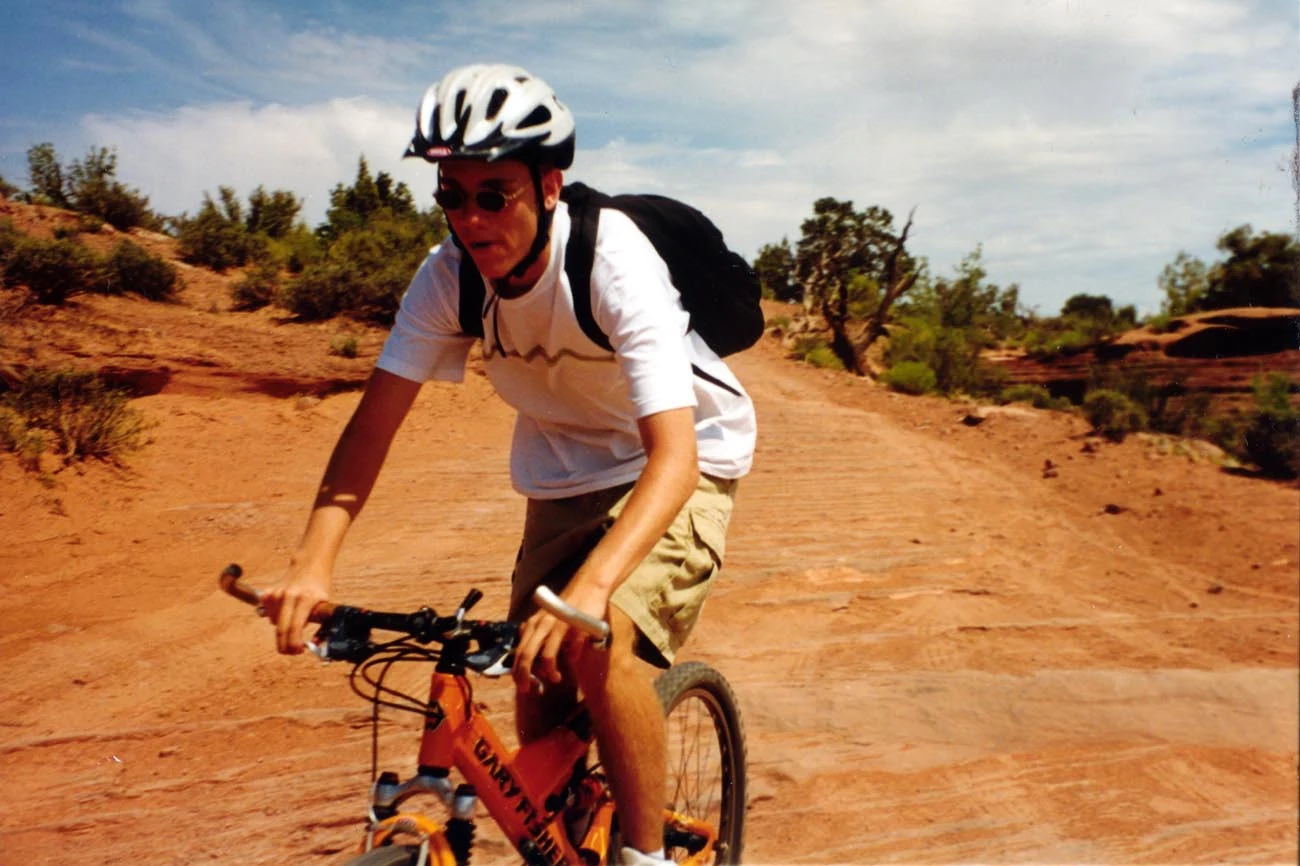
Moab and Sedona are exceptional mountain-bike destinations, but destination prestige is not the same as first-trip confidence. Broader mountain-bike rankings routinely put Moab at or near the top while acknowledging that only a small portion of its terrain is truly beginner-friendly. Singletracks, for example, describes Moab’s environment as unforgiving and notes that many popular trails are challenging for young or beginning riders. [S21]
That does not mean a beginner can never ride in Moab. It means a new rider should not book a first mountain-bike vacation there simply because the town is famous. Local route choice, surface comfort, exposure, heat, and guide selection become more important. The same logic applies to Sedona’s rocky terrain. These are better “second destination” candidates for many riders after they know how they react to rocks, loose corners and sustained technical attention.
If you still want Moab but are not convinced mountain biking should be the centerpiece of your trip, compare the best adrenaline activities in Moab for other ways to experience the destination.
Which Destination Is Best for Your Type of Beginner?
| Your priority | Best starting point |
|---|---|
| You want the easiest all-around first trip | Bentonville |
| You want a clear lesson-to-progression pathway | Park City |
| You want several beginner systems in one outdoor town | Bend |
| You want your first desert MTB vacation | Fruita / Grand Junction |
| You live on the East Coast and want forest riding | Brevard / DuPont |
| You are traveling with kids or a family group | Kingdom Trails or Bentonville |
| You want riding plus a northern city vacation | Duluth |
| You want a lower-cost weekend sample | Roanoke |
| You need a winter-friendly desert option | Tucson |
Fitness can change the answer. A strong runner or road cyclist may still lack dirt-specific braking and cornering skills, while a technically confident rider may tire quickly. Plan around the weaker side of that equation.
If cycling fitness itself is the main obstacle, compare our adrenaline activities that don’t require extreme fitness before building an entire vacation around mountain biking.
Should You Book a Mountain Bike Lesson on Your First Trip?
For many first-timers, yes. A short lesson or guided ride can be more valuable than upgrading to a more expensive bike. A coach can watch your body position, braking, shifting and line choice in real time, then choose terrain that matches what you are actually doing rather than what you think your level is.
The strongest case for a lesson is when you are comfortable on pavement but have never ridden narrow dirt, loose corners, roots, rocks or rollers. Bentonville, Park City, Bend, Kingdom Trails and Roanoke all have current official destination information pointing to lessons, clinics or guided support. [S3] [S5] [S10] [S14] [S16]
You do not need a guide for every ride. A practical format is to use instruction on Day 1, repeat a familiar beginner route on your own on Day 2, and only then decide whether to progress. That lets the trip respond to your real confidence instead of a schedule written before you touched the bike.
What Bike and Gear Does a Beginner Actually Need?
You do not need an extreme setup for a beginner ride, but fit, hydration, and basic protection matter more than a premium bike.
For a first destination trip, renting is often simpler than flying with a bike you may not yet know how to set up. Ask the shop to size the bike, set tire pressure and suspension for your weight and explain the controls before you leave. A modern hardtail can be enough for smooth beginner trails; a full-suspension trail bike can add comfort on rougher surfaces but is not a substitute for technique.
Wear a properly fitting bicycle helmet. In the United States, bicycle helmets sold for bicycling are subject to the CPSC’s federal performance standard under 16 CFR Part 1203, and required labeling includes fit and use warnings. [S2] If you rent a helmet, inspect its condition and ask for another one if the fit is poor or the shell or straps appear damaged.
For most beginner rides, add gloves, eye protection, grippy closed-toe shoes, water, a snack, sunscreen and your phone. Knee protection can make sense on rocky or bike-park terrain. Remote rides also call for repair basics, navigation and an emergency plan.
A Simple First-Trip Plan That Works in Almost Any Destination
Day 1 should feel almost too easy. Pick a skills area, paved connector or short green loop. Learn the rental bike. Practice braking with both brakes, shifting before a climb, standing in a neutral position and looking through turns. If you have a lesson, this is the day for it.
On Day 2, repeat some familiar terrain before adding anything new. Progress by one variable at a time: slightly longer distance, a few more trail features, or a modest increase in technical difficulty. Do not increase all three at once.
Day 3 can be a half-day ride or rest day. New riders often underestimate hand fatigue, saddle soreness and the concentration required by continuous singletrack. Use the destination’s off-bike attractions instead of forcing another full ride.
If you ride again on Day 4, choose the trail you enjoyed most rather than chasing a badge-of-honor route. Finishing a first mountain-bike vacation wanting one more ride is a better outcome than ending it exhausted and intimidated.
Safety: What Beginners Commonly Underestimate
Mountain biking is an inherently risky activity. A green rating does not eliminate the chance of falling, colliding with another user, striking a tree or rock, experiencing a mechanical problem, or being caught by changing weather. The goal is not to remove risk; it is to choose terrain and decisions that keep the challenge appropriate.
Control speed where sight lines are short, yield according to the posted local rules, and expect multi-use traffic where land managers allow hikers or horses. DuPont, for example, specifically reminds riders that its trails are multi-use and that blind turns are common. [S8] Kingdom Trails also warns about roadway crossings and connections. [S11]
Weather can change both difficulty and whether a trail should be ridden at all. Wet clay, desert mud, freeze-thaw conditions, snow, heat and thunderstorms can turn a comfortable plan into a poor one. Check the official trail-condition source on the morning you ride, not just the night before you fly.
If you have a medical condition, recent injury, balance concern, or uncertainty about exertion at altitude or in heat, review the operator’s current participation requirements and speak with an appropriate healthcare professional. This guide is general trip-planning information, not personalized medical advice.
Before-You-Book Checklist
A first MTB trip works best when progression is optional, not scheduled like a test.
- Check the official trail-condition report on the day you ride.
- Confirm that the exact route is open and that bikes are permitted.
- Check whether e-bikes are allowed if you plan to rent one.
- Read mileage, elevation gain and surface notes in addition to the trail color.
- Reserve the correct bike size in advance during busy periods.
- Ask what protective equipment is included with the rental.
- Consider a Day 1 lesson or guided ride if you have little singletrack experience.
- Choose a short first route with an easy bailout or return option.
- Check weather, heat, altitude and rain-related trail restrictions.
- Carry water, phone, navigation and basic repair items appropriate to the route.
- Plan at least one lighter or non-riding block in a multi-day trip.
- Recheck current fees, memberships, lift operations and cancellation rules before payment.
Frequently Asked Questions
What is the best U.S. mountain biking destination for a complete beginner?
Bentonville, Arkansas is our strongest all-around recommendation because it combines low-friction beginner riding, rentals, guided support, easy town connections and strong rest-day options. Park City is better if your priority is structured skill progression, while Roanoke can be a strong lower-cost weekend introduction.
Is a green mountain-bike trail always easy?
No. Green usually signals lower technical difficulty within a trail system, but technical rating does not automatically account for distance or total climbing, and ratings can vary between regions. [S1] Always check mileage, elevation gain, surface, exposure and recent trail conditions.
How many days should a first mountain-bike trip be?
Three or four days is a practical format for many beginners because it allows a short first ride, a progression day and at least one lighter day. That is an editorial planning recommendation, not a universal rule. If you are new to cycling fitness or traveling in heat or altitude, shorter riding days may be more appropriate.
Should a beginner rent a hardtail or full-suspension bike?
For smooth green trails, a properly fitted hardtail can be simple, efficient and completely adequate. A full-suspension bike can add comfort and traction on rougher terrain. Ask the local shop what matches the exact trail system and request a setup appropriate for a beginner rather than automatically choosing the most expensive model.
Are e-mountain bikes allowed at beginner destinations?
Rules vary by land manager and sometimes by trail. Do not assume that pedal-assist access follows conventional mountain-bike access. DuPont State Recreational Forest, for example, currently prohibits electric bicycles, including pedal-assist models. [S8] Verify the rule for the exact trail before renting an e-MTB.
Is Moab good for beginner mountain bikers?
Moab has some beginner-accessible options, but it is not our first choice for a first-ever MTB vacation because the wider destination is known for rocky, technical desert terrain and many famous routes are not beginner rides. [S21] A beginner who specifically wants Moab should choose the route with a current local guide or trail source rather than using the destination’s reputation as the decision.
Final Recommendation
If you want one answer, choose Bentonville for your first mountain-bike vacation. It offers the easiest combination of beginner progression, rental depth, optional instruction, town access and non-riding value. Choose Park City if you want a more structured skills ladder in a mountain setting; Bend if you want variety; Fruita if you want beginner-accessible desert flow; Brevard/DuPont for East Coast forests; Kingdom Trails for a Northeast family network; Duluth for a city-and-trails trip; Roanoke for value; and Tucson for a winter desert option.
The most important decision is still smaller than the destination: choose the right first trail. Start below your perceived level, learn the bike, stop before fatigue changes your technique, and progress only when the previous ride felt controlled. A first trip should make you curious about the next one.
Sources
Source IDs in the article correspond to the verified list below. Current trail conditions, closures and commercial prices should still be rechecked immediately before travel or publication updates.
[S1] Trail Difficulty Rating System — Ventura County Trails (reproducing IMBA guidance). Checked September 10, 2026. https://www.venturacountytrails.org/TrailMaps/TrailSymbols.htm
[S2] Bicycle Helmets Business Guidance — U.S. Consumer Product Safety Commission. Checked September 10, 2026. https://www.cpsc.gov/Business–Manufacturing/Business-Education/Business-Guidance/Bicycle-Helmets
[S3] Bike Bentonville 101 | A Beginner’s Guide — Visit Bentonville. Checked September 10, 2026. https://www.visitbentonville.com/blog/stories/post/bike-bentonville-101-a-beginners-guide/
[S4] 5 Local Favorite Free Things to Do in Bentonville, AR — Visit Bentonville. Checked September 10, 2026. https://www.visitbentonville.com/blog/stories/post/five-favorite-cost-free-experiences-in-bentonville/
[S5] Beginner Mountain Bike Rides in Park City — Visit Park City. Checked September 10, 2026. https://www.visitparkcity.com/blog/stories/post/beginner-mountain-bike-rides-in-park-city/
[S6] Fruita Trails, CO — Bureau of Land Management. Checked September 10, 2026. https://www.blm.gov/programs/recreation/mountainbike/fruitatrails
[S7] Over the Edge Sports — Colorado Tourism Office. Checked September 10, 2026. https://www.colorado.com/fruita/over-the-edge-sports
[S8] Biking at DuPont State Recreational Forest — North Carolina Forest Service. Checked September 10, 2026. https://www.ncagr.gov/divisions/nc-forest-service/state-forests/dupont-state-recreational-forest/explore-the-forest/biking
[S9] Mountain Biking in Brevard, NC — Explore Brevard. Checked September 10, 2026. https://explorebrevard.com/outdoor-adventure/biking/mountain-biking/
[S10] Mountain Biking in Bend and Central Oregon — Visit Bend. Checked September 10, 2026. https://visitbend.com/journal/mountain-biking-in-bend-oregon/
[S11] Family & Beginner Trails — Kingdom Trails Association. Checked September 10, 2026. https://www.kingdomtrails.org/familyandbeginnertrails
[S12] Mountain Bike Trails — Kingdom Trails Association. Checked September 10, 2026. https://www.kingdomtrails.org/mountain-bike-trails
[S13] Kingdom Trail Association Membership — Kingdom Trails Association. Checked September 10, 2026. https://www.kingdomtrails.org/membership
[S14] Visit Kingdom Trails — Kingdom Trails Association. Checked September 10, 2026. https://www.kingdomtrails.org/visit
[S15] Mountain Biking Trail Guide — Visit Duluth / COGGS. Checked September 10, 2026. https://visitduluth.com/itinerary/mountain-biking-trail-guide/
[S16] Explore Park – Mountain Biking — Visit Virginia’s Blue Ridge. Checked September 10, 2026. https://www.visitroanokeva.com/biking/mountain-biking/explore-park/
[S17] Mountain Biking in Tucson — Visit Tucson. Checked September 10, 2026. https://www.visittucson.org/things-to-do/outdoors/biking/mountain-biking/
[S21] The 12 Best Mountain Bike Destinations in the USA — Singletracks. Checked September 10, 2026. https://www.singletracks.com/mtb-trails/the-top-10-best-mountain-bike-destinations-in-the-usa/